
It’s a question that comes up at some point in planning. Can we get married in another state? Maybe it’s because a place on the Mississippi River just feels more like you, even if it isn’t home.
The short answer is yes, you can. And it’s far more common than most couples think.
A marriage license from any state is legally recognized nationwide. Once you are married in one state, that marriage is valid in all 50. This legal fact should bring a sense of calm. The real task is simply understanding the local steps where your ceremony will be held.
What does it mean to get married somewhere new?
I’ve seen it countless times—a couple decides on a change of scenery, wants to be closer to one side of the family, or just feels that a small town's rhythm is a better fit for their day.
This choice almost always comes from a feeling, not just logistics. It’s the sense that a particular place reflects who you are as a couple. Planning this kind of wedding feels a little different, but it’s not nearly as complex as it first seems. It's less about legal hurdles and more about managing a few quiet, specific details. Our own guide on how to plan a destination wedding can offer a starting point.
The most important thing to remember is this: while every state has its own rules, a marriage is recognized everywhere. The U.S. Constitution's Full Faith and Credit Clause ensures that once you are legally married in one state, that marriage is valid everywhere.
The quiet reality is that your marriage's legal standing is not the part you need to worry about. The only practical difference is where you get the piece of paper that makes it official.
It helps to think of this not as a barrier, but as one of the first simple, manageable decisions that shapes the story of your wedding day.
What I've seen couples wonder about
When you start looking into it, it's easy to get lost in what you think might be true versus what actually is. Here's a quiet summary of what holds true and what's often just a misconception.
| What You Might Be Wondering | The Quiet Reality |
|---|---|
| Is my marriage less "official" if it's out-of-state? | No. A marriage license from any state is legally recognized nationwide. Your marriage is just as valid. |
| Do I need a lawyer to figure this out? | Almost never. The process is administrative. You'll just need to follow the county clerk's instructions carefully. |
| Will I need to go back to that state for legal paperwork later? | No. Once the license is filed in the state you married in, you’re done. You can order copies by mail or online. |
| Is the process a huge hassle? | It's just different. It requires a little advance planning, but it's typically a straightforward part of the process. |
Ultimately, getting the license is just a small step in a much bigger journey. Knowing that the process itself is usually straightforward can give you the breathing room to focus on what really matters.
How does the marriage license work?
This is usually the first practical question that comes up. I’ve seen countless couples travel here to Muscatine from places like Chicago or Des Moines, and the process is almost always quieter than they expected. It’s a simple truth: a marriage license is always tied to the county where your ceremony will be held, not where you live.
It’s one of those details that feels significant until you realize it’s just another task to check off the list, like picking up your rings. If you live in Illinois but are getting married on the Iowa side of the Mississippi River, you just need an Iowa marriage license.
The first move is always to find the correct county recorder's office. For a wedding here, that would be the Muscatine County Recorder. Knowing their hours and what to bring makes the whole experience feel less like a hurdle and more like a quiet, shared errand before the celebration.
The quiet details worth knowing
There are a few small but important details I’ve seen couples feel better knowing ahead of time. These are the practical things that bring a sense of ease to the process.
- What to Bring: Nearly every county requires a government-issued photo ID for both of you, like a driver's license or passport. It’s also wise to have the full names of your parents and their places of birth handy.
- When to Go: Timing is everything. Most couples handle this detail the week of the wedding, but it’s smart to check how far in advance you can apply. Some states let you apply months ahead.
- How Long It Lasts: Once issued, the license is only valid for a specific window of time. In Iowa, for example, there’s a three-day waiting period before you can use it, and then it remains valid for six months.
This is the basic flow for getting married out-of-state.
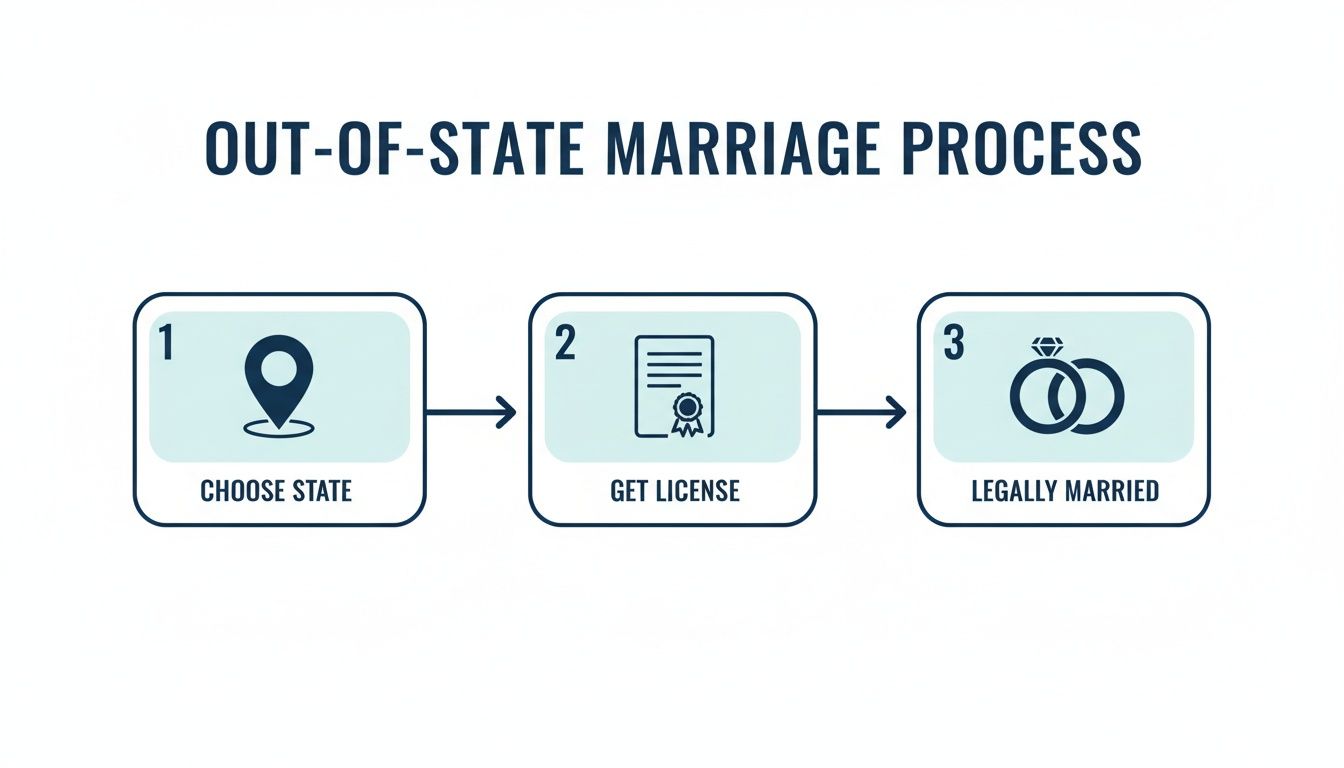
The core process is universal, no matter which state you choose.
Some offices have started allowing parts of the application to be filled out online, which can save a lot of time. A quick call to the recorder’s office a few months beforehand can clarify everything. It’s a five-minute conversation that can save you hours of wondering.
I’ve watched couples arrive at the courthouse, a little nervous, and leave just a few minutes later, holding a simple envelope. The relief on their faces is always the same. It is the moment they realize this piece of paper is not a barrier, but the key.
This step is a quiet acknowledgment that your wedding day is real and truly happening. It’s a small, official beginning to your celebration, often done with no one else around but the two of you.
Are the rules different in each state?
It’s a question that comes up a lot, especially for couples planning a wedding so close to a state line. Many who visit us in Muscatine wonder if getting married in Iowa is any different than back home in Illinois. The short answer is yes, but the differences are almost always small things, easily managed.
Think of them less as hurdles and more as local quirks in the paperwork. The foundation of marriage is the same everywhere. It’s just that each state has its own quiet way of handling the details.
This is becoming more common. We're seeing more couples who decide to get married a little later in life, with a clearer sense of the kind of place they want to be. A U.S. Census Bureau study noted that many Midwestern states see high marriage rates, and I think it has something to do with the pull of these thoughtful, grounded celebrations.
Common differences you might notice
When you look closer, the variations usually boil down to just a few key areas. These are the things to ask about ahead of time.
- Waiting Periods: Some states require a brief pause between getting your license and holding the ceremony. Iowa has a three-day wait. Others have none. This is often the most important detail to confirm for your timeline.
- License Expiration: Your marriage license doesn’t last forever. States set their own expiration dates, which can be anywhere from 30 days to a full year.
- Officiant Requirements: Who can legally marry you also changes by state. While Iowa’s rules are fairly flexible, other places might have stricter requirements for who can sign the license.
- Witnesses: The need for witnesses is another detail that varies. Some states require one or two people to sign the license. Others, like Iowa, don’t require any.
What I’ve seen time and again is that these details are never as complicated as they first appear. A ten-minute call to the local county recorder’s office almost always gives a couple all the clarity they need.
For our couples coming from the Illinois side of the Quad Cities, the process of getting married here is simple. The only real change is knowing you need an Iowa license. It’s just a small, practical step. You cross the river, handle a quick piece of paperwork, and you’re free to focus on everything else. These state-by-state differences aren’t meant to be confusing. They’re just part of the landscape—easily navigated with a little foresight, leaving you calm and ready for the day ahead.
What happens after the ceremony?
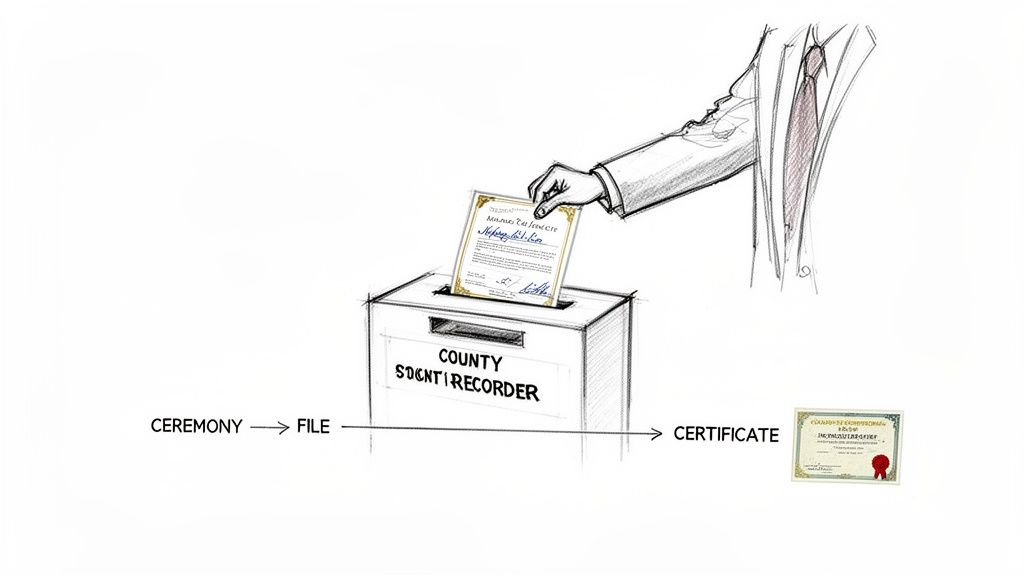
The vows are said. The rings are on your fingers. In the eyes of everyone gathered, you’re married. But there’s one last, quiet step that makes it official.
It’s a detail that often gets lost in the noise of the day. This final piece of the puzzle is returning the signed marriage license. This is the simple action that legally completes your marriage in the state where you held your ceremony.
Once the license is signed by you, your partner, and your officiant, it needs to find its way back to the county recorder's office where it was issued. This is what turns a piece of paper into a legal record.
Who handles the paperwork?
In nearly every wedding I’ve watched unfold, the officiant is the one responsible for this task. It’s a standard, expected part of their role.
They know the local rules and the timeline for returning the license. Here in Iowa, for instance, the signed license has to be returned within 15 days of the ceremony.
A quiet conversation with your officiant beforehand brings a lot of peace of mind. Just confirming that they will handle it lets you stay present in the celebration, without a small administrative detail lingering in your thoughts.
I’ve seen how much it helps when a couple knows this last step is in capable hands. It allows them to relax into the celebration, trusting that the paperwork will be taken care of calmly and correctly.
From license to certificate
After your officiant returns the signed license, the county recorder files it, creating a permanent, legal record of your marriage. At that point, you can request certified copies of your official marriage certificate.
This is the document you will actually use for all the legal and administrative changes that come next.
- Changing Your Name: This is the document required by the Social Security Administration and the DMV.
- Updating Insurance: You will need it to add a spouse to your health or car insurance policies.
- Filing Taxes Jointly: It serves as the official proof of your marriage for tax purposes.
Most county offices, including the one right here in Muscatine, make it simple for out-of-state couples to order these copies. You can usually request them by mail or through an online portal once you’re back home.
Often, the very last step of getting married in another state is just a simple form, filled out from the comfort of your own couch.
How do you plan for a weekend away?
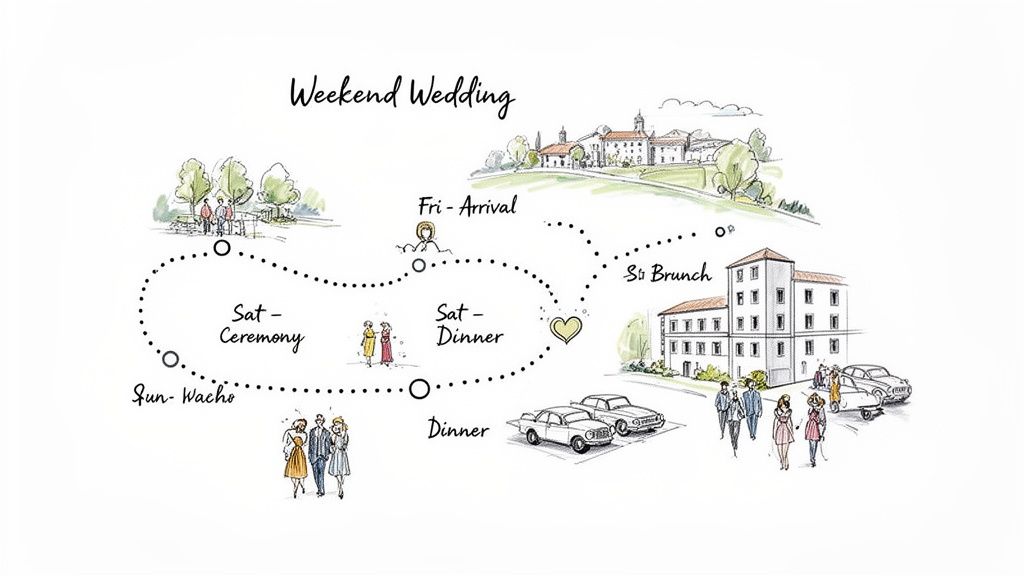
When couples decide to get married in another state, they’re usually looking for more than just a wedding day. They’re creating a whole weekend—not just for them, but for the people they love most.
I’ve seen this happen more often in recent years. Couples seem to have a clearer vision for their day, maybe because they’re marrying a bit later in life. Data from the U.S. Census Bureau even points to a shift in the median age for first marriages, which might be why more couples are planning these multi-day celebrations.
What I've noticed is that the most peaceful celebrations have a natural, unhurried rhythm. The choice to marry away from home becomes an opportunity to give everyone—especially yourselves—the gift of time.
The rhythm of a wedding weekend
A wedding weekend often unfolds in three quiet parts. There’s the arrival, the celebration, and the slow goodbye. Each one has its own feeling.
The Gentle Arrival: Guests usually start showing up on a Friday afternoon. Here in Muscatine, you can feel the pace shift as cars pull in along the river. There’s a sense of relief as people check in, set their bags down, and realize they don’t have to rush anywhere else.
The Shared Celebration: The rehearsal dinner often feels like the real beginning. It’s a warm, relaxed gathering where families meet, friends reconnect, and the wedding feels truly underway. It sets a comfortable tone for the main event.
The Unhurried Farewell: A Sunday brunch is a soft landing after a day of high emotion. It allows for quiet conversations and shared memories before everyone heads home. It feels less like an ending and more like a gentle conclusion. Our thoughts on a wedding weekend itinerary template might help you picture this flow.
The comfort of keeping everyone together
There is a noticeable calm that settles over a wedding party when travel is simple. I’ve watched countless groups where, once the car is parked, no one has to think about driving again until Sunday.
Having everything in one place—the rehearsal, the ceremony, the reception, and the guest rooms—removes the small, scattered stresses of getting from one location to another. It allows everyone to feel truly present and settled.
When you get married in another state, you’re often asking guests to travel. Creating an experience that feels easy and centered is one of the kindest things you can do for them. It lets the focus stay on what’s most important: the people in the room and the reason you’ve all come together.
This isn’t about a checklist of events. It’s about the feeling it creates when everyone can simply relax, knowing that everything they need is right there.
What other questions do couples have?
Sooner or later, as couples start to imagine a wedding away from home, a few practical questions bubble up. The logistics are almost always simpler than they seem, but getting the details straight brings a sense of calm. These are the things I've seen couples quietly wonder about over the years.
Does my marriage license expire?
Yes, and this is one of the most important details to track. A marriage license is only valid for a certain amount of time, and that window changes from state to state.
Some might give you 30 days to hold your ceremony after the license is issued, while others can be as long as six months or even a year. It’s a simple but critical piece of information to confirm with the county recorder’s office when you apply. Knowing that timeline lets you plan without feeling rushed.
Do we need witnesses to get married?
This one depends entirely on where your ceremony is held. Many states require one or two witnesses to be present and to sign the marriage license.
Others, like Iowa, don’t require any witnesses at all. This is an easy question to ask when you’re looking into local rules. It helps you know if you need to ask a specific person to take on that role, or if your ceremony can be an entirely private moment between just the two of you.
What I’ve seen is that knowing the answers to these small, practical questions ahead of time removes so much unnecessary worry. It lets a couple focus on the meaning of the day, not the mechanics of the paperwork.
How do I get a copy of my marriage certificate?
After your officiant returns the signed license, the county officially files it. From that moment on, you can request certified copies of your actual marriage certificate.
This is the official document you’ll need for everything from a name change to updating insurance or other legal records. Most county offices make this straightforward, with clear instructions for ordering copies online or by mail, which is especially helpful once you’re back home.
The process is designed to be manageable, even from a distance. If you're also thinking about the financial side of a wedding weekend, our guide on destination wedding costs might offer some useful perspective.
Ultimately, getting married in another state is a very common and straightforward choice. The legal details are just a few quiet steps in a much larger, more meaningful journey. It's about choosing a place that feels right, and letting the rest fall into place.