
A couple sits down to set a wedding budget and the first feeling is often loss. The number on the page looks firm. The day they want feels expensive. They start cutting in their heads before they have made a single useful decision.
A better budget starts with a different question. What needs to feel calm, full, and worth remembering when the day arrives?
That answer changes everything. Some couples want excellent food, one beautiful room, and very little added décor. Some want a longer celebration with multiple events and are willing to trim the guest count to make that work. For many Chicago couples planning Indian or other cultural weddings, the smartest move is not choosing the cheapest option in the city. It is choosing a high-value venue outside the metro area where the setting, space, and service do more of the work for the same money, or less.
That trade-off matters in the Midwest. A riverfront hotel or event venue in places like Muscatine, Davenport, Bettendorf, Moline, or Rock Island can give a wedding a destination feel without the price pressure that comes with downtown Chicago. Guests still feel like they traveled somewhere special. Couples often get more room for ceremonies, guest hospitality, and multi-day events. The budget stretches further because the location itself is part of the strategy.
A good wedding budget is not built by cutting every line item evenly. It is built by choosing where generosity matters and where simplicity will still feel good in the room.
The tips below are meant for real planning decisions. The kind that come up when you are comparing one large venue to a smaller one, deciding between bundled services and separate vendors, or asking whether a cultural wedding venue outside a major city gives you more flexibility, more comfort for guests, and better overall value.
1. Choose an All-Inclusive Venue Package
A couple tours a downtown venue first. The base price looks manageable. Then the actual list starts. Catering from one company. Rentals from another. A separate coordinator. Extra labor for setup. Transportation between hotel, ceremony, and reception. By the end, the budget is carrying more weight than the first quote suggested.
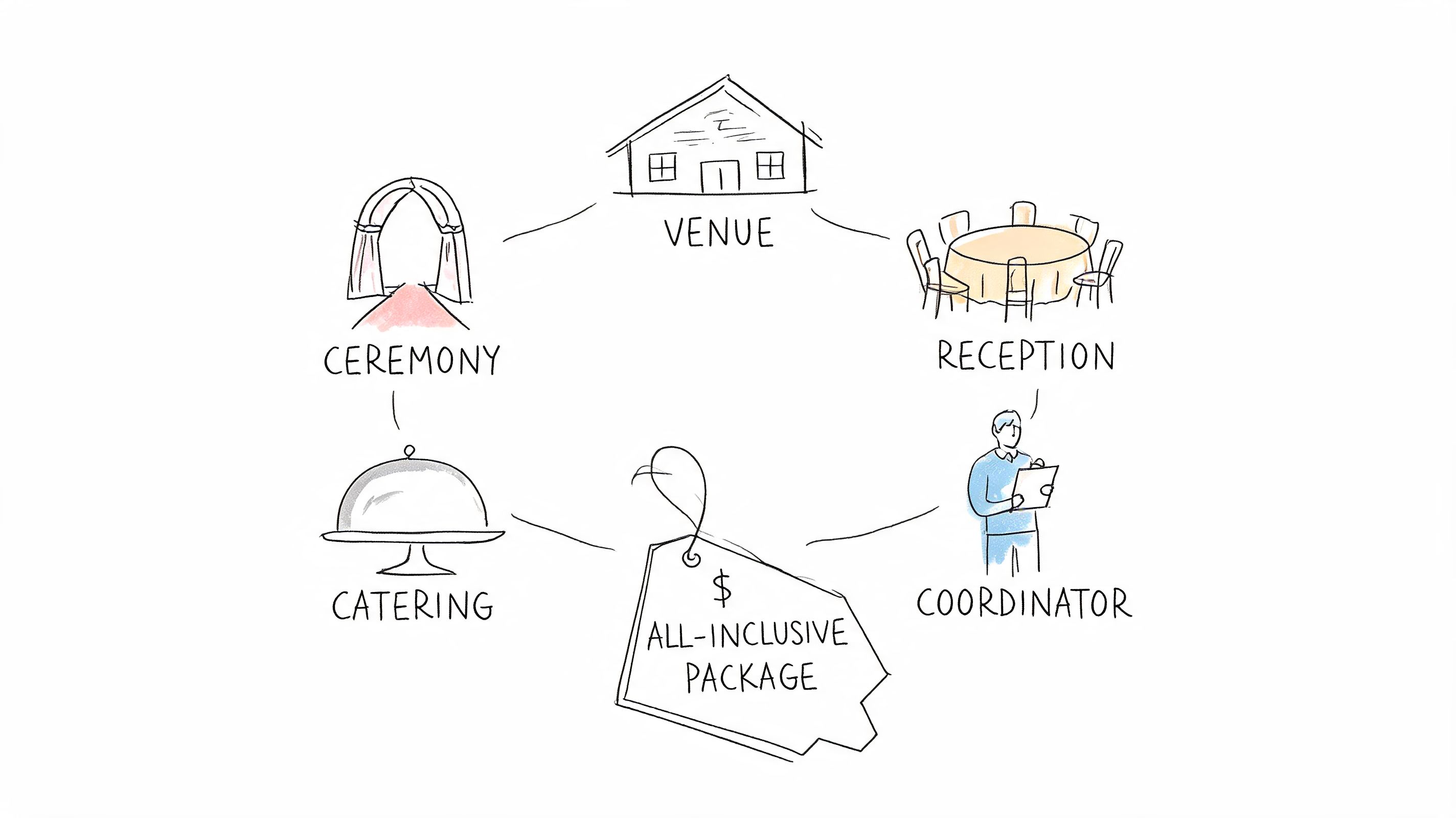
An all-inclusive wedding venue reduces that drift. It puts the biggest cost centers in one place, under one contract, with fewer handoffs and fewer surprises. That matters even more for couples trying to create a polished, destination-style wedding without paying major-city rates to get it.
For Chicago couples, especially those planning Indian or other cultural weddings, this is often where Midwest value becomes real. A high-value property outside the metro area can include catering, bar service, guest rooms, ceremony space, and staffing at a level that would cost far more in the city. The result often feels more generous to guests, not less. People arrive, settle in, and stay present. The day feels contained in a good way.
Bundled pricing also changes the planning experience.
An à la carte approach can work well for couples who want highly specific creative control and have time to manage many vendors. It also creates more invoices, more deadlines, and more room for missed details between teams. If the florist assumes one setup time and the rental company has another, someone absorbs that stress. Usually the couple does.
A strong package creates clarity early. Ask for a full itemized version, not a summary. If a venue cannot explain exactly what is included, the first number is only a starting point.
That document should answer practical questions. Does the price include ceremony chairs, linens, glassware, teardown, and staffing? Is coordination limited to the event day, or does the team handle vendor communication in advance? Are there guest rooms on site, and is there enough space for people to move comfortably between events?
These questions matter even more outside Chicago, where the right venue can do more of the work for you. A riverfront hotel or event property in Muscatine or the Quad Cities may give you the atmosphere couples often chase in destination markets, with more room to host, better guest flow, and less logistical sprawl. That is a budget decision, but it is also a feeling decision. Fewer location changes usually means a calmer day.
Before you sign, compare packages with a short checklist:
- Included services: Confirm whether catering, bar service, tables, chairs, linens, ceremony setup, and cleanup are in the base price.
- Planning support: Ask who owns the timeline, rehearsal details, and communication with outside vendors.
- Capacity flexibility: Check whether the room still feels right if your guest count shifts.
- Cultural flexibility: If you need a mandap, baraat access, multiple event blocks, or specialty catering coordination, ask directly.
- Guest experience: On-site lodging and shared event spaces often save money while making the weekend feel more connected.
The best package is rarely the one with the lowest starting number. It is the one that protects the experience, contains the hidden costs, and lets the wedding feel smooth from the first event to the last.
2. Embrace Weekday or Off-Season Wedding Dates
A couple from Chicago tours a riverfront venue outside the city and realizes the shift is not only geographic. It is financial. The same room that feels out of reach on a peak Saturday can suddenly support better food, stronger photography, or a longer celebration when the date moves to Friday, Sunday, or winter.
That trade-off matters. Date choice affects price, but it also shapes the pace of the day.
Weekday and off-season weddings often feel more intentional because the schedule has a clearer frame. Guests arrive knowing they made a real commitment. The day can feel calmer, especially for couples planning multi-event cultural weddings who want space for a welcome gathering, ceremony, and reception without paying major-metro Saturday rates at every turn.
For Chicago and Naperville couples considering Eastern Iowa or the Quad Cities, this is one of the strongest value plays in the Midwest. You can get the destination-style feeling people often want from a wedding weekend, but without the cost structure of downtown Chicago. A Thursday sangeet, Friday ceremony, or Sunday reception can open up better venues and better guest accommodations at the same time.
Timing changes the experience
A Friday evening wedding feels polished and social. A winter celebration indoors feels close and warm. A Sunday brunch reception feels relaxed in a way guests often remember.
None of those choices feels second-tier when the event is built around the date instead of treated like a compromise.
That is the important question to ask. Not whether a Saturday is more traditional, but whether your chosen date supports the kind of weekend you want to host.
Guests respond well to non-Saturday weddings when expectations are clear, travel is manageable, and the hospitality feels considered.
This approach can also help with guest flow. Some families would rather make one short trip and stay together for a full wedding weekend than rush through a single high-cost Saturday event. That is especially true for couples balancing Indian wedding events, extended family travel, and the desire to make the celebration feel generous without overspending.
If you are planning a smaller event around one of these alternate dates, it also helps to understand why smaller weddings feel different. The tone of the day changes when the room is more focused and the schedule has more breathing room.
Ask these questions early
Ask about date pricing with the same care you give the venue itself. Small calendar shifts can create meaningful savings and a better guest experience.
- Best-value dates: Ask about Thursday, Friday, Sunday, and slower-season weekends first.
- Seasonal differences: Confirm which months are priced lower and whether any package inclusions change.
- Ceremony timing: If you want outdoor photos or an outdoor ceremony, ask how daylight and weather affect the plan.
- Travel rhythm: Consider when Chicago-area guests would realistically leave, arrive, and check in.
- Where the savings go: Choose in advance what gets the extra budget. Better hospitality usually has more impact than extra décor.
Use the lower date cost with discipline. Put it into the parts of the wedding people experience, the meal, the music, the comfort of the room, and the time to enjoy each other. That is how a budget decision starts to feel like a luxury one.
3. Limit Your Guest List Strategically
Guest count is where many budgets come undone. Couples spend weeks debating flowers or invitations while avoiding the one decision that changes almost everything else.
Every added guest affects food, drinks, tables, chairs, linens, staffing, and often space selection. That's why trimming the list is usually more effective than trying to save around the edges.
The Knot notes that costs scale per attendee, and it's one of the clearest reasons many couples revise their original plans once real quotes start arriving. If you need a practical mindset shift, stop asking, “Who might be offended?” and start asking, “Who will shape how this day feels?”
Intimate doesn't mean underwhelming
Smaller weddings often feel better because the room relaxes. Conversations last longer. You see the people you invited. The day has less drift.
That's especially useful if you're comparing a large wedding venue with a more intimate reception venue, or considering whether a scenic hotel or riverfront property can host a smaller gathering with more warmth. Couples who are drawn to that format often find it helpful to read why smaller weddings feel different. The emotional tone changes when the guest list gets more intentional.
One planning gap I see often is that couples don't talk enough about the relational strain of money decisions. A planning review cited by The Mama Marketer's summary of wedding budget stress notes that budget disputes are a major stress point for many couples. That's a good reason to decide together what “intimate” means before family opinions enter the room.
A cleaner way to build the list
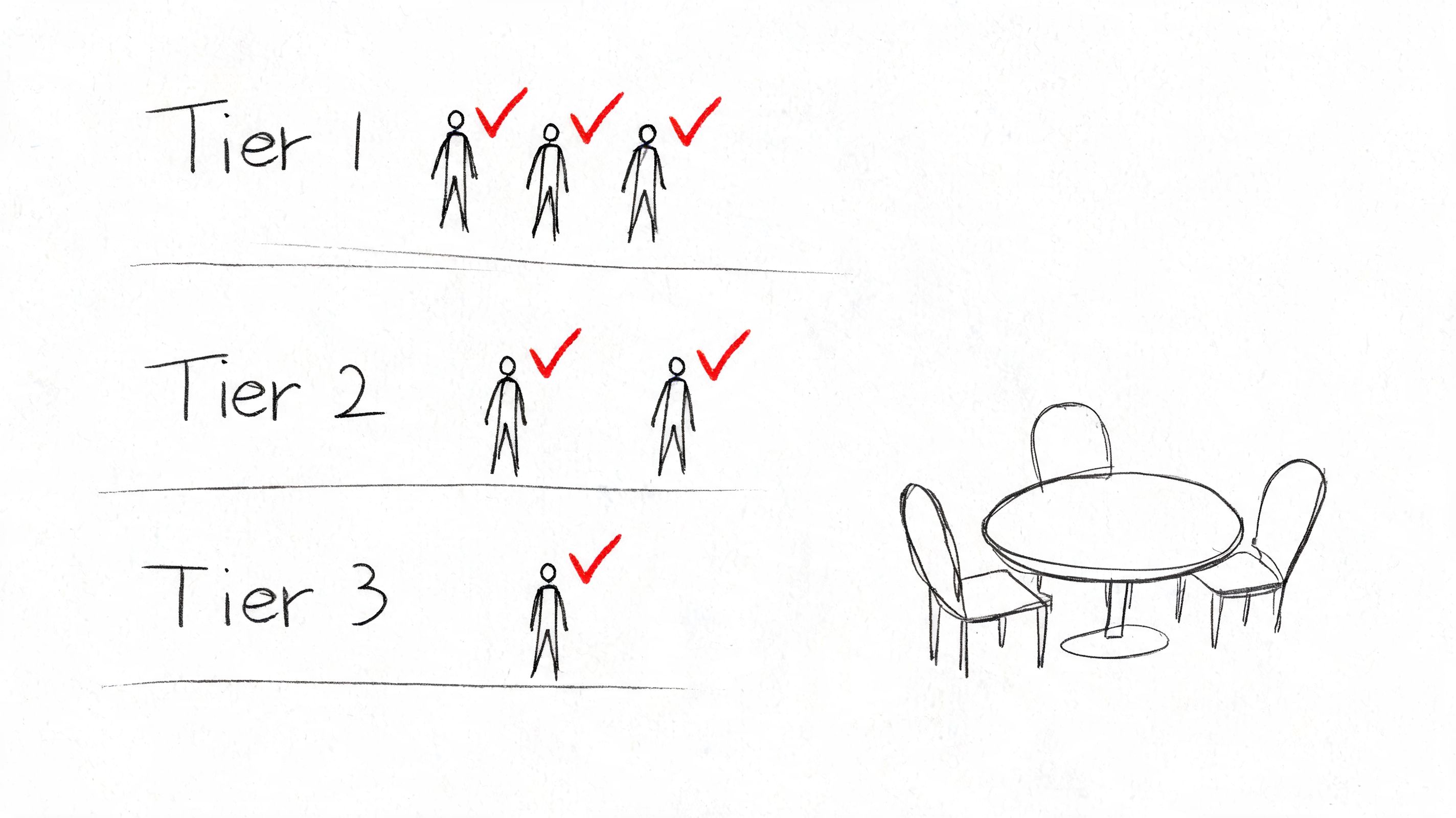
Try a tiered list before you look at venues.
- Must-have guests: The people you can't imagine getting married without.
- Strong hopes: People you want there, but who don't define the day.
- Nice additions: People you'd enjoy celebrating with, if budget and space allow.
One useful test: If removing ten guests would let you book the venue you really want, would you feel relief or regret? Relief usually tells you what to do.
This approach is especially helpful for cultural weddings, Indian wedding venue planning, and large family events where expectations can grow quickly. You don't have to reject tradition. You do have to decide where your emotional energy and budget are best spent.
4. Prioritize Your Budget and Invest in What Matters Most
Couples get into trouble when they spread money evenly across every line item. Weddings do not feel evenly experienced.
Guests remember a few things with real clarity. They remember how the room felt when they walked in. They remember whether dinner felt generous. They remember the energy on the dance floor. You remember the parts you cared about before planning ever started.
General budget benchmarks can be useful as a reference point, but they are only a reference point. They show where couples often spend. They do not tell you what matters most to you, your families, or the kind of celebration you want to host.
Make your trade-offs visible
Set your top three priorities first. Protect those categories. Let the rest play a supporting role.
If food and photography matter most, spend there on purpose. Cut back on custom paper goods, extra rentals, or décor pieces that only live in the room for a few hours. If the ceremony setting matters most, choose a place that already has presence and scale. A strong venue does part of the visual work for you.
That is one of the clearest advantages of planning outside a major metro. Couples from Chicago often want a wedding that feels refined, expansive, and destination-like, especially for multi-event or Indian wedding weekends. They can often get that feeling more efficiently by choosing a high-value Midwest property instead of paying city pricing for square footage, parking, and basic access. A well-chosen affordable wedding venue can free up room in the budget for the experiences people feel.
Luxury is often about restraint.
A ballroom with natural character, river views, or strong architecture needs less floral volume and fewer rented statement pieces. That changes the budget math quickly. The savings can move into guest hospitality, better photo coverage, or a food and beverage experience that feels generous all weekend.
A simple way to decide
Answer these two questions separately, then compare notes.
- What will still matter to us five years from now?
- What will shape how the day feels in real time?
Those answers usually bring clarity fast.
For many couples, the priorities come into focus here:
- Food and drink: Guests feel cared for when service is warm and the meal is satisfying.
- Photography: The flowers are gone the next morning. The images stay.
- Music and atmosphere: A beautiful room still needs energy.
- Venue setting: The right space can reduce spending in several other categories at once.
Skip the spending that comes from guilt or outside pressure. Favors, elaborate signage, and too many small upgrades rarely carry the emotional weight couples expect. A focused budget usually feels calmer, more generous, and more expensive than a distracted one.
5. Work with Local Vendors and Trusted Venue Relationships
A vendor who already knows the property saves more than time. They reduce mistakes.
That matters even more when the wedding is outside a major metro area by choice. Couples from Chicago often book a high-value Midwest venue to get more space, better hospitality, and a destination feel without major-city pricing. The right local team protects that advantage. They know the dock door, the service elevator, the ceremony backup plan, and how long room flips take in that building.
Familiarity changes the budget in quiet ways. A photographer who knows the light can move faster and need less scouting time. A florist who understands the room's scale can propose centerpieces that feel full without overspending. A DJ who has worked there before is less likely to bring an oversized setup or add avoidable labor costs.
Good vendors help couples stay on budget because they prevent expensive corrections. That is often more valuable than a low starting quote.
Why local knowledge matters in the Midwest
In Muscatine, Davenport, Bettendorf, Moline, Rock Island, and the broader Quad Cities, logistics are usually more practical than in Chicago. Parking is easier. Load-in is less chaotic. Timelines often have more breathing room. But distance still matters, especially for couples planning a multi-event cultural wedding from another city.
For Indian weddings and other celebrations with several events, vendor relationships become even more important. Hair and makeup needs an accurate start time. Catering needs realistic spacing between ceremony elements. Photography needs a team that understands family groupings, outfit changes, and how the day will flow. A local vendor who has handled that rhythm before can keep the weekend calm.
The cheapest proposal can still cost more. Revisions, late arrivals, extra rentals, and overtime charges usually show up after booking.
How to use venue referrals wisely
Ask a venue why they recommend someone. The answer matters. A strong referral usually comes down to reliability, communication, cultural familiarity, or proven performance in that space.
Use questions like these:
- Venue experience: How often have you worked at this property?
- Quote clarity: Are travel, setup, teardown, and delivery included?
- Event flow: How do you handle delays, room flips, or weather changes here?
- Cultural fit: Have you worked weddings with similar traditions, timelines, or family expectations?
- Design restraint: What do couples usually spend too much on in this venue?
That last question is especially useful. Experienced local vendors often know where to scale back without making the day feel smaller. For couples considering outdoor wedding ideas on a budget, that kind of advice can shape better decisions early.
A good local team gives you fewer surprises, steadier timing, and a wedding weekend that feels composed. That is part of the Midwest value proposition too. You are not only buying a better price. You are buying a setting and a vendor network that can make a destination-style celebration feel easier to host.
6. Simplify Décor Using the Venue's Natural Beauty
A beautiful venue can do work for you. That may be the most underrated budget strategy in wedding planning.
If the room has warm architectural character, strong natural light, river views, or a well-designed outdoor setting, you don't need to decorate over it. You need to support it. Couples often spend too much trying to create atmosphere that was already available in the venue they booked.
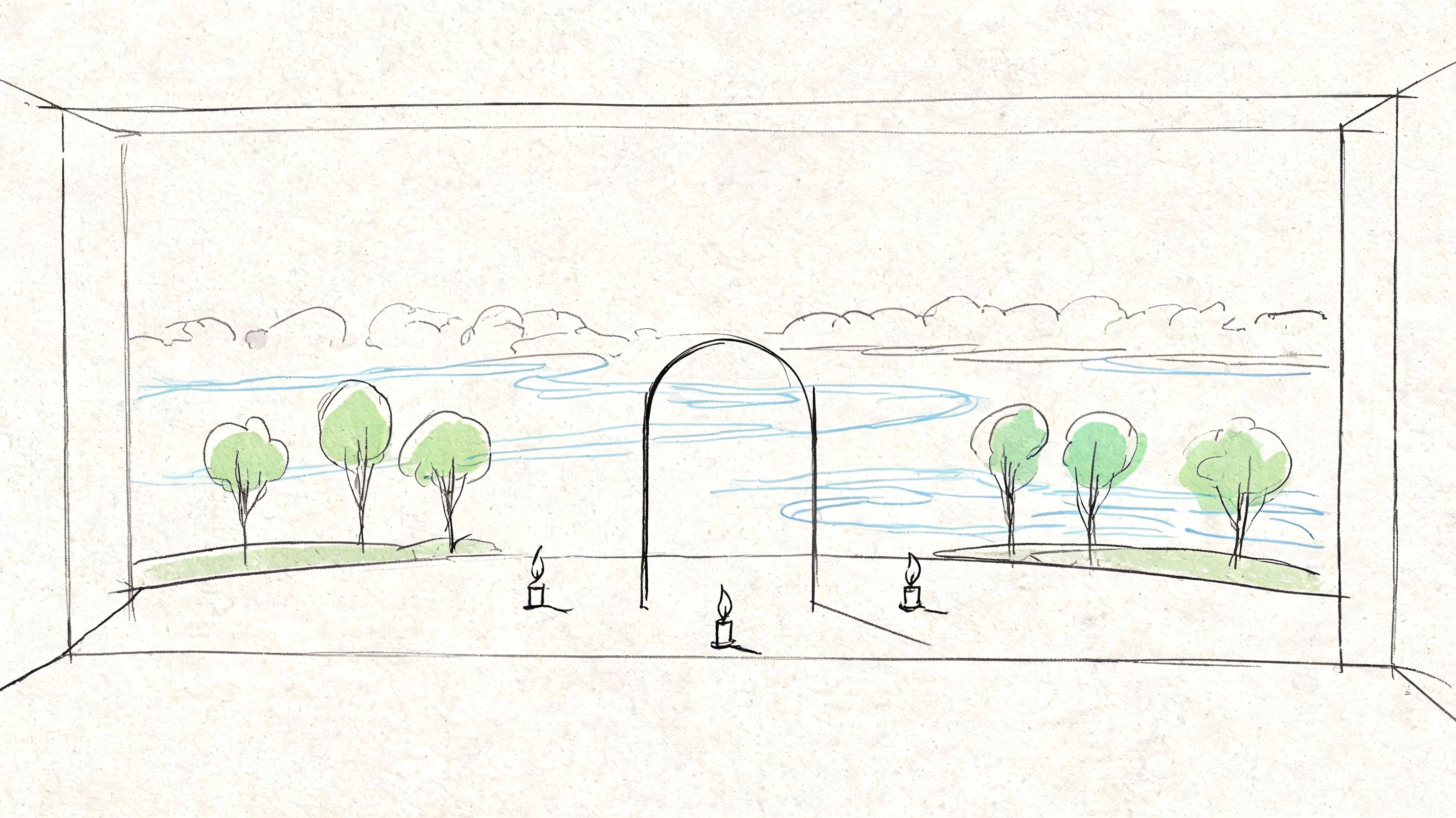
This is one reason scenic Midwest venues can offer such strong value. If you're choosing an outdoor wedding venue in Muscatine, a riverfront reception venue near Davenport, or a luxury wedding venue outside Chicago, built-in beauty can replace a surprising amount of rented décor.
Use the venue as the backdrop
Instead of asking, “What else do we need in this room?” ask, “What would make this room feel finished?”
That usually leads to better decisions. A single ceremony arch. Candlelight. Thoughtful linens. A restrained floral plan in the places guests will photograph and gather. The room stays breathable. The budget stays more controlled.
If you want examples of that approach, these outdoor wedding ideas on a budget show how a venue's setting can shape the look without forcing excess.
One gap in a lot of wedding advice is that décor is treated as if more always feels better. It often doesn't. Simpler design usually feels calmer and more expensive when the venue itself is doing the visual heavy lifting.
Where to spend and where to pull back
A few areas deserve focused attention:
- Ceremony focal point: Vows and photos happen at this central location.
- Guest tables: Keep them elegant, not crowded.
- Cocktail area: People linger here and notice atmosphere.
- Entrance moments: A welcome table or clean floral cue is often enough.
Then pull back everywhere else. Hallways don't need styling. Every chair doesn't need a treatment. Not every corner needs a floral piece.
A venue walk-through helps. Watch this kind of setup thinking in motion:
The goal isn't to make the room look empty. It's to make it feel intentional.
7. Negotiate and Bundle Services with Single Vendors
Bundling works because it reduces overlap. Fewer separate teams means fewer setup fees, fewer communication gaps, and fewer chances for one vendor to bill for time that another vendor could have covered.
This is especially useful for services that naturally connect. Catering and bar service. Photography and videography. Florals for ceremony and reception. Coordination attached to the venue itself.
Not every bundle is a better deal. Some are just packaged to sound easier. But when a vendor handles related services well, bundling can simplify both the budget and the timeline.
What to ask for in the quote
Request two versions when possible. One quote for the bundled package. One for the same services priced separately. That comparison reveals whether the bundle is real savings or just cleaner marketing.
If you're planning a cultural wedding, Indian wedding venue event, or large capacity wedding venue celebration with multiple moving parts, this becomes even more important. Long timelines and complex setups create more opportunities for duplicated labor if no one is coordinating the overlap.
A few direct questions help:
- Service scope: What exactly is included in each bundled offering
- Timeline ownership: Who handles setup, transitions, and breakdown
- Adjustment terms: Can you reduce or revise services later if plans change
- Quality consistency: If one company offers multiple services, who is delivering each one
- Contract detail: Are all inclusions and discounts listed clearly in writing
Ask vendors, “If we book these services together, what disappears from the process?” The best bundles remove friction, not just line items.
Where bundling usually makes sense
Venue-connected bundles are often the strongest. A reception venue that pairs coordination with catering usually has more control over the event flow than two separate companies would.
Photography and videography can also pair well when the team already works together. So can floral packages that cover personal flowers, ceremony pieces, and reception arrangements under one design plan.
Bundling isn't about buying more. It's about reducing duplication. That distinction matters.
8. Maximize Wedding Weekend Value with Multi-Event Celebrations
A wedding weekend sounds like a luxury idea, but in the right venue, it can be a budget strategy.
That's especially true when you're bringing guests from Chicago or other Illinois markets to a destination-style venue in the Midwest. If people are traveling anyway, one well-structured weekend often feels more generous than one very expensive day. The cost isn't only about expansion. It's about how you distribute the experience.
A venue with guest rooms, rehearsal dinner space, ceremony options, and brunch capability can turn travel into part of the event rather than a logistical burden. For a large wedding venue or cultural wedding venue, that kind of continuity matters. People know where to go. Families stay connected. The celebration has room to breathe.
Spread the experience, not the pressure
Not every event needs the same level of formality. That's where the value comes in.
A casual welcome gathering can replace pressure on the reception to do everything at once. A next-day brunch gives you real time with close family and out-of-town guests. If you're hosting a multi-day cultural celebration, one location can make transitions much easier for everyone involved.
The planning gap around weekday and micro-format weddings also points to a broader truth. Couples are increasingly open to alternatives that feel more efficient and more personal, as reflected in Sierra Storm Photography's summary of emerging budget wedding formats. The broader lesson is simple. You don't have to force every emotional moment into one compressed evening.
A weekend structure that works
Think in layers, not in spectacle.
- Welcome event: Keep it relaxed and easy for arriving guests.
- Main celebration: Put your full budget emphasis here.
- Next-day meal: Use it to slow down and connect.
- On-site lodging: This reduces transportation coordination and keeps the experience cohesive.
- Flexible guest counts: Not every guest has to attend every event.
For couples searching terms like event venue near me, wedding venue near Chicago, or large capacity wedding venue with lodging, this is often the hidden advantage of looking outside a major city. You may get more space, more time, and more usability from the location itself.
8-Point Budget Wedding Planning Comparison
| Option | Implementation Complexity 🔄 | Resource Requirements ⚡ | Savings Potential ⚡📊 | Expected Outcomes 📊⭐ | Ideal Use Cases 💡 | Key Advantages ⭐ |
|---|---|---|---|---|---|---|
| Choose an All-Inclusive Venue Package | Low, single contract, venue-managed coordination 🔄 | Moderate, upfront deposit, fewer vendor meetings ⚡ | Moderate–High, volume discounts, bundled value ⚡📊 | Predictable budget and lower coordination stress ⭐⭐⭐ | Couples wanting affordability and low planning burden | Transparent pricing; single point of contact; bundled services |
| Embrace Weekday or Off-Season Wedding Dates | Low, change of date planning only 🔄 | Low, fewer vendor conflicts, needs guest communication ⚡ | High, 20–40% typical savings ⚡📊 | Lower cost, better vendor availability, intimate feel ⭐⭐ | Budget-conscious couples willing to shift date/time | Significant savings; stronger negotiation leverage; more availability |
| Limit Your Guest List Strategically | Moderate, requires diplomatic communication 🔄 | Low, reduced catering, rentals, accommodations ⚡ | High, 30–50% typical reductions with smaller headcount ⚡📊 | More intimate event; higher per-guest experience ⭐⭐⭐ | Couples prioritizing intimacy and quality over size | Dramatic cost reduction; simpler logistics; reallocatable budget |
| Prioritize Your Budget, Invest in What Matters Most | Moderate, needs clear priorities and ongoing tracking 🔄 | Moderate, reallocate funds to 2–3 key areas ⚡ | Moderate, improves perceived value; depends on choices ⚡📊 | High satisfaction in prioritized areas; premium feel ⭐⭐⭐ | Couples with clear top priorities (photo, food, music) | Maximizes impact of spend; reduces regret; easier decisions |
| Leverage Local Vendors and Relationships | Low–Moderate, research & in-person meetings 🔄 | Low, less travel & logistical overhead ⚡ | Moderate, 15–25% typical savings (travel/referral) ⚡📊 | Smoother logistics; vendor familiarity with venue ⭐⭐ | Regional couples and venues with preferred lists | Lower travel fees; venue-savvy vendors; loyalty discounts |
| Simplify Décor Using the Venue's Natural Beauty | Low, minimal décor planning and setup 🔄 | Low, fewer décor vendors and rentals ⚡ | High, 40–60% décor budget savings typical ⚡📊 | Authentic, photography-friendly aesthetic with less effort ⭐⭐⭐ | Scenic venues; couples favoring minimal or natural looks | High visual impact for low cost; simpler setup; eco-friendly |
| Negotiate and Bundle Services with Single Vendors | Moderate, negotiation and vetting required 🔄 | Moderate, one vendor provides multiple services ⚡ | Moderate–High, 10–25% common bundle discounts ⚡📊 | Streamlined coordination and cohesive delivery ⭐⭐ | Couples seeking fewer vendors and better package rates | Package discounts; unified vision; simpler invoicing |
| Maximize Wedding Weekend Revenue with Multi-Event Celebrations | High, multi-day logistics and coordination 🔄 | High, more catering, lodging, transport, planning ⚡ | Moderate, per-person savings possible but overall spend ↑ ⚡📊 | Destination-style guest experience; higher perceived value ⭐⭐⭐ | Destination-style couples or many out-of-town guests | Enhanced guest experience; bundled lodging discounts; distributed costs |
Your Wedding Budget, Redefined
The best wedding budgets don't feel restrictive. They feel clear.
That's the difference couples usually notice once planning gets serious. A vague budget creates anxiety because every decision feels personal and every new quote feels like bad news. A clear budget does the opposite. It gives each decision context. You know what matters most, where you're flexible, and what you're willing to leave behind without regret.
That's why the most useful budget wedding planning tips are rarely about cutting for the sake of cutting. They're about matching the structure of the wedding to the feeling you want. If you want a calm day, simplify the vendor list. If you want a full guest experience, choose a venue that can host more than one part of the celebration. If you care most about food and photos, let the décor stay quieter. If cultural traditions matter, choose a venue that can support them without forcing workarounds.
It also helps to remember how common budget stress is. Couples often underestimate what the day will cost and then feel like they've failed when real numbers arrive. They haven't. They're just finally making decisions with full information. That's why strategic planning matters more than optimism. Start with priorities. Build the guest list realistically. Ask direct questions. Compare package structures, not just headline prices.
For many couples in Eastern Iowa and the Quad Cities, and for many Chicago-area couples looking outward, location itself becomes part of the strategy. A wedding venue outside a major metro can offer a different kind of value. More space. More flexibility. More room for an indoor wedding venue and an outdoor wedding venue experience in one property. More support for large celebrations, smaller weddings, or multi-day cultural events. Less pressure to spend heavily just to create atmosphere.
That's where a venue like The Merrill Hotel can fit naturally into the conversation. It offers riverfront event spaces, indoor and outdoor wedding settings, guest rooms, catering, and coordination in Muscatine, Iowa. For couples comparing wedding venues in the Midwest, especially those looking for destination-style value outside Chicago, that kind of setup can make budgeting simpler because the experience is already more integrated.
Your budget is not the part of wedding planning that limits the day. It's the part that helps you shape it well. Used properly, it protects what you care about most and removes the noise that doesn't belong.
If you're comparing a wedding venue in Muscatine, the Quad Cities, or a destination-style option outside Chicago, explore The Merrill Hotel to see indoor and outdoor event spaces, wedding weekend possibilities, and package options that can make planning feel more straightforward.