
You’re probably balancing two competing feelings right now. You want the bridal shower to feel polished and generous, but you also don’t want gifting to become awkward, overly formal, or disconnected from the couple’s real life.
That’s exactly why the bridal shower wishing well still works so well. When it’s handled with taste, it gives guests a simple way to offer support that feels useful, heartfelt, and easy. At a home shower, it can soften the gift table. At a luxury wedding venue, it can become part of a larger, beautifully coordinated event design. And for destination-style celebrations, cultural events, or multi-day weekends, it often solves practical problems that a traditional registry alone doesn’t.
The key is intention. A wishing well shouldn’t feel like a collection point. It should feel like one gracious part of the celebration, with the same care given to the flowers, the menu, and the guest experience.
Understanding the Bridal Shower Wishing Well
Hosts often arrive at the same question. The couple already has cookware, dishes, and the basics for daily life, so what kind of gift setup still feels thoughtful? A bridal shower wishing well answers that question elegantly when it’s framed as an invitation to support the couple’s next chapter, not as a request for cash.
The tradition has deeper roots than many people realize. According to the history of the wedding wishing well tradition), it traces back to 16th-century Brussels and became formalized in America in the early 1900s. It grew from the idea of a community “showering” a couple with support, often as an alternative to a traditional dowry. That history matters because it changes the tone. A wishing well isn’t just a box on a table. It’s a visible expression of collective goodwill.
Why it still feels relevant
That older spirit translates surprisingly well into modern events. Many couples are combining households before marriage, planning a honeymoon, saving for a home, or trying to avoid duplicate gifts. In those situations, a wishing well feels less like a workaround and more like good hosting.
It also works across very different event styles. A garden shower can use a basket with handwritten notes. A ballroom shower can use a sleek card box with customized signage. A brunch at a reception venue can present the well as part of a broader welcome display with florals and candles.
A well-designed wishing well works best when guests feel informed, never pressured.
The emotional difference between helpful and tacky
The line between graceful and uncomfortable usually comes down to presentation. If the well appears without explanation, guests may hesitate. If it’s described too aggressively, it can feel transactional. The best version lands in the middle. It says, in effect, your presence matters most, and if you’d like to contribute, here is a lovely and organized way to do so.
That’s why I don’t treat the bridal shower wishing well as a trend piece. I treat it as a hosting tool. Used well, it reduces confusion, honors tradition, and lets guests give in a way that matches the couple’s real needs.
A good wishing well also complements larger planning decisions. Whether the shower is happening in a private dining room, an indoor wedding venue, an outdoor wedding venue, or part of a full wedding weekend at a large wedding venue, the principle stays the same. Guests respond well to clarity, warmth, and thoughtful design.
Designing a Wishing Well That Complements Your Event
The physical setup matters more than most hosts expect. Guests decide in a few seconds whether the wishing well feels intentional, easy to use, and appropriate for the room. That judgment starts with the container, but it’s shaped just as much by placement, styling, and signage.
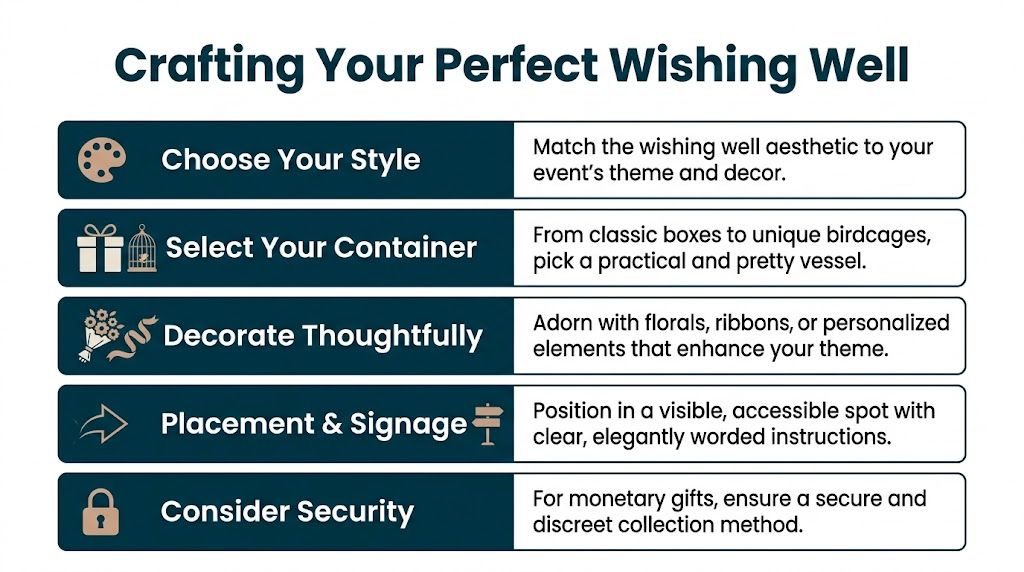
Choose a vessel that fits the room
The best wishing wells don’t look borrowed from another event. They belong to the space.
For a luxury wedding venue or refined reception venue, a clean acrylic box, lacquered card chest, or covered linen-wrapped box usually feels right. For a more relaxed event, a decorative basket, birdcage, or wooden keepsake box can work beautifully. The point isn’t to be clever for the sake of it. The point is to choose something guests understand immediately and trust.
A few practical matches tend to work well:
- Formal ballroom shower: mirrored box, acrylic card chest, or a monogrammed container
- Outdoor wedding venue celebration: woven basket, painted crate, or covered garden-style box
- Cultural wedding venue event: a vessel that reflects the celebration’s textiles, colors, or ceremonial details
- All-inclusive wedding venue weekend: a more polished lockable box that can move easily between spaces
If you want more inspiration for how shower details can align with the room, these bridal shower venue ideas are helpful for thinking through style and setting together.
Place it where guests naturally pause
Placement is the detail hosts get wrong most often. If the well is hidden in a corner, guests miss it. If it’s in the center of the room, it can feel too pointed. Event planner benchmarks cited by The Knot’s wishing well guidance recommend placing it where 85-90% of guests will see it, such as near the entrance or gift table. The same guidance notes that clear invitation wording can boost participation by 40%, with average contributions of $20-50 per attendee in Midwest markets like Iowa.
That placement advice tracks with real event flow. Guests are most comfortable using the wishing well when they encounter it during arrival, while greeting the host, or as they set down cards and gifts.
Practical rule: Put the wishing well in a visible location, but not in the room’s focal point. It should be easy to find and easy to pass naturally.
Style the surrounding area, not just the box
The well should sit within a small visual moment. A simple arrangement works best:
- The vessel itself
- A modest sign
- A few design elements such as florals, candles, ribbon, or a framed couple photo
That’s enough. Too much decor can make the setup feel theatrical, and too little can make it look accidental.
A strong setup usually includes:
- Readable signage: one short sentence is enough
- A writing surface nearby: useful if guests want to add a note
- A stable table: no wobble, no crowding, no clutter from unrelated items
In a large wedding venue, I also like to keep the wishing well station slightly offset from high-traffic beverage service so guests aren’t trying to manage envelopes, drinks, and greetings at the same time.
Graceful Wording for Your Wishing Well Invitations
Wording is where most hosts freeze. They’re not worried about the box. They’re worried about sounding presumptuous.
That concern is healthy. Good wording respects the guest first. It makes the option clear, explains the purpose if needed, and leaves room for every guest to participate in their own way. The tone should feel like hospitality, not instruction.
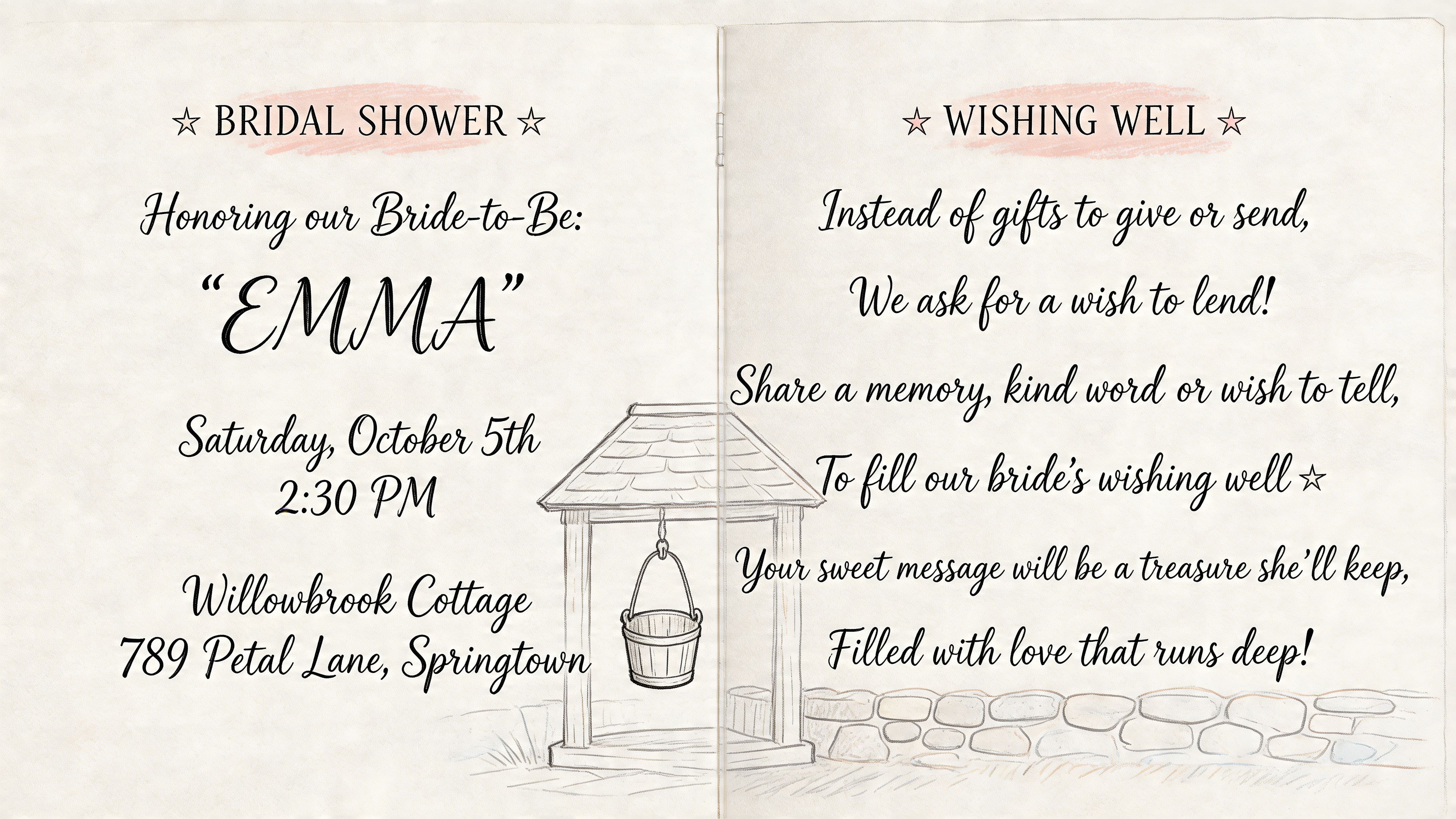
What the best wording does
The best invitation language does three things well:
- It leads with appreciation
- It makes the well optional
- It gives a simple reason, such as a honeymoon, home setup, or future plans
What doesn’t work is language that sounds demanding, overly cute, or overly detailed. Long poems can sometimes feel charming in the right crowd, but they can also distract from the message. For most showers, concise language feels more polished.
If you’re also planning printed inserts, cards, or faith-forward notes for the event, these bridal shower Bible verse ideas can help shape the tone of the paper suite without making the invitation feel crowded.
Wishing well wording templates
| Style | Wording Example |
|---|---|
| Subtle | Your presence at the shower is the greatest gift. For guests who would like to contribute to the couple’s next chapter, a wishing well will be available. |
| Warm and practical | The couple is so grateful to celebrate with you. If you’d like to bring a gift, contributions to the wishing well will be warmly appreciated. |
| Purpose-led | No gift is expected, but contributions to the wishing well are appreciated to help the couple’s honeymoon fund. |
| Traditional | In lieu of a traditional gift, guests who wish to do so may leave a card or contribution in the wishing well at the shower. |
| Digital-friendly | For guests traveling in or celebrating from afar, the wishing well details will also be available digitally. |
How to choose the right tone
A younger guest list may welcome direct, simple wording. A mixed-generation shower often benefits from a softer line that emphasizes presence first. Cultural context matters too. In some families, monetary giving is already familiar and doesn’t need much explanation. In others, a gentler approach helps everyone feel comfortable.
If the wording sounds like something the host would actually say aloud at the door, it’s probably right.
For digital invitations, keep the main message brief and place any extra explanation on an event page or follow-up note. For printed invitations, a small insert card often looks more elegant than crowding the main invitation.
The standard to aim for is simple. Guests should read it once and understand both the option and the spirit behind it.
Modern Wishing Well Ideas From Decor to Digital
A bridal shower wishing well doesn’t have to stop at a decorated box and a printed sign. Some of the most polished setups now combine physical presentation with digital convenience, especially when guests are traveling from Chicago, Naperville, Aurora, or elsewhere in Illinois for a destination-style weekend in the Quad Cities or broader Midwest.
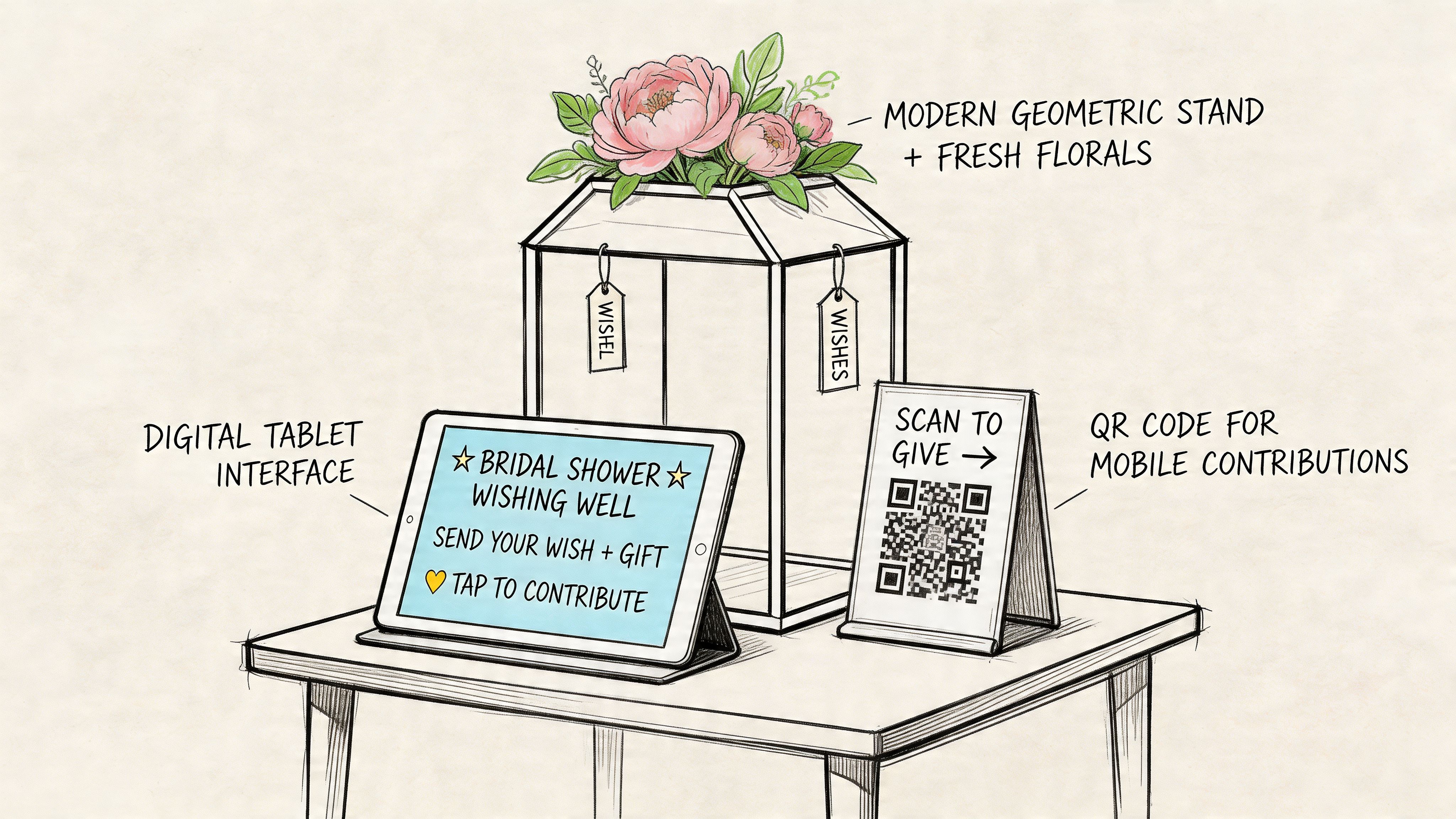
Decor that feels current, not crafty
The modern version of a wishing well is more curated than homemade. That doesn’t mean expensive. It means edited.
A polished display might include:
- A custom sign in the event font
- One floral moment that echoes centerpieces or ceremony flowers
- A tray for cards and envelopes
- Soft lighting from votives or a small lamp if the event is indoors
The key is to make the wishing well feel like part of the event design language. At a luxury wedding venue, that may mean acrylic, metal, or glass. At an outdoor wedding venue, it may lean more organic with natural textures and softer colors. At a cultural wedding venue, it may include motifs or patterns that connect to the broader wedding weekend.
Adding a digital option without losing warmth
Digital giving helps when guests don’t want to carry cash, are flying in, or prefer mobile payment. It also helps at larger or more dispersed events, where not every guest arrives with a card in hand.
A QR code can sit on a small framed sign or tabletop card. The design matters. If it looks like an afterthought, it feels transactional. If it’s integrated neatly into the display, guests accept it easily. Keep the destination simple, and test it before the event.
For a visual example of how digital setup can work in practice, this short video is useful:
Sustainable and experiential options
The wishing well is evolving most, according to WeddingWire’s 2026 bridal shower reporting as discussed here, 62% of Midwestern showers now include zero-waste elements. The same source notes that experiential wells, such as QR-linked charity donations, can boost guest satisfaction by 22% over cash-only options.
That tells hosts something important. Guests increasingly like contributions that feel meaningful, not merely efficient.
Some elegant options include:
- A honeymoon experience well tied to dinners, excursions, or travel moments
- A home project well framed around one shared goal
- A charity-linked option for couples who want part of the giving to reflect their values
- Seed-paper wishes or plantable cards for a softer, more sustainable display
The best modern wishing wells don’t erase tradition. They translate it into forms that fit how people gather and give now.
There is a trade-off, though. A highly experiential or charitable setup can feel more personal, but some guests still prefer the familiarity of a simple envelope and card. The strongest approach is often a hybrid one. Keep the physical wishing well for tangible gifts and notes, and add a tasteful digital path for convenience.
Adapting the Wishing Well for Large and Cultural Events
A wishing well becomes much more valuable as guest count, event complexity, and travel logistics increase. At a smaller shower, it’s mostly a nice touch. At a large wedding venue, multi-day celebration, or culturally layered event, it becomes an organizing tool.
That’s especially true for couples comparing a wedding venue in Muscatine, a reception venue in Davenport, a large wedding venue near Bettendorf, or a destination-style option for guests coming from Chicago or the broader Illinois market. Once a celebration includes multiple gatherings, varied guest arrivals, and formal attire changes, gift handling needs structure.
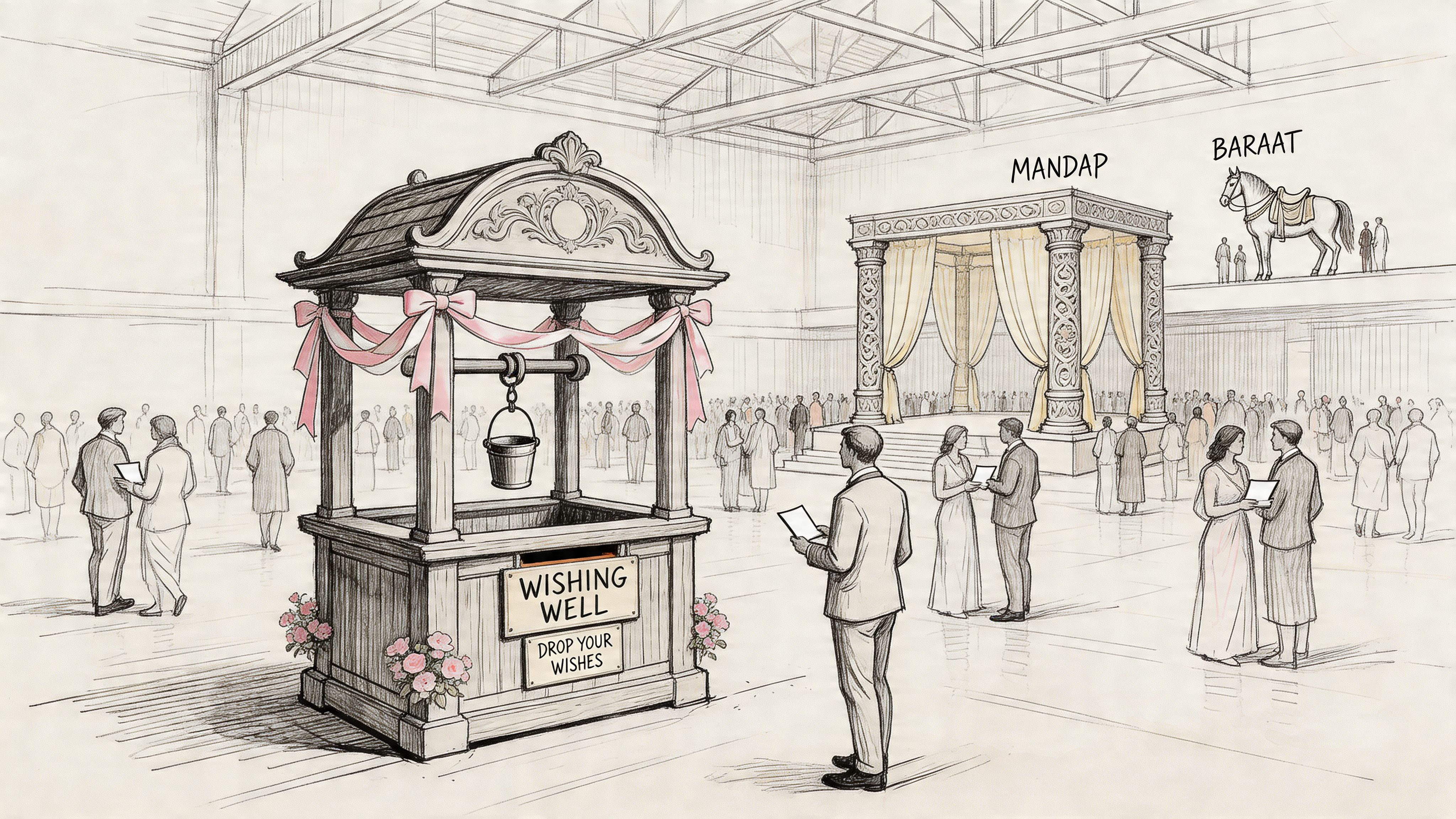
Why larger events benefit more from a formal setup
In a large-capacity event, guests don’t all enter at the same moment or through the same emotional rhythm. Some arrive early. Some come in between ceremonies. Some are meeting family members for the first time. A clearly designated wishing well creates a calm, predictable place for cards and contributions.
That matters in:
- Large wedding venues with multiple rooms
- Indoor wedding venues where cocktail space and ballroom space are separate
- Outdoor wedding venues where weather may shift traffic patterns
- All-inclusive wedding venues hosting rehearsal dinner, ceremony, reception, and brunch across one property
A loose card basket might work for a brunch of close friends. It rarely works well for a grander event. The more guests you have, the more the setup should communicate order.
Cultural weddings and the value of clarity
For many families, giving monetary gifts is already an established part of celebration. In Indian weddings, for example, monetary giving can sit naturally alongside ceremonial traditions and family hosting. In that context, a wishing well isn’t replacing custom. It’s giving custom a practical home.
That’s one reason flexible venues matter so much for cultural events. Families searching for an Indian wedding venue near Chicago, a cultural wedding venue in the Quad Cities, or a large capacity wedding venue outside the city often care about more than square footage. They need room for multi-part ceremonies, space for guest flow, and enough flexibility to support details like mandap placement, baraat logistics, outside vendor coordination, and gift management without friction.
At cultural events, the best setup honors the existing giving tradition rather than trying to modernize it beyond recognition.
A wishing well can be styled to match ceremonial colors, placed alongside a greeting area, or integrated into a family-hosted welcome table. That keeps it respectful and legible to guests across generations.
Multi-day events need one clear process
Destination-style celebrations often include guests moving between a bridal shower, mehndi, sangeet, rehearsal dinner, ceremony, and farewell brunch. In that setting, the question isn’t whether to use a wishing well. The question is where it lives, who manages it, and how it transitions between events.
A practical system looks like this:
- Choose one primary collection point for the main event where gifts are expected.
- Use matching signage across related events so guests recognize the setup.
- Assign one trusted point person who knows when the contents are checked and moved.
- Avoid shifting locations repeatedly unless staff or family are actively overseeing the transition.
For large gatherings, consistency matters more than novelty. Guests don’t need a different idea at every event. They need confidence that their card or contribution is going to the right place.
The venue question couples should ask
When couples tour an event venue near me, many ask about catering, guest count, and lodging first. They should. But for larger or cultural celebrations, gift logistics belong on that same list.
Ask whether the venue can accommodate:
- A dedicated gifting station
- Secure placement near a monitored entrance or reception area
- Smooth movement between ceremony and reception spaces
- Outside decor or cultural styling elements
- A weekend flow that supports more than one hosted event
That’s often the hidden difference between a venue that looks good in photos and one that handles complex celebrations well.
Managing Contributions and Showing Appreciation
Once the shower ends, the host’s job shifts from presentation to stewardship. This is the part guests don’t see, but it shapes how safe and well-run the event feels.
The first rule is simple. Never leave the wishing well unattended once guests begin arriving. One trusted person should know where the key is, where cards are moved if needed, and when the contents are collected. That person can be a host, planner, family member, or venue contact, but it should be one clearly identified adult, not a vague handoff between several people.
A clean post-event process
A practical sequence usually works best:
- Close the well promptly: once the event winds down, remove contents before breakdown becomes busy.
- Move contributions to a private space: don’t sort them at the guest table.
- Create a written record: note names and accompanying cards while details are fresh.
- Store everything together: cards, envelopes, and any related notes should stay with the record.
That record becomes invaluable later when thank-you notes are written and when the couple wants to track gifts accurately. If the couple is also building out a registry strategy, these ideas on good things to put on a wedding registry can help balance physical gifts with contribution-based giving.
Thank-you notes that feel personal
A wishing well gift deserves the same level of acknowledgment as a wrapped present. Don’t default to a generic line.
A strong thank-you note does three things:
- Names the gift or contribution
- Expresses genuine appreciation
- Mentions the future use if appropriate
For example, instead of “Thank you for your generosity,” write something closer to: thank you for your thoughtful contribution to our honeymoon fund and for celebrating with us at the shower. We felt so supported having you there.
Guests remember whether their generosity was acknowledged with care.
If the shower included notes, advice cards, or messages placed in or beside the bridal shower wishing well, mention those too. People appreciate knowing that what they wrote was read and valued, not merely collected with the envelopes.
Frequently Asked Questions About Wishing Wells
Is it tacky to have a bridal shower wishing well
No, not when it’s presented graciously. It becomes tacky only when the wording feels demanding or the setup feels like a cash prompt instead of part of thoughtful hosting.
Should guests still bring a gift if there’s a wishing well
A contribution to the wishing well is a gift. Guests shouldn’t feel they must do both unless they want to.
Can you have a registry and a wishing well at the same shower
Yes. That’s often the most comfortable arrangement because it gives guests options. Some prefer choosing a physical gift, while others prefer contributing in a more flexible way.
How much should someone put into a wishing well
There isn’t one correct amount. Guests should give according to their relationship with the couple and their own budget. The most important etiquette principle is willingness, not comparison.
Where should the wishing well go at the event
Place it somewhere guests will naturally see and approach without making it the visual center of the room. Near the entrance, welcome area, or gift table usually works best.
Can a wishing well work for a large or cultural event
Absolutely. In fact, it often works better at those events because it creates structure around gifting and helps guests understand where cards and contributions belong.
If you’re looking for a setting that can host a bridal shower, full wedding weekend, cultural celebration, or large reception with the same sense of ease, The Merrill Hotel offers a graceful riverfront experience for couples across Muscatine, the Quad Cities, and the wider Illinois and Midwest region. It’s an especially strong fit for hosts who want beautiful indoor and outdoor spaces, on-site lodging, polished dining, and the kind of calm coordination that makes every detail, including gifting traditions like a wishing well, feel effortless.