
When couples first consider a black tie wedding, there is often a quiet hesitation. The words themselves can sound formal, maybe even a little rigid. But what I have seen over hundreds of weekends here is that black tie is less about rules and much more about a feeling.
It is a way of signaling to your guests that this night is different. It is an invitation for everyone to step out of the everyday and into a moment that has been set apart. It is not a test of etiquette, but an atmosphere you build together.
When an invitation says black tie, guests understand they are being asked to be part of something significant. They show up with a different kind of energy. It shapes the entire day, from the moment they arrive along the river to the last song of the night.
What does black tie really mean for a wedding?
It helps to think of the dress code as a note you send ahead of time. A note that says, "This day matters to us, and you matter to us." It is a way of turning up the warmth and importance of the gathering.
Couples sometimes worry that this formality will feel cold, especially in a place like Muscatine where life is a bit more relaxed. What I see, time and again, is the opposite. When people are given a reason to dress in a way they rarely do, they rise to the occasion. The evening feels more momentous. More connected.
What I have seen is that the formality of a black tie event does not diminish the warmth. It elevates it. The care guests put into their attire is often reflected in the intention they bring to the celebration itself.
The decision is just a framework. It provides a container for all the personal, emotional, and wonderfully messy moments that make a wedding day feel real. The laughter is just as loud, the tears during the toasts are just as heartfelt, and the joy on the dance floor is just as free.
The elegance of black tie does not suppress these things. It holds them.
What should guests wear?
For guests, an invitation to a black tie event can sometimes bring a moment of uncertainty. It is much simpler than it sounds and is really about classic, elegant choices. This is not about passing a test; it is about feeling confident and ready to celebrate.
Here is a simple breakdown to help everyone feel comfortable.
| Attire Element | For Gentlemen | For Ladies |
|---|---|---|
| Main Attire | A black tuxedo jacket and matching trousers are the classic choice. A dark navy or midnight blue tuxedo is also perfectly acceptable. | A formal, floor-length gown is the most traditional option. A sophisticated cocktail dress or an elegant pantsuit can also be appropriate. |
| Shirt | A crisp white dress shirt with a pleated or bib front. | N/A |
| Footwear | Black patent leather shoes are standard. Well-polished black dress shoes work well, too. | Formal heels, elegant flats, or dressy sandals. |
| Accessories | A black bow tie is the standard. Cufflinks and optional suspenders are common. A cummerbund is traditional but not always required today. | A small evening bag or clutch. Tasteful jewelry that complements the outfit—think simple and elegant. |
When in doubt, lean toward classic and elegant.
Where did the idea of black tie come from?
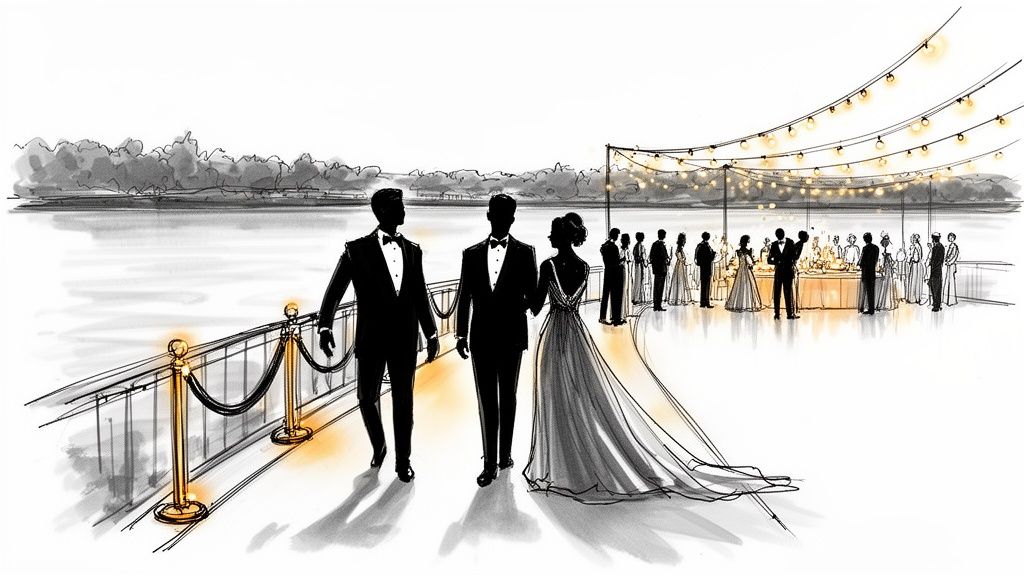
Sometimes knowing the story behind a tradition makes it feel less intimidating. It helps to remember that black tie was once the relaxed option.
Before it, the only choice for a truly formal evening was “white tie.” It was a much tougher dress code, with tailcoats and specific accessories that took a lot of work.
Black tie showed up in the late 1800s as a more comfortable, slightly less buttoned-up way for people to gather at night. It was created for dinners and social events, not the most formal state occasions.
The first dinner jackets—the heart of black tie—were a little shocking at first. They were not the expected tailcoats. But they were also more practical for an evening spent simply talking and dining with friends.
The real point of black tie has always been to make an evening feel separate from the everyday. It is a tradition born not from rules, but from our need to celebrate important moments together.
This new style caught on because it filled a gap. It let people mark an occasion as important without all the ceremony of white tie. Over the years, the tradition kept evolving. You can get lost in the details of its evolution on Wikipedia, but the spirit of refined comfort remains.
Understanding this story seems to reassure couples. It shows that black tie is not one set of unchanging rules. It is a tradition that has always bent to fit the times. That gives you the freedom to make it your own, ensuring the formality serves the warmth of your day, not the other way around.
How do we word the dress code for guests?
How you talk about the dress code is one of those small, quiet details that sets the tone for everything else. You want to be clear, but not demanding. You want to guide your guests, but not add pressure.
From what I have seen, the best approach feels less like a rule and more like an invitation. It helps people feel ready and excited, not stressed about what to pack—especially for those traveling in from the Quad Cities or Chicago for a full Muscatine weekend.
The clearest wording is almost always the simplest. A short, direct phrase on your invitation or wedding website is really all it takes.
- Black Tie: This is direct and classic. Guests understand it means tuxedos and floor-length gowns, and it immediately signals the kind of evening you are creating.
- Black Tie Optional: This phrase gives people a little room. It says the night is formal and a tuxedo is welcome, but a dark suit and tie are just as appropriate. It is a thoughtful way to acknowledge that not everyone owns a tux.
- Formal Attire: This is a slightly softer way to signal the same level of formality. It suggests dark suits or tuxedos and long dresses without being quite as specific.
Most couples put this at the bottom of the main invitation or on a details card. Adding a small section to your wedding website is also a nice touch.
There is a moment when a guest looks at an invitation and wonders, "What should I wear?" Your role is just to answer that question with calm clarity. It is an act of care, not a demand.
A simple sentence on your website can also go a long way: "We would love for you to join us in black tie attire, but most importantly, we want you to feel comfortable and ready to celebrate with us."
It holds onto the formality of the event while keeping the focus right where it belongs—on having your favorite people in the room. You can find more of our thoughts on the rich history of black tie or a related style, cocktail attire wedding, if you are still exploring. In the end, it is all about making your guests feel welcomed.
What details create a black tie feeling?
The feeling of a black tie event is something you notice. It settles in long before anyone adjusts a tuxedo or zips up a gown. I have seen it built from a hundred small, intentional choices that all add up.
That feeling can start with the invitation itself. A heavier paper stock or a spare, elegant design sends a subtle message. It suggests what is coming has been thought through.
From the moment guests arrive, those details continue. It might be the music that meets them at the door—not so loud that it overpowers, but present enough to set a mood. Often, it is a live musician, like a string duo or a pianist, playing something that feels both refined and welcoming.
The Flow of the Evening
The pace of a black tie wedding is often different. There is an unhurried grace to it. The best timelines I have seen always have more breathing room built in, which is a real kindness to the couple and their guests.
This slower rhythm allows for longer, more genuine conversations. It means the cocktail hour is not just a rush to the dinner table, but a distinct and memorable part of the celebration.
What I have seen is that the most successful black tie events are not the most rigid. They are the ones that allow time to unfold naturally, giving guests the space to simply be present and enjoy one another’s company.
This relaxed timing carries through the rest of the night. A plated dinner service, for instance, encourages guests to settle in. It turns the meal into a shared experience, giving toasts more space to land.
The Atmosphere in the Room
Beyond the schedule, the physical environment plays a huge role. The choices here are about creating an atmosphere that feels both elevated and warm, never cold or stiff.
- Lighting is everything. It is one of the most powerful tools for shaping a mood. Soft, warm light from candles, uplighting, and chandeliers makes a room feel instantly more intimate. If you are curious, you can find our thoughts on wedding reception lighting ideas.
- Linens and Place Settings. A floor-length linen on every table immediately signals a certain level of formality. The weight of the fabric and the quality of the flatware all contribute.
- Thoughtful Centerpieces. Floral arrangements for a black tie event tend to feel elegant and structured. But the real key is that they do not get in the way, encouraging connection.
It is the sum of all these parts—the music, the pace, the lighting, the service—that creates the true black tie feeling. It is a sense of being wrapped in an evening where every detail was considered with warmth and intention.
Can a formal wedding still feel warm?
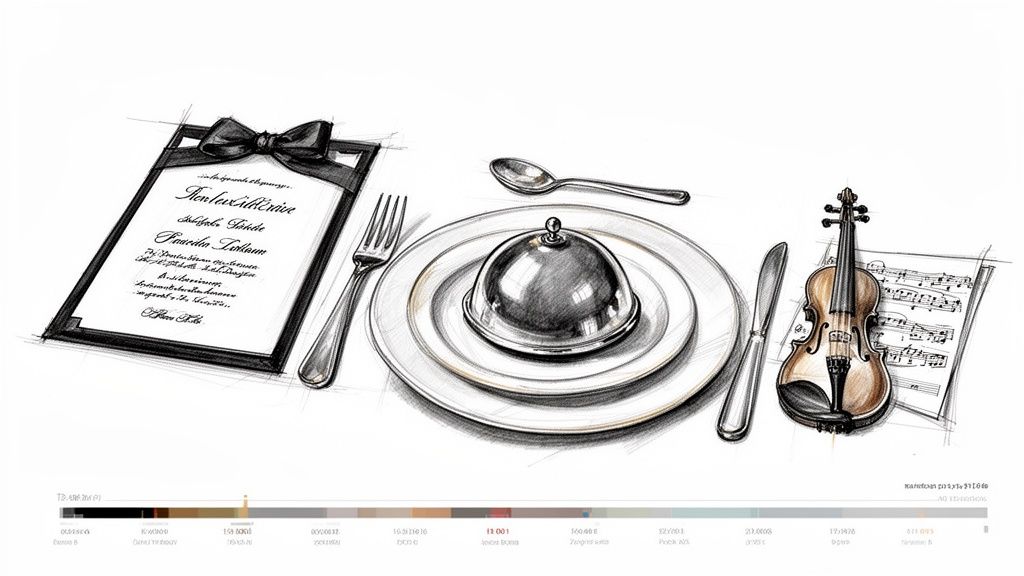
It is a quiet worry couples have. That by choosing black tie for their wedding, the day might feel stiff. Impersonal. There is a fear that the formality will somehow cool the warmth of the celebration.
What I have seen, over and over again, is the opposite. The formality does not erase the warmth. It gives it a beautiful place to land.
When you invite people to dress in a way they rarely do, it signals that this day is different. Guests seem to rise to the occasion, bringing a certain kind of energy with them. It feels less like a performance and more like a shared agreement to honor the moment.
The Heart of the Day Is Always You
A dress code is just a backdrop. It is a lovely frame, but it is not the picture. The real heart of any wedding, formal or not, is always the two people at the center of it.
That emotional core is built from moments the dress code never touches.
It is in the way you look at each other during the ceremony. It is in the unsteady, heartfelt voices of your parents and friends as they give their toasts. It is in the music you chose for your first dance and the laughter that erupts when a favorite song comes on later.
These are the things that make a wedding feel warm. They are the moments people carry with them long after they have put the formalwear away.
The most beautiful black tie events I have witnessed are the ones where the couple’s personality shines brightest. The elegance of the attire simply elevates the personal, human moments happening all around.
Formality and warmth are not opposites. They can exist together beautifully. The warmth comes from you. The formality just gives it a more memorable stage. Your personal touches—the photos on display, the inside jokes shared—are what will fill the room with genuine feeling. For more thoughts on this, you may appreciate our guide to intimate wedding reception ideas.
It helps to remember that your love story is always the main event. A black tie dress code just gives it the respectful setting it deserves.
A Few Quiet Questions About Black Tie Events
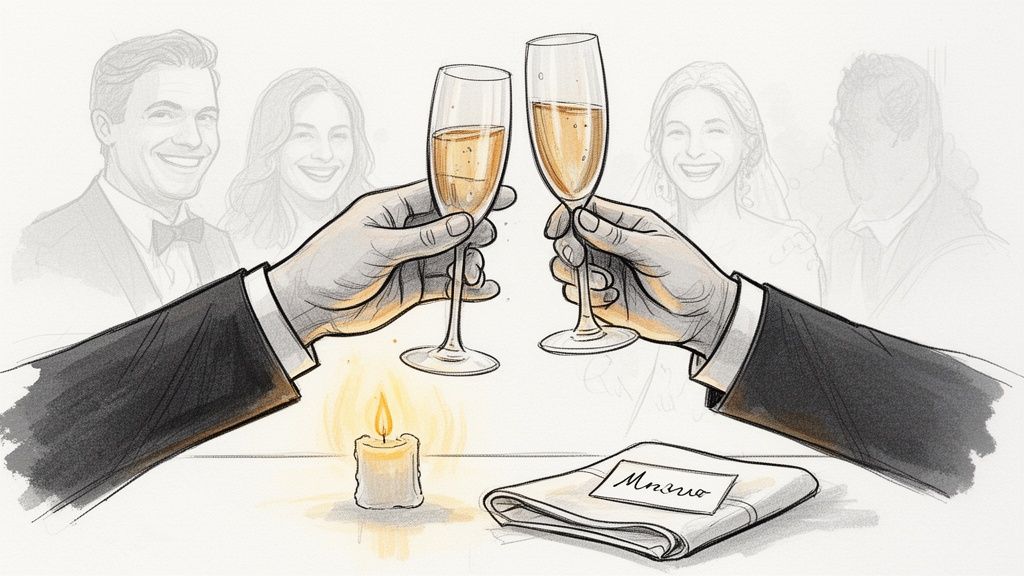
As couples start to imagine the feeling they want for their day, a few quiet questions about black tie events almost always come up. They are thoughtful questions, mostly about making sure everyone feels comfortable and that the day still feels like theirs.
I have heard these same worries in gentle tones over the years. My hope is that hearing them said out loud, along with a few thoughts from what I have seen, brings a little calm.
Will my guests feel stressed or uncomfortable?
This is usually the first concern, and it comes from a place of real care. The worry is that asking guests to wear formal attire will feel like a burden.
What I have seen happen is that guests appreciate the clarity. When an invitation is clear, it removes the guesswork and the quiet anxiety of being underdressed. It gives them a chance to step into the elegance of the day.
Many couples find it helpful to offer a “Black Tie Optional” choice. It communicates the formality while giving guests the grace to choose a dark suit if that is more comfortable for them.
It helps to remember you are not giving an order. You are painting a picture of the evening you hope to create and inviting your guests to be a part of it.
Does a black tie wedding cost more?
This is another practical and important question. It is true that some things associated with formal weddings can have higher costs, but it does not have to be that way. The feeling of a black tie event comes from thoughtful choices, not just expensive ones.
The most impactful details are often about atmosphere. Things like soft, warm lighting, floor-length linens, and an unhurried timeline cost very little, but they add so much to a feeling of elegance and care.
Couples are often surprised to learn how adaptable the tradition can be. The formality is in the style of service and the intention behind it.
How do we make it feel like us?
This is the most important question of all. There is a fear that a formal dress code will overshadow your personality.
But the opposite is usually true. The formality of black tie events creates a beautiful, consistent backdrop. Against that backdrop, every personal touch—every inside joke in a toast, every hand-picked song, every heartfelt hug—stands out even more.
The elegance of the setting does not quiet your story. It amplifies it. Your warmth, your humor, and your love for each other will always be the brightest things in the room.
At The Merrill Hotel, we have seen how these details come together to create a day that is both elegant and deeply personal. We are here to help you find that balance. If you would like to see how our spaces feel, we would be glad to show you around.