
Choosing a menu can feel like one of the loudest decisions you have to make. There are so many opinions and options. But the question that seems to matter most isn't just about what you serve, but how it will feel to everyone in the room. Will the meal encourage conversation? Will it feel formal and elegant, or relaxed and communal? The way you serve the food sets the tone for the entire reception.
The most memorable wedding food I have seen isn’t about trends. It’s about creating a certain kind of warmth, a feeling of being cared for. It brings people together at a table, letting them settle in and truly be present. The meal becomes a quiet, grounding part of the day, a moment of calm shared between the bigger events. It helps to remember that the goal is simply to nourish your guests and give them a reason to linger and talk. From there, the right choices often become much clearer.
This isn't a checklist, but a way to explore those choices. We can look at different styles, from plated dinners that feel timeless to family-style meals that invite sharing. We can also consider how the seasons here in Muscatine can influence a menu, making ingredients feel more intentional. The goal is to find the approach that feels most like you.
What if we want a formal, seated dinner?
Many couples I speak with want their menu to feel personal and connected to the place they have chosen. A plated, farm-to-table dinner accomplishes this with a quiet grace. Each course is prepared with intention and served to your guests with care. This approach brings a sense of calm formality to the reception and allows everyone to remain seated and connected.
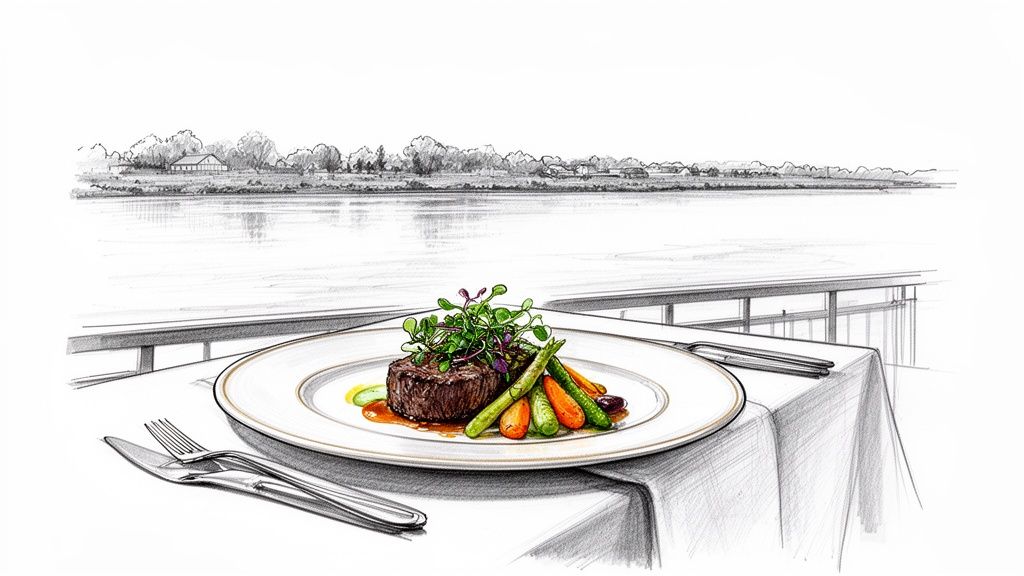
Here along the Mississippi, the menu can reflect the seasons in a very real way. I've seen things like Iowa beef tenderloin paired with vegetables harvested just miles away, or heritage pork that tells a story of the region’s farming tradition. It’s one of the most direct ways to share the best of our local landscape with your guests. The food tastes like here.
A few things to keep in mind
To make a plated dinner feel seamless, a little forethought helps.
- Most couples find that offering two or three protein choices, plus a vegetarian option, strikes the right balance between variety and efficient service.
- It helps to speak with our culinary team about two or three months beforehand to finalize your seasonal selections.
- I have seen it work well when servers are briefed on the details of each dish. It adds a lovely touch when they can tell guests what they are eating and where it came from.
Could we do something more casual, like a brunch?
Not every wedding celebration needs to happen after sunset. I’ve seen a growing number of couples embrace the relaxed, bright energy of a brunch reception. This approach feels less like a formal dinner and more like a cheerful, extended gathering. It allows for a more casual flow and encourages mingling in a very natural way.
This style works beautifully for morning ceremonies or as a next-day farewell for guests. Think of things like locally sourced eggs for a savory dish, fresh pastries from a Quad Cities bakery, and perhaps a carving station. A brunch menu feels both comforting and a little indulgent. It’s a lovely, gentle way to celebrate, especially with the morning light coming in over the river.
A few things to keep in mind
To make a brunch reception feel special, a few details make a difference.
- Most couples find that scheduling the brunch between 10 AM and 2 PM works best. This timing allows for a relaxed morning.
- A mimosa or Bloody Mary bar is a simple addition that I’ve seen bring a lot of joy to the occasion. It gives the event a celebratory feel.
- It helps to offer a mix of both hot and cold items. Things like smoked salmon, fresh fruit, and artisanal breads complement warmer dishes.
How can we make the meal feel more communal?
Some of the warmest receptions I have seen are built around a family-style meal. When large platters are passed around each table, it brings a natural sense of community to the room. It feels less like a formal event and more like an intimate family dinner, encouraging conversation as guests share food. It is a quiet way to foster connection.
This style resonates deeply here in the Midwest, where sharing a meal is a sign of welcome. Imagine tables laden with platters of roasted chicken and potatoes, or bowls of fresh pasta. It creates a relaxed and generous atmosphere for couples who value a warm, communal experience over formal service.
A few things to keep in mind
A successful family-style service feels effortless, but it benefits from a little planning.
- To ensure everyone has enough, it helps to plan for two or three main dishes per table of eight to ten guests. This provides variety without overwhelming the table.
- I have noticed it works well when servers are mindful of placing platters within easy reach of all guests.
- The relaxed nature of this service pairs beautifully with more casual centerpieces. The food itself becomes part of the decor. You can learn more about planning a family-style wedding dinner if this approach feels right for you.
What if we prefer appetizers and mingling to a sit-down dinner?
For couples who want the reception to feel fluid and social from the start, a cocktail hour with substantial appetizers is a wonderful choice. It blends the elegance of passed hors d'oeuvres with the variety of stationary displays, encouraging guests to mingle and graze at their own pace. This approach feels less like a prelude to dinner and more like a main event in itself.
Here, I’ve seen this work especially well when couples use both our indoor and outdoor spaces along the river. Guests can enjoy grilled skewers on the patio while also visiting a beautiful charcuterie and local cheese station inside. It creates a dynamic, interactive atmosphere where conversation flows easily. The experience feels generous and unhurried. For more specific ideas, you might find some helpful appetizer ideas for your wedding.
A few things to keep in mind
A well-planned cocktail reception feels effortless to guests. A little coordination makes that happen.
- It helps to place food and bar stations in different areas of the venue. This prevents crowding and invites guests to circulate.
- If this is the main food event, planning for about 10-12 appetizer pieces per guest is a good guideline.
- I find that having staff rotate the passed appetizer trays with new items every 15-20 minutes keeps the energy up.
Can we have something warm and comforting, like a BBQ?
There is a comfortable elegance to a well-done BBQ that I see couples drawn to more and more. It feels both celebratory and relaxed. This isn’t just about casual dining; it’s about creating a warm, communal atmosphere. It’s a wonderful way to honor our Midwest grilling culture with a sophisticated presentation that still feels easygoing.
This approach works especially well for riverside receptions, where the laid-back mood of the water complements the menu. Imagine slow-smoked Iowa brisket or pulled pork served alongside a beautifully arranged bar of classic sides. It’s familiar, it’s comforting, and when done with intention, it makes everyone feel right at home.
A few things to keep in mind
A successful BBQ service is all about flow and flavor.
- We often partner with local Iowa pit masters to bring in that authentic smoke-pit taste that is hard to replicate.
- It helps to plan for about 0.5 to 0.75 pounds of smoked meat per guest. Offering four or five distinct sides, including vegetarian choices, ensures there is something for everyone.
- I’ve seen it work best when the sides bar is set up in a logical sequence to prevent guests from creating a bottleneck.
What about a buffet that feels more special?
For many couples, the goal is to create a feeling of abundance and ease. A buffet with dedicated carving stations does this exceptionally well. It allows guests to move at their own pace and choose what appeals to them, while the staffed stations add a touch of personal service. It’s a practical approach that feels both generous and interactive.
This style works particularly well for larger weddings. I’ve seen it create a wonderful energy in the room, especially with dual carving stations for something like prime rib and Iowa pork loin. It combines the efficiency of a buffet with the elevated experience of having a chef prepare a plate just for you.
A few things to keep in mind
A well-organized buffet makes all the difference for your guests.
- It helps to arrange the line logically, starting with plates and cold items, moving to hot sides, and placing the carving stations near the end.
- Simple, elegant labels for each dish are incredibly helpful. Noting common allergens or dietary details like "gluten-free" or "vegetarian" is a thoughtful touch.
- Our team ensures everything is kept at its proper temperature, so the last guest’s meal is just as good as the first.
Is a cheese board enough for a light reception?
A beautifully arranged board of cheeses, cured meats, fruits, and breads is more than just food; it’s an invitation for guests to slow down and connect. I’ve noticed that when a couple chooses a grazing-style display, it naturally encourages mingling during cocktail hour or a more relaxed reception. It has a visual elegance that feels both generous and effortless.
This style works particularly well here because it can showcase the best of our region. We often source artisanal cheeses and heritage cured meats from producers in Iowa and Illinois, turning the display into a quiet map of Midwest flavors. Placed on our riverfront terrace tables, it becomes a focal point that is both sophisticated and approachable.
A few things to keep in mind
To get the most from a charcuterie display, a little planning goes a long way.
- We arrange the boards just an hour or two before serving to ensure everything looks and tastes its best.
- For an appetizer, planning on two to three ounces of meat and cheese per guest is a good measure.
- It helps to have someone refresh the boards every 45 to 60 minutes. This maintains the visual appeal and ensures everything stays well-stocked.
How do we make the food interactive and fun?
Some of the most memorable receptions I have seen are the ones that invite a little bit of fun into the meal. A build-your-own taco bar is a wonderful way to do this. It replaces the formality of a plated dinner with a relaxed, interactive energy, encouraging guests to mingle and create a plate that is exactly to their taste. This approach feels like a shared, celebratory feast.
This style of service is a natural fit for our local flavors, with options like slow-cooked carnitas or seasoned Iowa beef alongside fresh salsas and toppings. It is one of the easiest ways to ensure everyone finds something they truly enjoy. It is personal, engaging, and genuinely enjoyable for everyone. For those considering this style, there are more insights on how food stations for weddings can elevate the guest experience.
A few things to keep in mind
A successful interactive bar is all about flow and thoughtful preparation.
- Providing two or three proteins, including a vegetarian option, usually covers all preferences. Pair these with six to eight toppings.
- I have seen it work best when the station is set up logically. Guests should start with their base, move to proteins, then toppings, and finish with sauces.
- Our culinary team uses warming lamps and proper chilling methods to ensure every ingredient stays at the correct temperature.
Is there a way to offer both meat and seafood?
For couples who want to offer a truly special dining experience, a dual-protein plate is a memorable choice. Surf and turf brings together the best of both worlds, often pairing a rich cut of beef with delicate seafood. This approach removes the need for guests to choose a single entrée and instead presents a complete, celebratory meal that feels both generous and refined.
This style of dining feels right at home here. I have seen our culinary team create beautiful pairings like a classic Iowa beef tenderloin with Atlantic salmon or seared scallops. It offers variety on a single plate and elevates the reception meal into something distinct. It's a way to honor different tastes while maintaining the seamless flow of a plated service.
A few things to keep in mind
A dual-protein plate requires careful coordination to feel effortless.
- It's helpful to discuss protein options with our team about three months in advance to secure the best suppliers.
- The most successful pairings include lighter vegetable sides that complement the richness of two proteins without overwhelming the palate.
- Our kitchen’s expertise is key here. Coordinating the cooking of two very different proteins so they arrive at the table at the perfect temperature is a detail we manage carefully.
Can we include a special family recipe?
Some of the most memorable meals I’ve seen are those that tell a story. Integrating a family recipe or a dish that honors your heritage is a deeply personal way to do this. It’s a quiet nod to where you come from, transforming a part of your menu into something that feels like home. This approach makes your celebration feel grounded in tradition and shared history.
Here in the Midwest, family roots run deep. I've seen couples from Iowa farm families serve a special corn pudding from a grandparent’s recipe, or share a specific pasta that has been part of their celebrations for generations. It’s one of the most sincere ways to make your wedding food truly your own, offering guests more than just a meal, but a piece of your story.
A few things to keep in mind
To bring a family dish to your wedding menu, a bit of collaboration is key.
- It helps to talk with our culinary team early on about the recipe and its significance. Providing the recipe and any family notes allows us to honor it authentically.
- We always schedule a tasting for the heritage dish. It’s a chance for you to ensure the flavor is just right.
- A small note on the menu or a table card explaining the dish's origin is a lovely touch. It lets guests in on the story.
What are some dessert options besides cake?
While the cake-cutting moment is a tradition many couples hold dear, I've noticed a growing desire for more variety when it comes to dessert. A beautifully arranged station with multiple sweet options allows guests to choose what they genuinely enjoy. It transforms dessert from a single event into an experience that encourages movement and conversation.
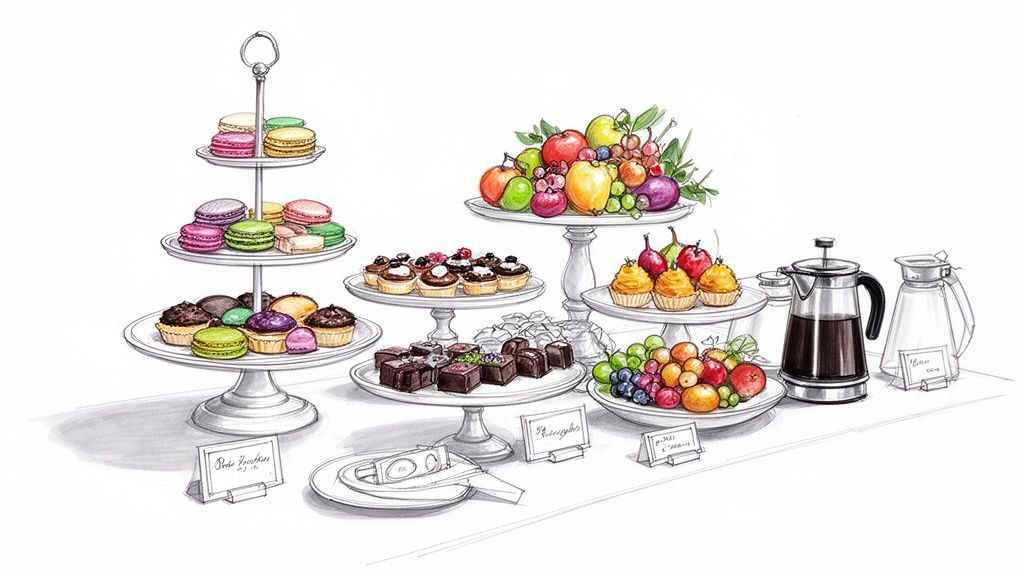
This approach brings a personal touch, reflecting the couple's favorite treats. Imagine a table filled with artisanal pastries from a local Quad Cities bakery, delicate macarons, or rich chocolates. This setup offers a sense of generous hospitality, ensuring there is a little something for every guest.
A few things to keep in mind
A thoughtful display can make a dessert station a highlight of the evening.
- It helps to plan for about three to five small dessert pieces per guest. This amount usually ensures everyone gets to try a few things.
- I have seen it work well when the table is arranged with tiered stands and platters of varying heights. It draws people in and makes the display feel abundant.
- Placing the dessert station near the coffee and tea service creates a natural flow. Our team can also refresh the station periodically.
How can we make the meal the center of the evening?
For couples who see the meal as the main event, a progressive tasting menu creates a memorable rhythm for the evening. Instead of a single entrée, guests are guided through a series of smaller, intentionally crafted courses. This style turns dinner into a journey, allowing everyone to savor a wide range of flavors and textures in an elegant progression.
This is one of the most artistic approaches to wedding food. It fosters an intimate atmosphere, where the focus is on shared experience and conversation over each new dish. From a light seafood course to a richer beef or duck profile, each plate builds on the last, often with a delicate sorbet in between to reset the senses.
A few things to keep in mind
A tasting menu requires precise coordination, but the result is a truly memorable dining experience.
- This concept benefits from a longer planning window. I suggest beginning conversations with our executive chef four to six months out.
- A progressive dinner is best suited for more intimate gatherings, typically 100 guests or fewer. This ensures the kitchen can maintain its rhythm.
- A multi-course experience is unhurried. It’s wise to budget around 3.5 to 4 hours for the dining portion of the reception.
How do we choose what's right for us?
After looking at all the possibilities, it can be easy to feel that you are searching for a perfect menu. What I have seen, though, is that couples are not really looking for a menu at all. They are looking for a feeling. The food you choose is simply one of the clearest ways to create that feeling for the people you have invited.
The search often ends when you stop thinking about what you should do and start thinking about how you want the evening to unfold. Do you imagine a room buzzing with energy as guests move between stations? Or do you picture a more settled quiet, with courses arriving at the table, allowing everyone to stay seated and connected? Neither is better than the other. They are just different ways of gathering.
In the years that follow a wedding, what people remember is rarely the specific herb on the chicken. They remember the bigger things. They remember feeling welcomed and cared for. They remember if the flow of the evening felt easy and natural. The most successful menus I have seen are the ones that reflect the couple themselves. When the food aligns with who you are, it feels authentic, and your guests will feel that.
This is where the pressure can lift. Your only task is to choose the food that lets you be a guest at your own wedding. If a complex menu will cause you to worry, it is not the right choice. If a casual buffet allows you to relax and enjoy your new spouse, then it is the best possible option.
The food serves your wedding; your wedding does not serve the food. It is a tool for connection. It brings people to tables, encourages conversation, and offers comfort. The final decision comes back to a simpler question: What kind of warmth do you want to create in the room?
Once you have answered that, the specifics of the menu tend to fall into place. Trust that feeling. The sense of ease you create is the part of the meal that everyone will carry home with them.
The culinary team at The Merrill Hotel specializes in creating menus that reflect the feeling you want for your day. We can walk through these options with you, ensuring every detail aligns with your vision. You can learn more at The Merrill Hotel.