
Many couples start with the thought of a backyard wedding. The idea feels comfortable, personal, and grounded in a way that nothing else does. It promises a day that is truly yours, free from the formal rules of a traditional venue.
But I have also seen the moment that thought meets reality. The logistics can become overwhelming very quickly, from coordinating rentals and power sources to managing weather plans and neighbors. What I’ve learned from watching hundreds of weddings unfold is that the desire for a "backyard wedding" is not always about a specific patch of lawn. It is about creating a feeling of home, wherever you choose to celebrate.
It is about a day that unfolds with ease, where your guests feel cared for, and you can focus on the moments that matter without worrying about the details. These ideas are for couples who want that intimate, relaxed atmosphere. They are ways to capture that feeling, whether in an actual yard or in a place that gives you the same comfort with a little more support. The goal is to design a day that feels just as warm and welcoming as coming home.
How can we make the most of the outdoors?
Many couples who want a backyard wedding just want to feel connected to the outdoors. I've found that one of the most effective approaches is to let a powerful natural element do the work for you. Here in Muscatine, that often means turning toward the Mississippi River.
A riverfront ceremony uses the wide, constant presence of the water as its own decoration. It becomes the backdrop, the focal point, and the setting all at once. This is not about creating something from scratch; it is about positioning your ceremony to take advantage of something already beautiful. The goal is to feel both intimate, as if you have found a private cove, and grand, with the expansive water and sky behind you. I have watched couples stand before the river, and the view itself brings a sense of calm and significance to the moment.
To make this work, timing and placement are important.
- Visit at your ceremony time. The sun's position over the water dramatically changes the light. A visit to your chosen spot at the same time of day will show you where the shadows fall and where the glare might be.
- Consider the "golden hour." The hour just before sunset offers soft, warm lighting that is flattering for photos and comfortable for guests. It avoids the harsh sun of midday.
- Plan for sound. The sound of water and wind can be lovely, but it can also carry your officiant's and your voices away. A quality sound system is a practical tool to ensure every guest feels included.
- Think about the guest experience. Arrange seating so that guests’ first view is of the water as they arrive. It helps set the tone long before the ceremony begins.
Letting nature provide the scenery is a way to honor the place you have chosen. It’s also one of the simplest ways to understand how you make an outdoor wedding feel special without overcomplicating things.
What if we want it to feel like a retreat?
Sometimes the backyard idea is less about a physical yard and more about creating a feeling of home for a whole weekend. The goal is to bring everyone together in one place, removing the logistical stress of travel between events. It turns a single day of celebration into a shared retreat, where moments can unfold without a sense of rush.
This approach treats your wedding like a destination event, but with the intimacy of being in a single, familiar location. I have seen this work beautifully when couples host their rehearsal dinner, ceremony, reception, and a next-day brunch all on one property. It allows guests to settle in, connect with one another, and feel like they are part of a continuous experience. The focus shifts from getting from one place to the next to simply being present.
To make this weekend model feel effortless for everyone, clear communication is helpful.
- Create a gentle itinerary. Share a schedule with guests a couple of months in advance. It helps them plan their travel and know what to expect, from the Friday rehearsal dinner to the relaxed Sunday brunch.
- Offer optional activities. For the downtime between scheduled events, suggest simple things like a walk along the river, a visit to a local shop, or just time to rest. It gives guests choices without pressure.
- Provide welcome packets. A small packet in each room with the weekend's schedule, local information, and a personal note is a thoughtful gesture. It helps guests feel cared for from the moment they arrive.
- Plan for transitions. If you are using a hotel or single venue for everything, their coordination team is essential. They manage the quiet work of transforming a space from a ceremony setting to a reception hall, so the flow feels natural.
Hosting a weekend-long event deepens the connections between family and friends. It gives everyone the gift of time, which is often the most valuable thing you can offer.
How can we help our guests mingle?
A wedding reception is more than just dinner and dancing. It is a collection of conversations and quiet moments between friends and family. A good way to foster this is to create dedicated garden and outdoor lounge spaces that invite guests to relax and connect away from the main activity.
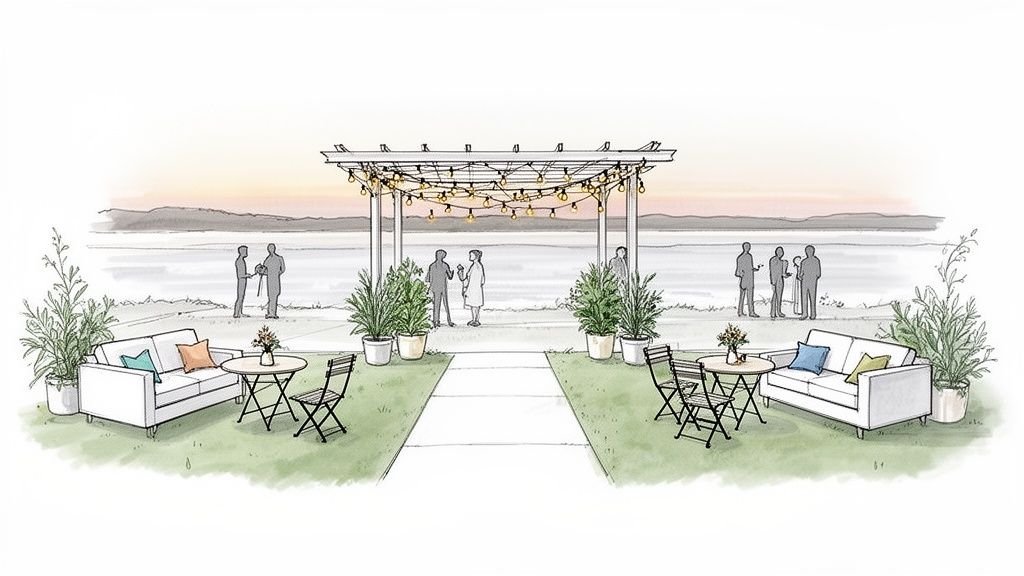
These lounge areas extend the feeling of your reception beyond the dining tables. They turn a simple lawn or terrace into a series of inviting social zones. This is not about filling empty space; it is about giving your guests permission to step away, find a comfortable seat, and have a real conversation. I have seen this done beautifully at historic homes in Midwest river towns, where garden nooks become natural gathering spots. The goal is to make the entire property feel like part of the celebration.
To create lounges that feel both intentional and effortless, a few details make a significant difference.
- Define the zones. Use clusters of comfortable furniture, area rugs, or even potted plants to create distinct “rooms” without walls. This subtly guides guests and makes a large space feel more intimate.
- Layer the lighting. String lights overhead provide general ambiance, while uplighting on trees adds a touch of drama. Just as important is task lighting on pathways or near steps to ensure everyone can move about safely after sunset.
- Plan for guest comfort. Renting real furniture like outdoor sofas and lounge chairs makes a world of difference. For evening events, consider fans or citronella candles to keep bugs at bay.
- Think about the flow. Guide guests naturally from one area to the next. A common path is from the ceremony space to a cocktail lounge, then to dinner, with dancing and other lounges accessible from there.
Creating these spaces encourages mingling and gives people a place to go when they need a break from the dance floor. It is a thoughtful touch that acknowledges not everyone celebrates in the same way.
What if a big wedding doesn't feel right for us?
Some of the most meaningful celebrations are not about scale, but about focus. A micro-wedding, which usually involves between 10 and 50 guests, is a conscious choice to celebrate with only your closest circle. This is not about cutting corners; it is about concentrating your attention, budget, and energy on what matters most to you.
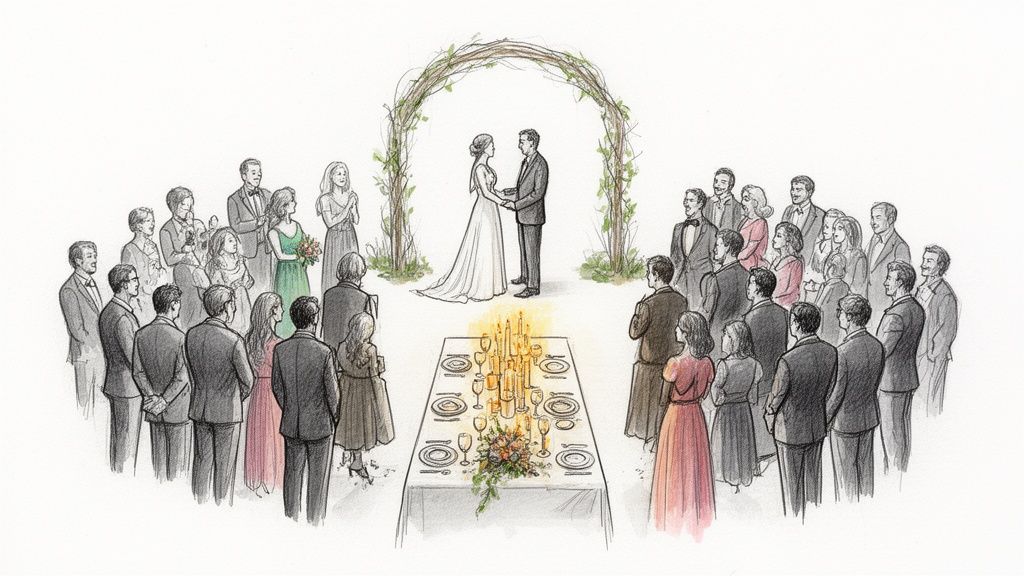
The feeling is different from a large event. With fewer people, the logistics become simpler, and the atmosphere often becomes more relaxed and personal. I have seen couples use this format for a second marriage, a vow renewal, or simply because they prefer a quiet, deeply personal day over a large production. The goal is to create a space where you can have real conversations and share genuine moments with every single person in attendance. It transforms the day from a performance into a shared experience.
To make an intimate gathering feel both special and inclusive, communication and planning can help.
- Communicate your intentions clearly. Deciding on a small guest list can be difficult. It helps to be direct and gentle with extended family and friends who may not be attending, explaining your desire for a small, private ceremony.
- Invest in quality over quantity. With a smaller guest count, your budget can go further. This might mean investing in a photographer whose work you love, a more elaborate meal, or personalized favors for each guest.
- Personalize the details. An intimate setting is the perfect canvas for details that would be impractical for a large wedding. Handwritten notes at each place setting, a custom menu reflecting your story, or a group activity can make the day more memorable.
- Consider a livestream. For relatives who cannot attend, a simple livestream of the ceremony can be a wonderful way to include them from a distance.
An intimate wedding allows you to prioritize connection. It honors the moment by keeping it close. For those who want more guidance, it can be helpful to understand how to plan a micro-wedding step-by-step.
How do we make the meal feel personal?
The meal at a wedding is more than just food; it is a way for everyone to connect and a reflection of the hosts’ care for their guests. Among the most personal approaches I have seen is embracing a farm-to-table menu. This is about more than just fresh ingredients; it is about telling a story of the place you have chosen, especially here in Iowa, where our agricultural heritage is so present.
A farm-to-table menu ties your celebration to the season and the local community. It grounds the event in an authentic culinary experience, whether you choose a plated dinner, a casual buffet, or a family-style meal where dishes are passed and shared. I have seen how this shifts the feeling of a reception. It is not just dinner; it is a thoughtful gesture that honors the region, from the pork producers in Washington County to the sweet corn grown just down the road. The goal is to create a menu that feels both elevated and deeply familiar.
To make this concept work, early conversation and intentional planning are key.
- Plan around the harvest. A menu designed for a June wedding will look very different from one in October. Discuss with your culinary team what will be at its peak freshness. This ensures the best flavor and respects the natural rhythm of the seasons.
- Tell the story. Small details, like naming the local farm that provided the produce or the dairy that made the cheese on your menu cards, make the meal feel special. It connects your guests to the food and the people behind it.
- Consider your service style. Family-style service encourages interaction and a communal feel, much like a backyard gathering. A multi-course tasting menu, on the other hand, can showcase a wider variety of local specialties in a more formal way.
- Collect guest needs early. Ask for dietary restrictions and allergies with your RSVPs. This gives your caterer or culinary team ample time to design thoughtful alternatives so every guest feels looked after.
Choosing a menu that celebrates local producers is a quiet way to add meaning to your day. It is an approach that feels both generous and grounded in the place you are.
How can we include guests of all ages?
A backyard wedding often feels like a family reunion. The guest list naturally expands to include grandparents, young children, and everyone in between. A truly welcoming celebration acknowledges this by designing the day around the comfort and enjoyment of every generation, not just the couple and their friends.
This approach views the wedding as a gathering of the entire family fabric. It is about creating an atmosphere where a grandparent can have a quiet conversation, parents can relax knowing their kids are entertained, and everyone feels included in the day’s rhythm. I have seen that the most memorable celebrations are those that make every single guest feel seen and cared for, regardless of their age or energy level. The goal is to build an environment that is both celebratory and accommodating.
Making this a reality requires thoughtful planning around accessibility, timing, and activities.
- Create quiet zones. A small, designated area away from the music with comfortable seating gives older relatives or guests with sensory needs a place to rest and talk without being overwhelmed.
- Plan for children. A simple kids’ table with coloring books or a supervised play area can be a saving grace. Hiring a trusted babysitter for the ceremony and key reception moments allows parents to be fully present.
- Keep the ceremony concise. A ceremony lasting 20 to 30 minutes holds the attention of guests of all ages. It respects the limited patience of children and the comfort of older family members who may be sitting for a while.
- Vary the schedule and food. Not everyone wants a late-night party or a formal plated dinner. Consider a brunch reception or an earlier dinner time. Offering both casual and formal food options can satisfy different tastes and schedules.
Thinking about your wedding from the perspective of your youngest and oldest guests is a simple act of hospitality. It ensures the day is remembered not for its inconveniences, but for the feeling of being together.
Does the wedding have to be on a Saturday?
One of the most practical ideas is to rethink the calendar itself. The default Saturday in June is often chosen out of habit, but shifting your date to a weekday or a less common season can bring a surprising amount of calm and flexibility to your planning. This is not about settling for a "lesser" date; it is about choosing one that works better for you and your peace of mind.
A wedding on a Friday, Sunday, or even during the crisp air of late fall or early spring opens up possibilities. Vendors who are booked solid on Saturdays often have availability, sometimes at off-peak rates. This can give you access to your first-choice photographer or caterer without the pressure of competing for a single popular date. I have seen couples in Eastern Iowa create stunning winter weddings that feel cozy and intentional, using the season to their advantage. The goal is to build your celebration around a timeline that feels less frantic and more personal.
To make this work, communication and atmosphere are key.
- Survey key guests early. Before setting a non-traditional date, check with the handful of people who absolutely must be there. This small step avoids major conflicts later on.
- Consider a Friday late afternoon ceremony. A 4:00 PM start time often allows guests to travel Thursday evening or Friday morning, minimizing time off work and still allowing for a full evening celebration.
- Use the season as decor. Let the time of year guide your aesthetic. The natural beauty of fall foliage, the simple elegance of winter greenery, or the fresh hope of early spring blooms can reduce your decorating budget and make the day feel grounded in its time and place.
- Plan for seasonal weather. An off-season wedding, especially in the Midwest, requires a solid indoor-outdoor plan. Think about a tent with heaters for a fall evening or a beautiful indoor space with large windows to let in the winter light.
- Inquire about off-season packages. Many venues and vendors are more flexible outside of peak season. It is always worth asking if they offer different pricing or packages for Fridays, Sundays, or months like November and March.
How can we make the reception feel more relaxed?
A wedding reception has moments of high energy and moments of quiet. Sometimes, the space between those two is where guests feel a little lost, especially during a cocktail hour or after dinner. I have seen it work beautifully to set aside a space for simple lawn games.
This is not about forcing entertainment on people. It is about giving them an easy, informal way to connect with each other. A game of bags (cornhole) or giant Jenga provides a natural focal point for conversation. It encourages guests who may not know each other to mingle without the pressure of a formal introduction. I have noticed it helps bridge age gaps, as grandparents and younger cousins can all share in a simple, fun activity. It changes the atmosphere from a performance that guests watch to a gathering they are truly part of.
For this to feel relaxed and not chaotic, a bit of planning helps.
- Create a dedicated zone. Position the games away from the main dining tables and quiet seating areas. This gives guests a choice; they can join the activity or observe from a comfortable distance.
- Choose quality over quantity. It is better to have two or three well-made, sturdy games than a dozen flimsy ones. Games should be intuitive and easy to play without a long list of confusing rules.
- Think about timing. Lawn games are a wonderful feature for the cocktail hour. They give guests something to do as they arrive and wait for the reception to begin. It sets a welcoming, casual tone from the start.
- Balance activity with rest. Ensure there are still plenty of chairs and quiet spots for conversation. Not everyone will want to play, and that is perfectly fine. The goal is to provide an option, not an obligation.
Giving your guests something to do together is a quiet way of showing them you have thought about their experience. It is a simple gesture that can make a backyard feel less like a formal venue and more like a warm, welcoming home.
How can we make the decor feel like us?
A backyard wedding feels most special when it feels like you. One of the clearest ways to achieve this is to fill the space with decor that tells your story. This is less about following a trend and more about making sure your guests see your personalities, your history, and your values in the details around them.
It is the difference between a standard floral centerpiece and one that uses a vase from your grandmother’s collection. It is a welcome sign written in your own hand, or a display of photos showing your journey together. These personal touches are what people remember because they feel authentic and create a sense of connection. I have seen couples use simple, meaningful objects to build an atmosphere that no amount of generic decor ever could.
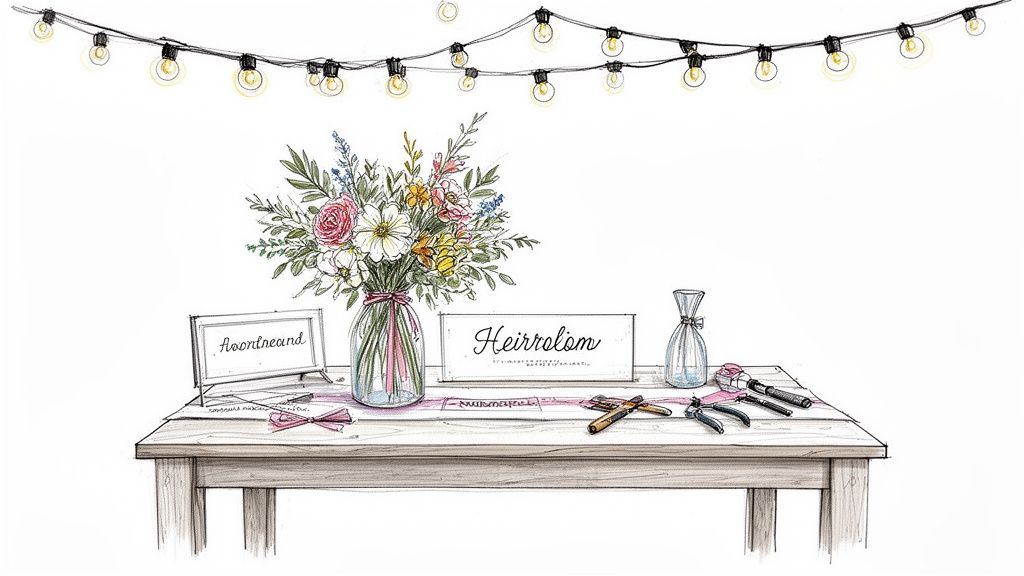
To make this approach work without adding stress, a bit of planning goes a long way.
- Start early. DIY projects often take more time than you think. Begin two to three months ahead to avoid a last-minute rush.
- Make it a group effort. Ask willing family and friends to help. Turning a decor project into a shared activity can be a wonderful memory in itself.
- Focus your efforts. You do not need to make everything yourself. Concentrate on a few high-impact items, like a unique guest book, personalized signage, or memorable centerpieces.
- Tell your story visually. A simple timeline with photos, quotes from your life together, or even a map showing places that are important to you can be a powerful focal point.
- Keep the color palette simple. Using just two or three cohesive colors for your DIY elements helps everything look intentional and avoids visual clutter.
Personalized details are about communicating warmth and meaning. It is one of the most effective outdoor wedding decorating ideas because it grounds the celebration in what truly matters: the two of you.
How do we get the destination feel without the destination price?
Many couples are drawn to the idea of a destination wedding but worry about the cost and logistics. A backyard wedding feels simpler, but creating everything from the ground up can be surprisingly complex. There is a middle path that I have seen work beautifully: treating a smaller Midwest town like a destination and relying on local connections. A venue in a place like Muscatine or Galena often has deep relationships with the area’s best vendors.
This approach combines the feeling of a getaway with the simplicity of local expertise. You are not just booking a space; you are gaining access to a trusted network of photographers, florists, and musicians who already know the venue, the lighting, and the flow of the day. This familiarity removes much of the guesswork and coordination stress. It provides a support system while still feeling personal and unique to your chosen location.
To make this work, it helps to be systematic in your approach.
- Ask for the preferred list. The first step is to request the venue’s list of trusted vendors. Ask to see examples of their work from past events held at the location.
- Interview a few options. Even with a recommended list, it is important to find the right fit. Plan to speak with two or three vendors in each category, like photographers or florists, to understand their style and personality.
- Inquire about package deals. Sometimes, a venue can help coordinate a package that bundles services from multiple local vendors. This can simplify contracts and sometimes offer better value.
- Discuss the venue with them. Ask potential vendors about their experience at the specific location. A photographer who has worked there before will already know the best spots for photos at golden hour. A florist will know the dimensions of the space and what arrangements work best.
- Get clear contracts. Ensure every vendor provides a detailed contract outlining all services, costs, timing, and contingency plans. The venue coordinator can often help review these to ensure nothing is missed.
This strategy is about finding a balance. You get the charm and affordability of a smaller town, but with a built-in team that makes the planning feel more manageable than a true DIY backyard event.
Finding your own quiet center
There is a point in planning when the ideas can feel louder than the intention. The search for the right theme, the perfect layout, or the most memorable activity can begin to feel like a job. It is a common feeling, one that most couples experience. You start with a simple, beautiful vision of celebrating with the people you love, and soon find yourself managing a dozen different projects.
I have seen so many unique ideas come to life, from elaborate floral installations to simple, heartfelt ceremonies by the water. The purpose of these ideas is not to give you more to do. It is to help you find the one or two that feel most like you.
The best celebrations I have seen, the ones that people talk about for years, are not always the most elaborate. They are the ones where the couple seems calmest. They have found a way to let the small worries go, trusting that the most important parts are already in place: each other, and the people who have come to share in their joy.
It helps to remember that the goal is not a flawless event. The goal is a day that feels like you. That feeling of groundedness is what everyone will remember long after the last dance.
What I have seen is that guests take their cues from the couple. When you are relaxed and present, your guests feel it. They relax, too. The entire celebration feels less like a performance and more like a gathering of friends and family, which is what it was always meant to be.
Whether your version of a backyard wedding is in your actual yard, a local park in the Quad Cities, or a space that just gives you that same sense of ease, the core principle remains. It is about creating a space where you can breathe. A place where the logistics fade into the background, and the human connection comes forward.
That might mean choosing an all-inclusive path to remove the stress of vendor coordination. It might mean focusing on a few key DIY projects that bring you joy, and letting go of the rest. Or it could mean finding a venue that gives you the open-air, scenic feeling of a backyard without asking you to manage the setup, the catering, and the weather plan. The quiet center is different for everyone. Your only task is to find yours.
The ideas here are simply starting points. The real work is in the quiet moments of reflection, deciding not what makes a wedding beautiful, but what makes it yours. Once you have that answer, the rest will follow. The small details find their place, the timeline loosens, and you can focus on the reason you started planning in the first place. That is the feeling worth protecting.
If you find that the logistics of a true backyard wedding feel like more than you want to carry, we are here. The Merrill Hotel offers the intimate, scenic feel of a private riverfront celebration with the calm assurance that every detail is handled for you. You can learn more at The Merrill Hotel.