
You search for the average cost of wedding venue, and within minutes you see numbers that don’t seem to agree with each other. One article says one thing, a venue guide suggests another, and then a real quote lands in your inbox that feels far above what you expected. That disconnect is where a lot of wedding stress begins.
Most couples aren’t confused about math. They’re confused about what they’re buying. A venue price can mean room rental only, or it can include tables, chairs, staffing, setup, food and beverage coordination, guest lodging, ceremony space, and planning support. Those are very different products wearing the same label.
That’s why the smartest way to evaluate cost isn’t to chase a single national average. It’s to understand what shapes your own number, what trade-offs matter to your day, and where location can change the equation in a major way. For couples in Muscatine, Davenport, Bettendorf, Moline, Rock Island, and the wider Quad Cities, and especially for couples in Chicago, Naperville, and Aurora comparing city pricing to destination-style Midwest options, that difference can be meaningful.
Why Wedding Venue Costs Feel So Complicated
The first wave of sticker shock usually comes from comparing unlike things.
A couple might look at one reception venue that offers a low room fee, then compare it to an all-inclusive wedding venue that looks much higher at first glance. But once they price linens, staffing, rentals, bar service, catering coordination, ceremony setup, and hotel transportation separately, the lower quote often stops looking lower.
The average is a starting point, not an answer
National averages help set expectations, but they don’t tell you what your wedding will cost. A luxury wedding venue in a major city, a riverside indoor wedding venue in the Midwest, and a rural outdoor wedding venue with limited inclusions can all serve completely different kinds of events.
That’s especially true when couples are planning more than a simple ceremony and dinner. A large wedding, a multi-day celebration, or a cultural wedding with specific setup needs changes the venue conversation fast. Space flow, vendor flexibility, guest lodging, ceremony timing, and the venue’s comfort with custom traditions matter as much as the rental rate.
Practical rule: Don’t ask only, “What does the venue cost?” Ask, “What problem does this venue solve for us?”
The emotional side is real
Venue cost also feels complicated because the venue shapes the whole day. It sets the first impression for your guests, the pace of your schedule, the weather backup plan, and how relaxed or rushed the celebration feels.
That’s why couples often feel torn between budget and experience when they don’t have to be. In practice, the better question is whether the venue supports the kind of wedding you want to have. If it reduces logistics, fits your guest count comfortably, welcomes your traditions, and keeps the weekend smooth, the price starts to make more sense.
National and Regional Wedding Venue Costs
A couple tours a stylish city venue, likes the room, then sees the full proposal. The rental fee is only the first line. Service charges, catering minimums, parking, late-night labor, and hotel logistics push the total into a different category. Then they visit a Midwest property a few hours away and realize the same budget can buy a fuller weekend experience, not just a room for six hours.
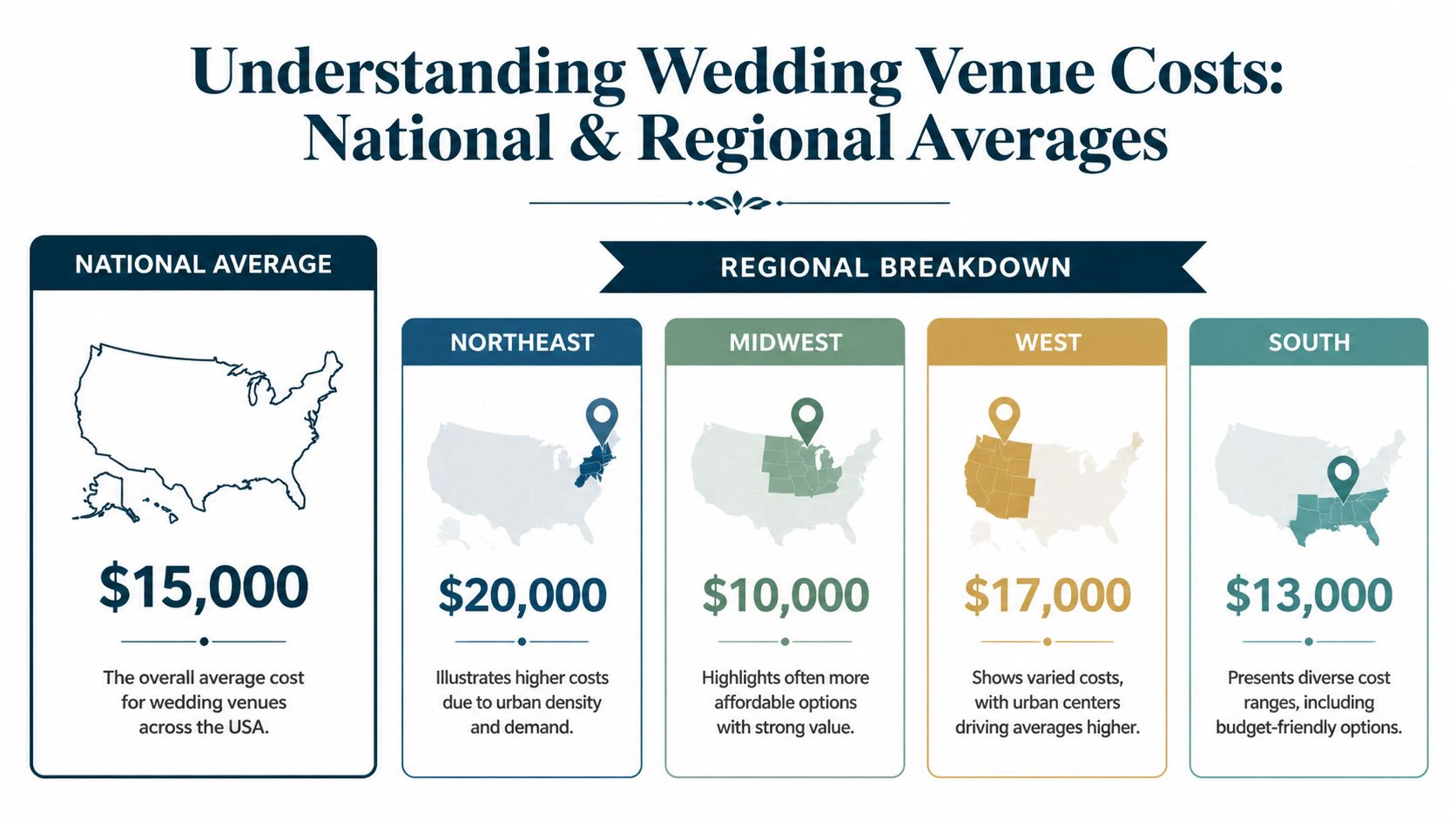
That comparison is why national averages need context. Data from 2025 showed average wedding venue pricing in the United States landing in a broad range, roughly $8,573 to $14,300, and venue costs can take a large share of the full wedding budget, as noted earlier. A wide range like that usually means couples are pricing very different products under the same label. One quote may cover only the space. Another may include staffing, tables, bar setup, suites, or coordination support.
Why region changes the math
Regional pricing affects more than the venue line item. It changes what kind of wedding you can afford to host comfortably.
Earlier cost reporting showed Midwest weddings averaging well below higher-cost regions such as the Mid-Atlantic. For couples, that gap often translates into choices that guests experience. Better menu flexibility. More breathing room in the timeline. Fewer compromises on guest count. Less pressure to cut cultural elements that require extra time, space, or vendor access.
This matters for Chicago-area couples in particular. In and around the city, demand, union labor in some properties, valet or parking costs, tighter event windows, and higher food and beverage minimums can raise the true cost quickly. Couples searching for a large wedding venue near Chicago or an Indian wedding venue near Chicago often find that the venues capable of handling scale and tradition well sit at the top of the market.
The Midwest offers a different value equation. Muscatine, Davenport, Bettendorf, Moline, and Rock Island are close enough to feel practical for Illinois guests, but far enough outside major-city pricing to create real arbitrage. I see couples use that gap to get what would feel out of reach in Chicago: a welcome party, better guest accommodations, more generous catering, or an extra event built around family traditions. If you are comparing venue proposals, it also helps to understand how food spending interacts with the room cost. This guide on how much wedding catering costs helps clarify that trade-off.
What the numbers mean in practice
National figures are useful for orientation. Regional figures are better for decision-making.
| Comparison point | What it tells you |
|---|---|
| National average | Gives you a broad benchmark for what couples may spend on a venue |
| Midwest wedding costs | Shows why the same budget often buys a fuller guest experience in this region |
| Higher-cost metro areas | Explains why city couples often face higher minimums, tighter packages, and more add-on fees |
| Destination-style Midwest venues | Can deliver a luxury feel, multi-day flow, or large cultural format for less than an urban equivalent |
For many Chicago-area couples, the smartest venue search is not just local. It is regional. The goal is not merely to spend less. It is to spend in a market where your money buys more comfort, more flexibility, and a wedding that feels generous from the first guest arrival to the final goodbye.
The Key Factors That Drive Your Venue Cost
A couple tours a city venue, likes the room, then sees the full proposal. The rental fee looked manageable at first. Once guest count, service staff, bar minimums, rentals, setup windows, and ceremony needs are added, the actual number comes into focus. That is why venue pricing can feel harder to read than almost any other part of a wedding budget.
Data from 2025 showed venue costs staying high in many markets, but the bigger issue for couples is not one average number. It is how quickly costs change once the event gets larger, more complex, or more date-specific. In my experience, Chicago-area couples notice this fast when they compare urban proposals against Midwest properties that can host the same wedding with fewer added layers.
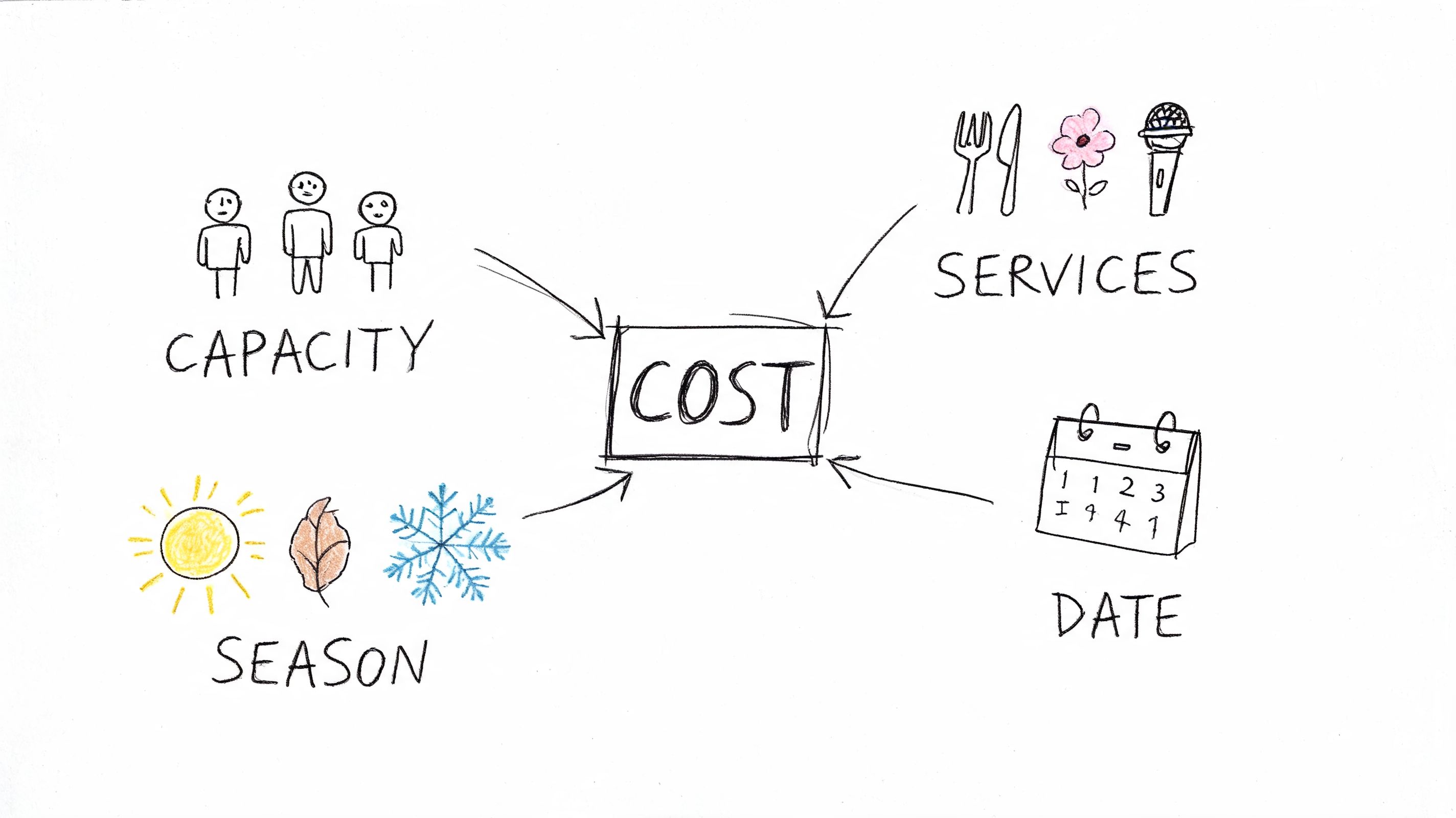
A venue quote reflects real operating demands. Space is only one piece of it. Labor, timing, room turns, equipment, food service, and guest flow often decide whether a wedding feels calm and polished or strained and overstuffed.
Guest count changes everything
If one factor drives the budget most consistently, it is guest count.
Each added guest affects more than the meal. Headcount changes the room size you need, the number of tables and chairs, staffing levels, bar lines, parking, restroom traffic, rental quantities, and the amount of time needed for setup and service. At a certain point, you are not just adding people. You are moving into a different class of event.
That is why a large capacity wedding venue can cost more. You are paying for infrastructure that keeps 250 guests comfortable, fed on time, and able to move through the evening without bottlenecks. For couples coming from Chicago pricing, this is often where Midwest value becomes clear. The right regional venue may handle a large wedding more comfortably, and with fewer outside rentals, than a tighter urban space.
Date and season influence the quote
The calendar shapes price because demand is uneven. Saturday evenings in peak season usually command the highest rates. Couples are competing for the same dates, and venues reserve those dates for events that justify the inventory and staffing commitment.
A Friday, Sunday, or off-peak month can change the math in a meaningful way. I have seen couples use that shift to afford a better room, add a second event, or keep more budget available for guest hospitality. That trade-off often feels especially smart for a destination-style Midwest wedding, where the goal is not only to secure a date but to create a fuller weekend experience.
Included services can raise the price and improve the value
A higher quote is not always the more expensive option in practice. Some venues include the pieces couples would otherwise source one by one, and those separate line items add up quickly.
Look closely at whether the quote includes:
- Core furnishings such as tables, chairs, and standard setup items
- Staffing for banquet service, bar operations, room reset, and cleanup
- Ceremony support including chairs, site access, and transition planning
- Coordination help so vendors are not improvising on the wedding day
- Food and beverage structure that avoids separate management headaches and keeps service under one roof
If you are comparing packages, it helps to understand how wedding catering pricing works because catering can either simplify the venue budget or fragment it. The lowest room rental is often paired with the most logistical work, the most vendor coordination, and the most opportunities for surprise costs.
The cheapest quote often turns the couple into the operations team.
Layout and flexibility matter for cultural weddings
For an Indian wedding venue, a cultural wedding venue, or any event with multiple traditions, the room rate only tells part of the story. The property has to support how the wedding unfolds.
Ask direct questions. Can the venue accommodate a mandap with good sightlines? Is there a practical path for a baraat? Can the ballroom turn from ceremony to reception on time? Is outside catering permitted if the menu requires cultural specificity? Can the team handle several events across a weekend without confusion for guests or vendors?
Those capabilities may raise the quote. They also prevent expensive workarounds later, which is often where couples lose money. For Chicago-area families planning a larger or multi-day celebration, that is one of the strongest reasons to compare Midwest venues carefully. The right property can deliver the scale, flexibility, and guest experience of a destination wedding without the city-level cost structure.
Sample Venue Budgets For Three Wedding Styles
The easiest way to understand the average cost of wedding venue is to match it to a wedding style instead of a generic national figure. Most couples recognize themselves in one of these formats almost immediately.
The intimate celebration
This wedding is usually small by design. The couple wants closeness, good food, a beautiful room, and enough service to keep the day from feeling improvised.
A micro-wedding often works well in an elegant indoor wedding venue or a smaller private dining setting within a larger property. The venue budget tends to stay manageable because the guest list is controlled, the room footprint is smaller, and service can stay focused rather than sprawling.
What works:
- A strong room with built-in character so decor stays simple
- A bundled package which includes the basics cleanly
- On-site lodging or nearby rooms for a relaxed end to the evening
What doesn’t work:
- Renting a space that’s too large and trying to “fill it” with decor
- Using a bare room that needs extensive outside production
The classic mid-size wedding
This is often the wedding couples pictured from the start. There’s enough guest energy for a real reception, but not so many people that the event becomes hard to manage.
For this group, venue value usually hinges on balance. You want enough room for ceremony, cocktail hour, dinner, and dancing, but you also want services that keep the event from becoming a stack of separate vendor problems. A polished reception venue with coordination support usually earns its price here.
A mid-size wedding often feels best when the venue can support transitions smoothly. Guests shouldn’t feel like they’re being moved from one logistical checkpoint to another.
The large or multi-day event
Venue selection enters its operational phase. The wedding may include a large guest count, a welcome gathering, family hospitality events, or cultural ceremonies that need specific sequencing.
A large wedding venue, luxury wedding venue, or cultural wedding venue in this category needs clear circulation, real staff depth, vendor access, parking simplicity, and enough flexibility to adapt the space. For Indian weddings especially, the best venues are often the ones that allow the celebration to unfold across multiple moments instead of forcing everything into one rigid room turn.
A large wedding doesn’t feel luxurious because it’s expensive. It feels luxurious when guests never see the strain behind it.
The mistake here is booking a venue that technically fits the headcount but doesn’t fit the event. That’s when timelines tighten, storage becomes a problem, and every transition feels rushed.
Strategies for a Smarter Venue Budget
A smart venue budget isn’t about stripping the day down. It’s about spending where the wedding feels better and avoiding costs that add stress without adding much experience.
Buy flexibility instead of pressure
Couples often lock onto one Saturday and then build the whole budget around it. That can make every other decision harder.
If you can consider a Friday, Sunday, or a quieter part of the year, you may open the door to a better venue, a more generous package, or a more relaxed planning process. Flexibility also helps with room blocks, vendor scheduling, and guest arrival patterns.
Compare complete costs, not just venue fees
A lower venue number can hide a lot of separate spending. Before you call one option “more affordable,” line up the full picture.
Use a simple comparison list:
- Rental only means you still need to price furniture, staffing, setup, cleanup, and coordination
- Package pricing may look higher first, but often removes the most frustrating add-ons
- Guest lodging can reduce transportation friction and make the weekend feel more cohesive
- Outside vendor freedom is useful, but only if you have the time to manage those pieces well
Couples trying to balance price with experience often do better when they evaluate venues through a complete budget lens rather than a single line item. That’s the same logic behind finding a wedding venue that feels right for your budget.
Negotiate with flexibility, not force
Most venues aren’t interested in haggling for the sake of it. They are interested in filling dates, creating efficient event calendars, and matching the right event to the right package.
So ask thoughtful questions instead of demanding a discount. You may have better results by adjusting the date, simplifying room usage, selecting an existing package format, or bundling more of the weekend into one agreement. That kind of flexibility gives the venue something workable in return.
If you want better value, give the venue a way to say yes.
The Chicago-to-Midwest Advantage for Cultural and Large Weddings
Chicago-area couples often start local for obvious reasons. It’s familiar, convenient on paper, and full of options. Then the critical filters begin. The guest list is large. The wedding needs cultural flexibility. The family wants a full weekend feel. Parking matters. Room flow matters. Outside catering may matter. Suddenly the shortlist gets much smaller and much more expensive.
The average US venue costs around $12,200, but venues in major urban markets like NYC can exceed $30,000. Iowa-adjacent states like Wisconsin at $8,760 and Missouri at $8,530 show a 30 to 70 percent savings, according to The Knot’s reception venue cost breakdown. That regional gap is why more Illinois couples are willing to drive for a better fit.

Why cultural weddings benefit from more space and flexibility
An Indian wedding venue near Chicago needs more than a ballroom. It may need room for a baraat route, a mandap, family gathering areas, vendor staging, late schedule shifts, and a team that doesn’t treat cultural traditions as unusual exceptions.
That’s where destination-style Midwest venues become attractive. They often offer more practical space, fewer downtown restrictions, easier load-in, and a calmer guest experience. Families can settle in instead of commuting across a city between events.
For couples searching large capacity wedding venue, that same advantage applies even outside cultural weddings. A venue with room to breathe runs better.
The destination value is both financial and experiential
Driving a few hours doesn’t just change the quote. It changes the shape of the celebration.
A Midwest hotel venue or riverfront event property can turn the wedding into a weekend gathering. Guests arrive, settle in, attend multiple events in one place, and spend more real time together. That’s often what couples hoped for all along, especially when family is traveling from different cities or states.
For larger guest counts, it also helps to review spaces designed with that scale in mind. Couples comparing options often start with practical guides to wedding venues for 150 guests because capacity on paper and comfort in practice are not the same thing.
How a Venue Like The Merrill Hotel Delivers Value
The venues that create the strongest value usually do three things well. They simplify logistics, support the full guest experience, and price the event as a package rather than a puzzle.
A riverfront hotel venue does that naturally because ceremony space, reception space, lodging, catering, and post-wedding gathering areas already live in one environment. Couples don’t spend the day moving guests from one address to another or managing transportation between separate vendors.
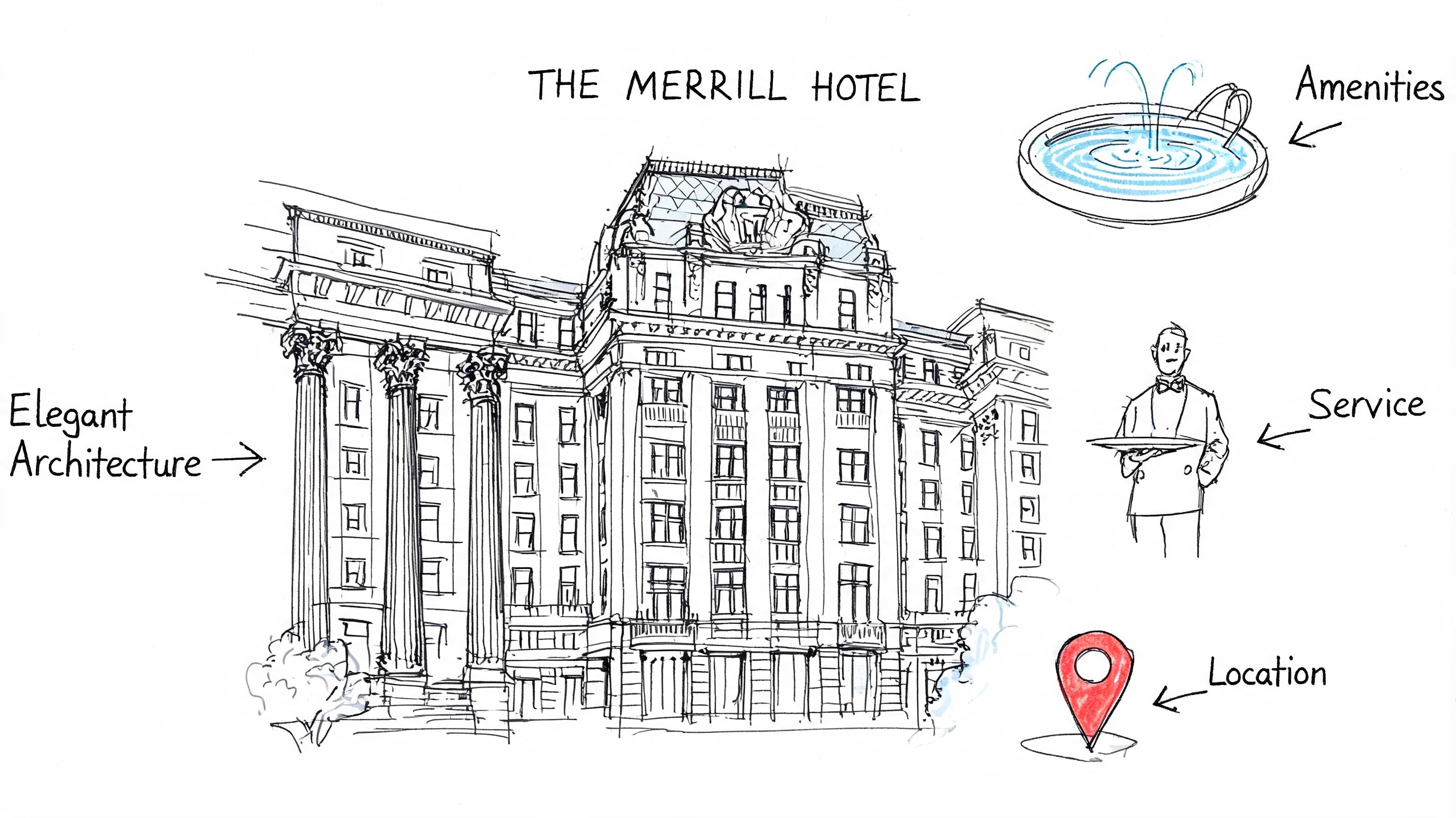
That matters for local couples in Muscatine and the Quad Cities, but it matters just as much for families coming from Chicago, Naperville, Aurora, or elsewhere in Illinois. A destination-style venue only works when it feels easy once guests arrive. On-site rooms, parking, dining, and event flow are part of the value.
What makes the value feel real
The best venue value often looks like this:
- Weekend continuity with rehearsal dinner, ceremony, reception, and brunch in one place
- Package clarity so couples know what’s included and what still needs to be sourced
- Cultural flexibility for custom timelines, ceremonial setups, and outside vendor conversations
- A setting with visual impact so the space carries some of the design burden on its own
That combination is why some couples spend less overall even when they choose a venue that initially appears more premium than a stripped-down rental hall.
Venue Planning and Cultural Wedding FAQs
Can a venue allow outside catering for cultural weddings
Some do, some don’t. Ask early and ask specifically. If you need regional Indian cuisine, kosher service, specialty sweets, or family-preferred caterers, don’t settle for a vague answer. You want to know whether the venue allows full outside catering, partial outside catering, or only approved partners.
How much room is needed for a mandap
It depends on the design and the ceremony layout, but the better question is whether the room still feels balanced after the mandap, seating, aisle, and photography positions are in place. A venue can technically fit a mandap and still feel cramped. Ask for a sample floor plan based on your likely guest count.
Can a venue handle a baraat
Many can if the property has the right circulation and the team is open to planning it correctly. Ask about arrival routes, noise considerations, weather backup, parking flow, and where guests will gather before the processional begins. A good answer should sound operational, not theoretical.
What’s usually included in a large wedding package
The strongest packages typically combine event space, standard furnishings, staffing, food and beverage coordination, setup and cleanup, and planning support tied to the timeline. Large weddings benefit from clarity more than anything else. If a venue says it’s all-inclusive, ask for the exact list.
Is an indoor or outdoor wedding venue better for Midwest weddings
Neither is automatically better. Outdoor ceremonies can be beautiful, but the quality of the backup plan matters just as much as the primary setting. The strongest Midwest venues are usually the ones that offer both, so the day still feels intentional if weather changes.
What should couples ask on the first venue tour
Start with the questions that affect the whole event:
- How many guests does the space hold comfortably
- What’s included in the package
- Can the venue support cultural ceremonies or multi-day events
- Are outside vendors or outside caterers allowed
- How does the rain plan work
- Where do guests stay, park, and gather between events
A venue that answers those calmly and clearly usually runs weddings the same way.
If you’re comparing venues in Muscatine, Davenport, Bettendorf, Moline, Rock Island, or looking beyond Chicago for a destination-style celebration with better value, The Merrill Hotel is worth exploring. Its riverfront setting, on-site lodging, flexible event spaces, and full-weekend wedding experience make it a strong fit for intimate weddings, large receptions, and cultural celebrations that need both elegance and practicality.