
You’re probably staring at a budget spreadsheet right now, trying to decide what belongs in the “must-have” column and what can move down the list. Venue. Catering. Photography. Then you hit beauty, and the question gets strangely personal. What is the average cost of wedding makeup, and how much should you spend to feel like yourself, look polished in photos, and stay calm on the morning of the wedding?
That question matters because makeup isn’t just another vendor line. It shapes how the day starts. If the beauty timeline runs late, everything feels rushed. If the look doesn’t wear well, you notice it in every mirror and every photo. If the artist is excellent, the morning feels steady, organized, and easy.
The bigger truth is that makeup costs never stand alone. They’re connected to your venue choice, your wedding size, your timeline, your bridal party, and whether you’re planning a one-day celebration or a full wedding weekend.
Starting Your Wedding Budget The Real Conversation
Most couples don’t begin by asking for luxury. They begin by asking for clarity.
They want to know whether they can host the kind of wedding they’re imagining without feeling squeezed at every decision. One partner starts entering quotes. The other starts comparing priorities. Then the budget stops feeling theoretical, because each line item represents part of the day itself. The flowers are the room. The photographer is the memory. The makeup is the version of you that walks into the ceremony.
That’s why the beauty line can feel surprisingly emotional. A couple may look at a quote and wonder whether professional makeup is worth it, especially if they’re also trying to choose between an indoor wedding venue and an outdoor wedding venue, compare a large wedding venue with a smaller reception venue, or decide whether a destination-style celebration outside a major city might stretch their budget further.
A practical budget conversation works better when you stop treating every number as isolated. Makeup affects your timeline, your comfort, and your photos. Your venue affects travel, setup, vendor access, and how calm the day feels from the first hour.
If you’re still building the full financial picture, this guide on what a wedding can cost overall helps put beauty in the context of the bigger plan.
A healthy wedding budget doesn’t ask, “What’s cheapest?” It asks, “What will matter to us when the day is actually happening?”
The National View What Wedding Makeup Costs on Average
A couple may start with one simple question. What does wedding makeup usually cost? The national answer helps, but it only helps if you understand what is being counted.
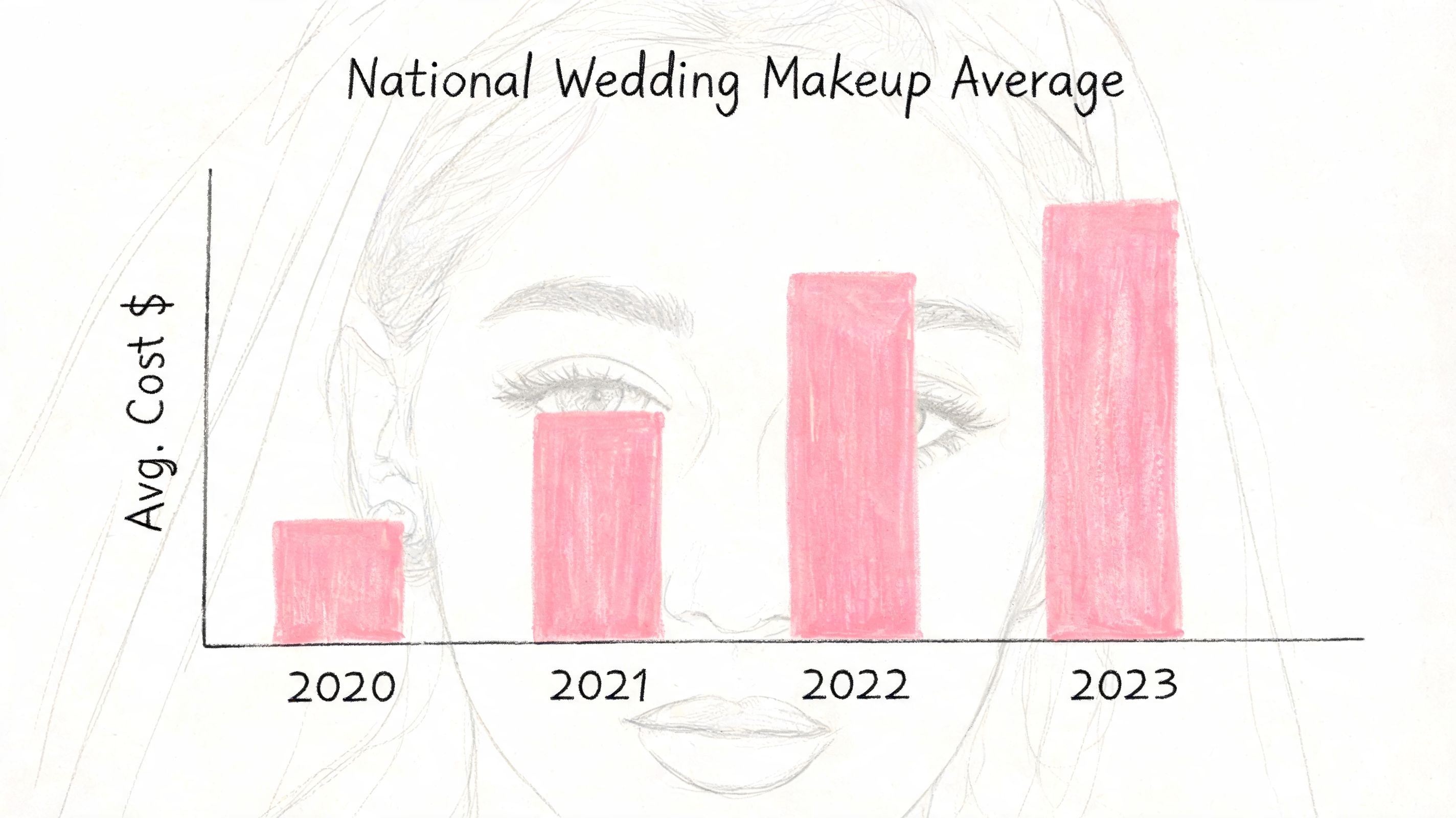
According to The Knot’s wedding hair and makeup cost guide, the average cost of bridal hair and makeup combined is $290. The same source reports $140 for wedding-day makeup alone and $150 for wedding hair. It also references Zola’s Wedding Cost Index, which puts combined hair and makeup at $982 nationally, with beauty often falling around 1 to 2% of the total wedding budget. In that reporting, bridal makeup alone falls in the $200 to $500 range, and bridesmaids average about $100 per person for hair and makeup combined.
Why national averages can feel confusing
Couples often see the lower combined average and the much higher national benchmark and assume the pricing is inconsistent. Usually, the service scope is different.
A lower number may reflect the bride’s core services only. A higher number often reflects a package with more people, more time on site, or a team handling both hair and makeup for the wedding party. Those are very different mornings.
I see this confusion most often when couples compare city pricing to a destination-style venue outside a major metro area. The quote is not just about makeup application. It may also reflect travel time, early arrival, assistant staffing, and whether the artist is serving one person or managing a full room of attendants, mothers, and touch-ups.
A practical benchmark to use
For planning purposes, these ranges are the most useful:
- Bride only: expect professional bridal makeup to fall somewhere in the $200 to $500 range.
- Bride’s hair and makeup combined: national reference points vary, and some published averages are much lower than full-service wedding day quotes.
- Bridal party services: bridesmaids often average about $100 per person for hair and makeup combined.
Those numbers are a starting point, not a working quote.
The working quote depends on the kind of morning you are building. A hotel suite in a large city, a private estate with limited prep space, and a full-service venue outside the city can all produce very different beauty costs, even when the makeup style itself is similar. Venue choice affects vendor travel, setup efficiency, and how many moving parts need to be covered before the first photo is taken.
If you are weighing beauty costs against the rest of your visual budget, it helps to compare them with the average wedding photographer cost so the priorities stay balanced.
What the average does not show
National averages do not tell you whether your artist has to travel an hour each way, whether your venue has a calm getting-ready space, or whether your party size requires a second stylist. They also do not show the difference between a wedding where vendors can work easily on site and one where every service comes with extra coordination.
That gap matters more for couples choosing a destination-style venue outside a major city. Sometimes that choice lowers total wedding costs. Sometimes it shifts spending from the venue line to travel-related vendor fees. The best budget decisions come from looking at the full experience, not just the headline average.
Key Factors That Influence Your Final Makeup Price
A couple can book two weddings with a similar guest count and a similar bridal look, then receive very different makeup quotes. The difference usually comes from the morning setup, not just the makeup itself.
Your final price is shaped by four practical decisions: who you hire, which application method you choose, how many people need services, and how easy your venue is to work in. For couples planning at a destination-style venue outside a major city, that last factor matters more than they expect. A beautiful property can lower some costs across the wedding. It can also add travel fees, earlier start times, or extra staffing if the prep space is tight or remote.
Artist experience affects the whole morning
As noted earlier, artist pricing varies widely by experience level. That spread reflects more than product quality or a stronger portfolio.
A seasoned wedding makeup artist usually builds a calmer morning. They know how to prep different skin types, keep the schedule moving, and adjust when a parent arrives late, a bridesmaid swaps her service, or the photographer needs the bride ready sooner than planned. That kind of control is valuable when the timeline is full and the room is busy.
A newer artist can still be a good fit. For a smaller wedding, a simple look, or a bride who wants to keep beauty spending in check, that choice can make sense. The trade-off is that you need to ask better questions about timing, backup plans, and how they handle a real wedding schedule.
Traditional vs airbrush should match the day you are planning
Application method is often treated like a style preference, but it is really a wear-and-environment decision.
Traditional makeup is usually a comfortable choice for brides who want a softer finish, know which products they like, or are getting ready indoors in a controlled setting. Airbrush often costs more because it is being chosen for performance. It tends to appeal to couples planning a long day, warm weather, emotional ceremonies, or extended portraits where staying power matters.
The best choice depends on what the day will feel like. An indoor ceremony with a short break before dinner asks less of your makeup than a riverside ceremony, outdoor cocktail hour, and late-night dancing at a venue far from the city where touch-up access may be limited.
Use this quick filter:
- Traditional makeup: often a strong fit for indoor settings, shorter timelines, and brides who want a classic finish.
- Airbrush makeup: often suits heat, humidity, long wear, and heavier photo coverage.
- Common mistake: choosing the lower quote without matching it to the length and conditions of the day.
Group size changes the timeline first
Couples often notice the budget impact of a larger beauty roster. They usually feel the schedule impact sooner.
Bride-only services are straightforward. Once you add bridesmaids, mothers, junior attendants, or a second look, hair and makeup become a timed production. If enough people need services, the artist may need an assistant or a second stylist, and that changes the quote quickly.
Venue choice profoundly impacts beauty costs. A full-service venue with a spacious bridal suite, good lighting, mirrors, outlets, and room for photography makes a larger beauty schedule easier to run. A cramped hotel room or a venue without a dedicated prep area can create delays, crowding, and added labor.
Travel and location can raise the quote
Travel fees are one of the most overlooked parts of wedding beauty pricing.
If your artist is driving a long distance, starting before dawn, hauling equipment up multiple floors, or setting up in a space that was not designed for getting ready, the quote can rise. Even when the line item looks reasonable, the bigger issue is often strain on the morning itself. Earlier call times, tighter setup windows, and more vendor coordination can make the day feel rushed before the ceremony even begins.
This matters for couples considering a destination-style venue outside a major city. Sometimes that choice helps the overall budget because the venue and local vendor market are more favorable. Sometimes it shifts costs into travel and logistics. The smart question is not just, "What does bridal makeup cost here?" It is, "How easy is this venue for my beauty team, photo team, and wedding party to use well?"
Ask questions that reveal the real quote
A clear proposal should tell you how the morning will run, not just what the bride’s service costs.
Ask these before you book:
- Who is included in the quote? Confirm whether it covers only the bride or a block of services for attendants and family.
- How is the timeline built? Ask when the team arrives, how long each service takes, and what happens if someone is late.
- What kind of prep space works best for them? An honest answer will tell you whether your venue supports an easy morning.
- Are travel, early start, assistant, or location fees separate? Those items often explain why one proposal looks much lower at first glance.
- How do they handle changes on the wedding day? The best vendors answer this calmly and specifically.
A good makeup quote should feel clear and grounded in the reality of your venue, your timeline, and your people. When those pieces fit together, the morning feels settled, and that feeling stays with you long after the last touch-up.
The Midwest Advantage Wedding Makeup Costs in Eastern Iowa and the Quad Cities
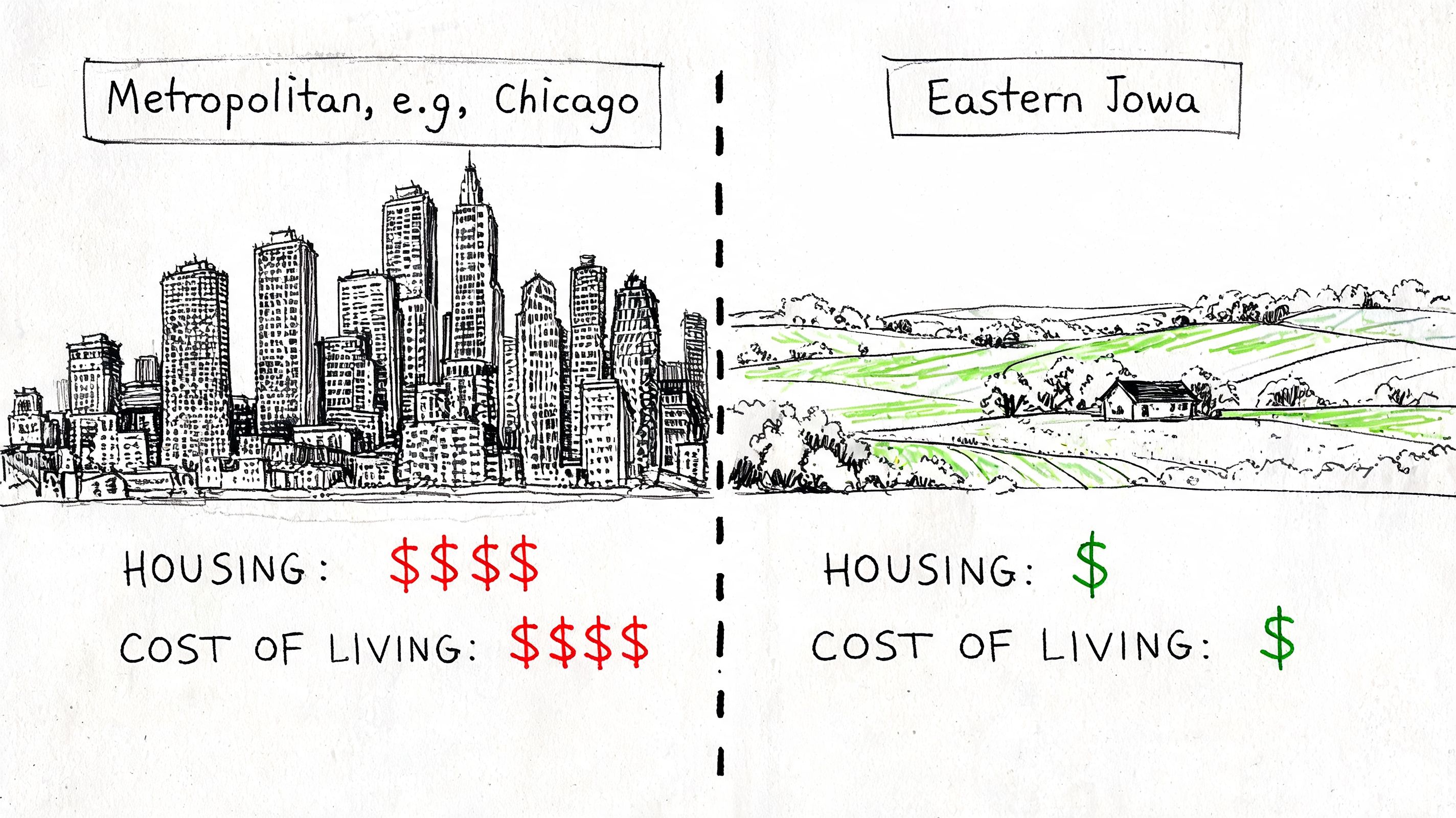
A couple tours venues in Chicago, then visits Eastern Iowa for a weekend. By the second stop, the difference is easy to feel. The getting-ready space is larger, the timeline has more breathing room, and the beauty budget is no longer carrying the pressure of a major-city price structure.
That is why location matters so much here. A wedding venue outside a major metro does not only affect what an artist charges for bridal makeup. It changes how easily your hair and makeup team can park, set up, stay on schedule, and serve a larger group without turning the morning into a squeeze.
Why location changes the beauty budget
As noted earlier, national averages are only a starting point. In practice, artists in large metro areas often build higher overhead, longer travel times, parking costs, and tighter scheduling pressure into their pricing. In Eastern Iowa and the Quad Cities, couples often see a different structure. Rates can be more approachable, and the day itself is usually easier to stage.
That difference shows up across the whole wedding morning. A venue in Muscatine, Davenport, Bettendorf, Moline, or Rock Island may give your beauty team one clear place to work, easier access for assistants, and enough room for bridesmaids, mothers, and photographers to function without crowding each other. Those details affect the final quote just as much as the makeup style you choose.
The venue choice can work in your favor
I tell couples to look beyond the bride’s service price and ask how the venue supports the full experience. A destination-style venue outside Chicago can be a smart budget decision when it also helps guests stay nearby, keeps events in one location, and gives vendors a setup that makes sense.
This matters for couples looking for:
- A large wedding venue that can hold a bigger guest count without a cramped start to the day
- An Indian wedding venue near Chicago with room for longer timelines, multiple events, and family participation
- An all-inclusive wedding venue that cuts down on separate locations and extra transportation
- An event venue near me option that still feels special and well-managed for guests
A couple planning a smaller celebration may see the same benefit on a different scale. A venue with simple logistics often keeps beauty costs more predictable, which is one reason intimate events work well in destination-style settings. Couples planning a smaller wedding can also use this guide on how to plan a micro wedding to think through venue flow and guest experience together.
Why this matters for larger and cultural weddings
This advantage becomes even clearer with large weddings and cultural celebrations. More services, more family members, earlier start times, and multiple outfits can put real pressure on the beauty schedule. If the venue gives everyone space to spread out and keeps the ceremony, reception, and prep areas close together, the morning feels calmer.
That is the trade-off couples should measure. A lower-cost region helps, but the true value comes from pairing that region with a venue that is easy for vendors and guests to use well. When those pieces line up, you are not only trimming makeup-related costs. You are creating a wedding day that feels organized, comfortable, and much easier to enjoy.
Budgeting for Beauty Scenarios for Different Wedding Sizes
A couple can look at the same national average and end up with two very different wedding mornings. One is getting ready in a hotel near downtown with traffic, parking fees, and a tight vendor window. The other is at a destination-style venue outside the city, where the artist parks nearby, sets up once, and works through the party without interruption. The makeup line item may start from the same national benchmark, but the total experience rarely does.
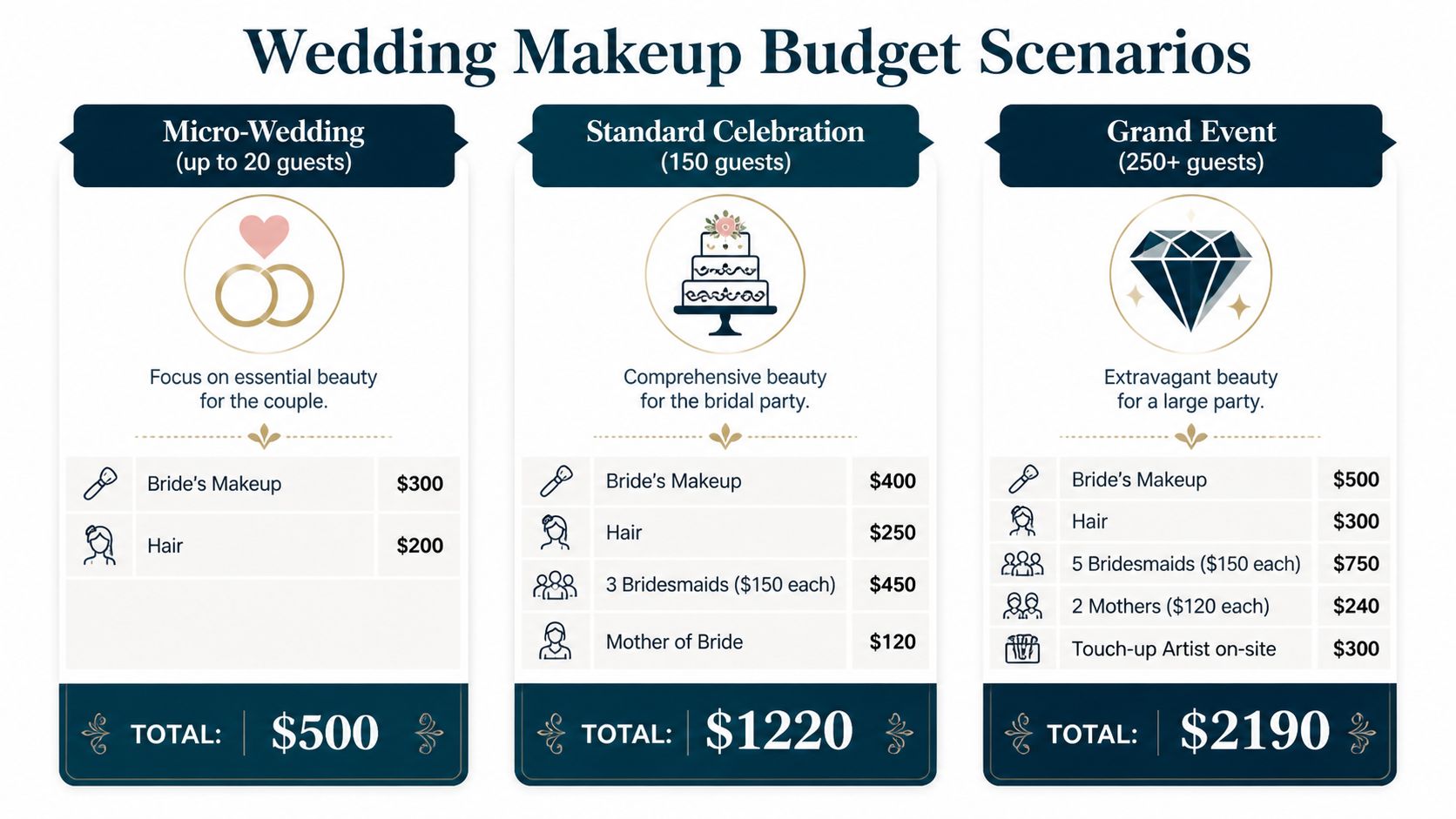
Bridal makeup pricing still needs a starting point. Zola’s guide to wedding hair and makeup costs places traditional bridal makeup at $200 to $400 and airbrush bridal makeup at $300 to $500. Use those numbers as a baseline, then adjust for party size, event length, and how much movement your venue requires on the wedding morning.
Small celebrations often spend less by keeping the plan tight
For a micro-wedding, the smartest beauty budget is usually simple. The bride books one artist, chooses one look that photographs well all day, and avoids building a schedule around services nobody really needs.
That approach works especially well at an intimate venue where the getting-ready space feels calm and close to the ceremony. Less movement usually means fewer timing problems, which helps keep the beauty plan focused and the final bill easier to predict.
If you are planning a smaller event, this guide on how to plan a micro wedding can help you map the day in a way that keeps both the budget and the guest experience comfortable.
Mid-size weddings need clearer math
This is the point where couples start to feel the difference between a reasonable quote and a realistic one. A bride, four attendants, two mothers, a photographer waiting for detail shots, and a ceremony clock that does not move can turn a relaxed morning into a rushed one.
The trade-off is usually straightforward. You can keep the service list shorter, or you can add more artists and pay more to protect the timeline. At a venue outside a major city, couples often have a little more breathing room because setup, parking, and room changes tend to be easier for the beauty team.
Larger weddings should budget for stamina, not just application
Big bridal parties, cultural celebrations, and multi-part wedding days ask more from makeup than a standard ceremony and reception. The look needs to last through family greetings, portraits, weather, outfit changes, and a longer schedule.
Airbrush can make sense here because wear time affects the whole day. If the venue includes outdoor moments, a long gap between ceremony and reception, or a full evening of dancing, paying more upfront can reduce touch-ups, delays, and stress later.
Long wedding days need a beauty plan that holds up emotionally and practically.
Sample Wedding Makeup Budgets
| Wedding Type | Bridal Makeup (inc. Trial) | Bridal Party Example | Total Estimated Cost |
|---|---|---|---|
| Micro-wedding | $300 | No attendants booked for makeup | $300 |
| Standard celebration | $300 to $500 | 4 bridesmaids at about $100 each for hair and makeup combined | About $700 to $900 |
| Large cultural wedding | $300 to $500 | 8 attendants or family members at about $100 each for hair and makeup combined | About $1,100 to $1,300 |
These examples are meant to help couples pressure-test the budget before they request proposals. Actual quotes can rise if the artist needs to travel farther, stay for touch-ups, start very early, or bring a second artist to keep the schedule on track.
How to choose the right scenario for your wedding
A few practical questions usually make the answer clear:
- Choose traditional makeup if your wedding is shorter, mostly indoors, and built around a simpler timeline.
- Choose airbrush makeup if your day runs long, includes heat or humidity, or puts a lot of weight on portraits and wear time.
- Prioritize the people who affect the timeline most. The bride, mothers, and anyone needed early for photos often matter more than booking every attendant.
- Factor in venue logistics before you add services. A destination-style venue outside a major city can keep the morning calmer, which sometimes saves more stress than cutting one beauty service from the proposal.
The best beauty budget is the one that protects the feeling of the morning. Couples remember whether they felt settled, cared for, and ready. They rarely remember that they saved a little money on paper if the first half of the day felt rushed.
How a Full-Service Venue Simplifies Your Entire Wedding Plan
Most couples first think of a venue as the ceremony site and reception room. In practice, the venue shapes almost every vendor experience around the wedding, including beauty.
That matters because the average cost of wedding makeup isn’t only about the artist’s rate. It’s also shaped by access, timeline, setup ease, and whether the morning unfolds in one place or across several locations.
One location solves a surprising number of problems
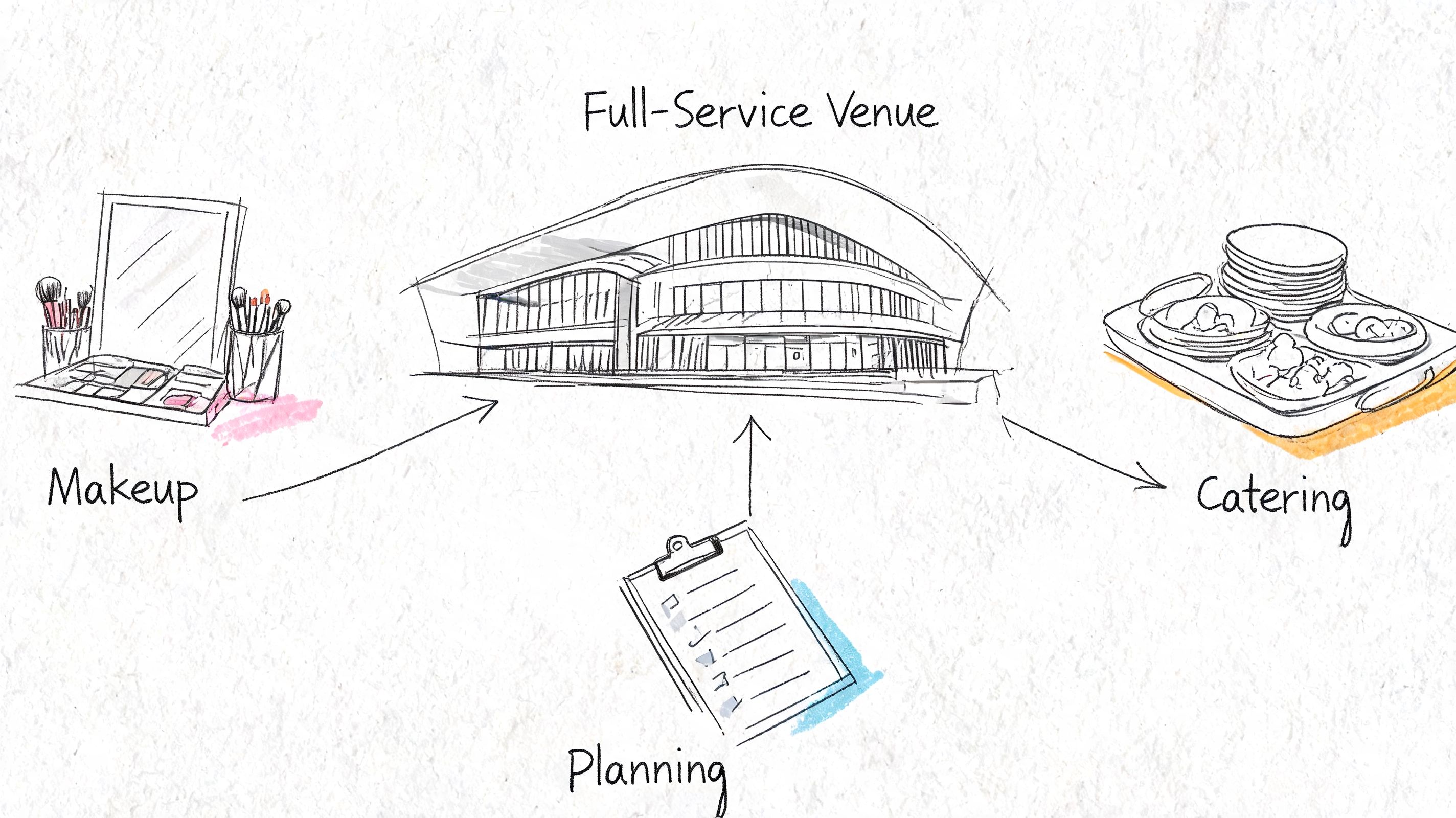
When couples choose a full-service wedding venue with on-site lodging, getting-ready spaces, and coordination support, the wedding morning tends to feel lighter. There are fewer car transfers, fewer timing gaps, and fewer moments where a vendor is asking, “Where should I set up?”
That kind of venue helps beauty services in practical ways:
- Artists arrive to a known environment: good light, outlets, mirrors, and enough room to work.
- The bridal party stays centralized: hair, makeup, photography, and wardrobe can operate in one zone.
- The schedule holds more easily: no one loses time moving between hotel rooms, salons, and the ceremony site.
Preferred vendors often save stress, not just money
A strong preferred vendor list helps because the venue team already knows which artists can work efficiently in that specific space. Couples sometimes worry that recommended vendors limit choice, but the main value is operational. The venue has seen those teams perform under wedding-day pressure.
That can matter even more for a luxury wedding venue or large wedding venue where the scale of the day requires experienced professionals who can keep pace.
What doesn’t work well is assembling vendors who have never worked together, in a space they don’t know, with no one overseeing the handoff points.
The smoothest weddings rarely come from the cheapest combination of vendors. They come from vendors who know how to work together in the same environment.
This matters even more for cultural and multi-day events
For couples searching for an Indian wedding venue near Chicago, a cultural wedding venue, or a reception venue that can support multiple events, the venue decision becomes foundational.
A flexible property can make space for:
- Multi-day celebrations: rehearsal dinner, ceremony, reception, and next-day brunch
- Cultural ceremony needs: room for a mandap setup, family gathering areas, and ceremony flow
- Guest convenience: lodging on site or close by
- Vendor flexibility: support for outside specialists when needed
For a baraat or other outdoor arrival moment, the surrounding layout matters. For a large family wedding, parking and room flow matter. For beauty teams, having enough preparation space matters. These details don’t sound glamorous when you’re first venue shopping, but they often decide whether the wedding feels effortless or strained.
Venue quality affects the feel of the day
Couples often search by practical terms like wedding venue Muscatine, wedding venue Davenport, large capacity wedding venue, or event venue near me. Those searches usually begin with logistics, but they end with atmosphere.
The best venues don’t just hold the event. They support the people creating it.
When a venue is planned well, makeup artists can work calmly, photographers can move naturally, family members know where to go, and the couple gets what they want on the wedding day: a sense that everything is under control without feeling rigid.
Frequently Asked Questions About Venue and Vendor Planning
How many guests should a large wedding venue comfortably hold
A large wedding venue should feel balanced, not crowded. Couples should ask whether the room still works for dining, dancing, stage elements, cultural ceremony structures, and guest movement once the full layout is in place.
For larger weddings, ask the venue to walk through actual floor-plan options instead of only quoting maximum capacity. A room may technically fit your guest count and still feel too tight for the experience you want.
What should couples ask when comparing a wedding venue in Muscatine, Davenport, Bettendorf, Moline, or Rock Island
Start with flow. Ask where each part of the day happens, where you’ll get ready, how guests move between spaces, and whether the ceremony and reception venue functions feel connected or fragmented.
Then ask about practical support:
- Vendor access: How easy is load-in for beauty, floral, décor, and entertainment teams?
- Guest convenience: Is there nearby or on-site lodging and convenient parking?
- Weather backup: If you want an outdoor wedding venue ceremony, what’s the indoor plan?
- Package clarity: What’s included, and what must be brought in separately?
Can a destination-style wedding outside Chicago help control costs
Yes, often it can, especially when couples move from a major metro market to a more affordable Midwest location with strong service infrastructure. The point isn’t only to spend less. It’s to get more comfort, flexibility, and space for the same budget.
That can be especially appealing for Chicago, Naperville, and Aurora couples who want a luxury wedding venue feel without the intensity of a big-city price environment.
What makes a good Indian wedding venue near Chicago
A good Indian wedding venue near Chicago needs flexibility first. Families should ask whether the property can support multi-part celebrations, cultural ceremony layouts, larger guest counts, and a schedule that extends beyond a single dinner reception.
Important questions include:
- Can the venue accommodate a mandap setup?
- Is there space for a baraat or outdoor arrival?
- Can the venue support multi-day events?
- Is outside catering or outside specialty vendors allowed when needed?
- Are there enough guest rooms or nearby accommodations for traveling family?
A venue may look beautiful online and still not function well for a cultural wedding if it can’t handle those basics.
For cultural celebrations, flexibility is part of the service, not an extra.
Is an all-inclusive wedding venue always the better choice
Not always, but it’s often the calmer choice for couples who want fewer moving parts. An all-inclusive wedding venue can reduce the burden of coordinating rentals, food service, staffing, and event flow separately.
That doesn’t mean every all-inclusive package is equally strong. Couples still need to ask how customizable the experience is, especially if they’re planning a cultural wedding, a large reception, or a destination-style weekend with multiple events.
Should couples use the venue’s preferred beauty vendors
Preferred vendors are often worth serious consideration because they already know the property, timing patterns, and setup logistics. That familiarity can make the wedding morning easier.
Still, the best approach is to ask why a vendor is recommended. Is it because they’re easy to work with, reliable under time pressure, and consistent in quality? If the answer is yes, that relationship can be a real advantage.
What if we want outside catering or outside specialty vendors
That’s an important question for any cultural wedding venue or event venue hosting family-centered traditions. Some couples need specific caterers, henna artists, draping teams, DJs, or ceremonial specialists.
Ask the venue these questions directly:
- Are outside vendors allowed?
- Are there insurance or approval requirements?
- Does the venue provide setup support for specialty needs?
- How does the coordination team handle outside vendors on event day?
The clearer those answers are, the less friction you’ll have later.
What matters most when choosing between an indoor wedding venue and an outdoor wedding venue
Choose based on the experience you want guests to have and the operational reality of the day.
An outdoor wedding venue may offer scenic views, natural light, and a memorable ceremony atmosphere. It also requires stronger backup planning, a comfort strategy for guests, and beauty choices that hold up in changing conditions.
An indoor wedding venue offers more environmental control, which can simplify makeup, hair, timing, and guest comfort. Many couples land on the best of both worlds by selecting a venue that offers both options in one property.
How early should beauty planning happen after booking the venue
Beauty planning should start soon after the venue is secured, especially if your date falls in a busy season or your wedding includes a larger party. Once the venue is booked, you can make better decisions about travel, setup needs, and how many services the morning can realistically support.
That sequence matters. The venue often determines what kind of beauty schedule is possible.
How do we know whether a venue will actually feel easy on the wedding day
Ask yourself whether the property answers real-world questions clearly. Can everyone get where they need to go without confusion? Is there enough room to prepare? Do the ceremony, reception, and guest lodging work together? Can the team explain the day in a calm, organized way?
If the tour feels confusing, the wedding day usually will too. If the space feels intuitive and the team communicates clearly, you’re usually in much better shape.
If you’re looking for a riverfront wedding venue that can support everything from an intimate celebration to a large cultural wedding weekend, The Merrill Hotel offers the kind of thoughtful setting couples want when they’re balancing beauty, budget, guest comfort, and a well-coordinated event experience. It’s a strong fit for couples planning in Muscatine, the Quad Cities, and for Chicago-area families who want a destination-style celebration with warm service, flexible event flow, and the ease of keeping the whole weekend in one place.