
You’re standing in the fitting room, and the dress is close. The neckline is right. The skirt moves well. The fabric feels like you. Then you turn, look again, and know exactly what’s missing.
Sleeves.
Not because the gown is wrong. Because your wedding has a setting, a season, a ceremony style, and a mood. A dress that works under bright showroom lights may need a softer, more intentional shape for a riverfront ceremony, a traditional service, or a ballroom reception in a luxury wedding venue. Adding sleeves to a wedding dress is often less about fixing something and more about finishing the story.
That’s especially true for couples planning in Muscatine, Davenport, Bettendorf, Moline, Rock Island, and across the Quad Cities, or for Chicago and Naperville couples choosing a destination-style celebration in the Midwest. Once you start comparing an indoor wedding venue, an outdoor wedding venue, and a reception venue that carries the full day from ceremony through dinner, you see how much a gown needs to do. It has to belong in the room. It has to move with the schedule. It has to feel right in photos from morning to night.
The Moment You Find the Almost Perfect Dress
A lot of brides don’t start by shopping for a sleeved gown. They start by shopping for a feeling.
They find a dress that makes them stand taller, breathe deeper, and stop comparing every option on the rack. Then one quiet thought shows up. It would be perfect with sleeves.
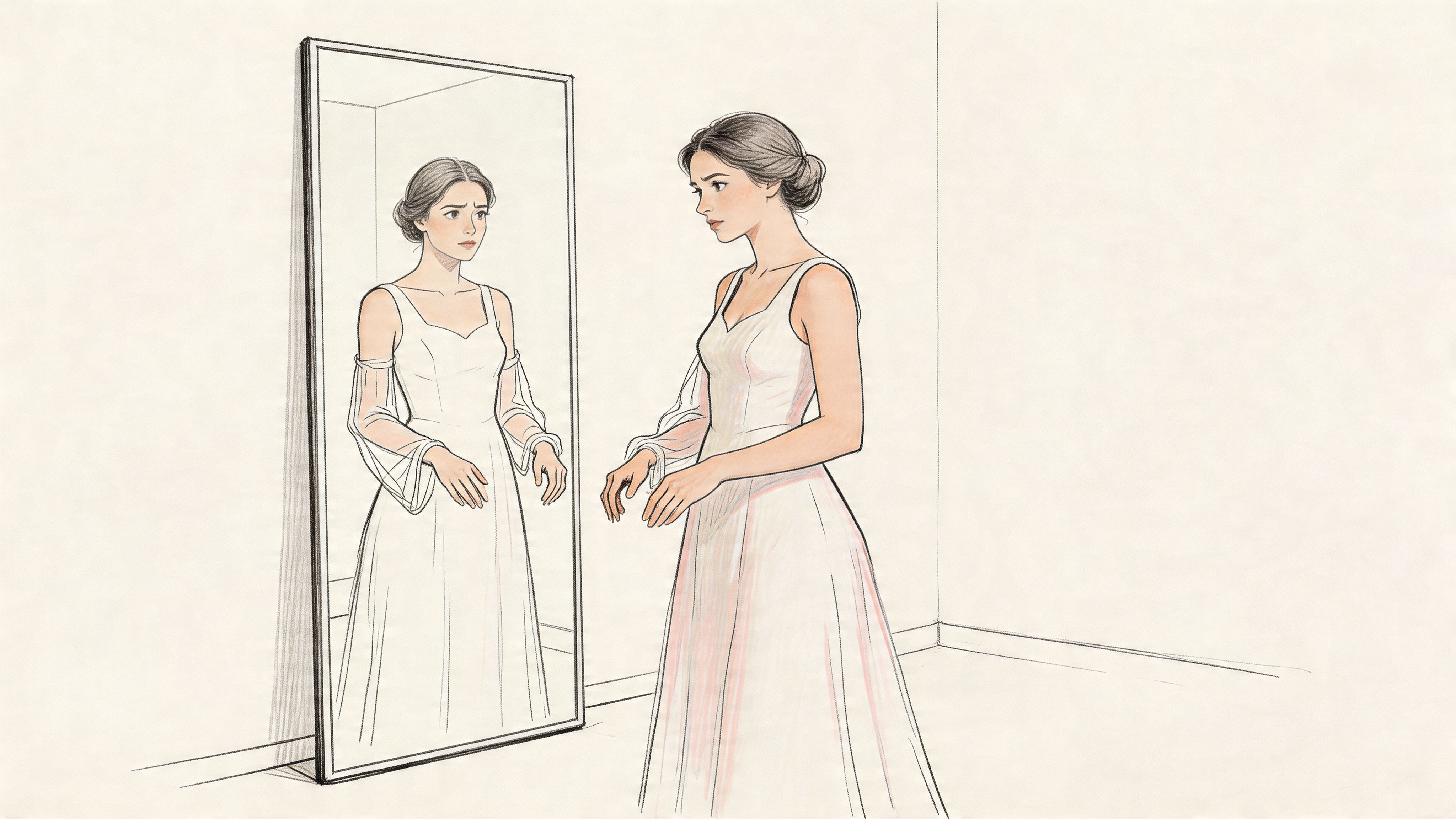
That thought usually comes from something specific. Maybe the ceremony is in late fall and the air will be crisp. Maybe the service is more traditional and extra coverage would make the whole look feel more respectful. Maybe the gown feels polished, but the bare shoulder line doesn’t fit the atmosphere of the wedding venue you chose.
Why sleeves often solve the real styling problem
Sleeves change more than coverage. They change proportion, posture, and tone.
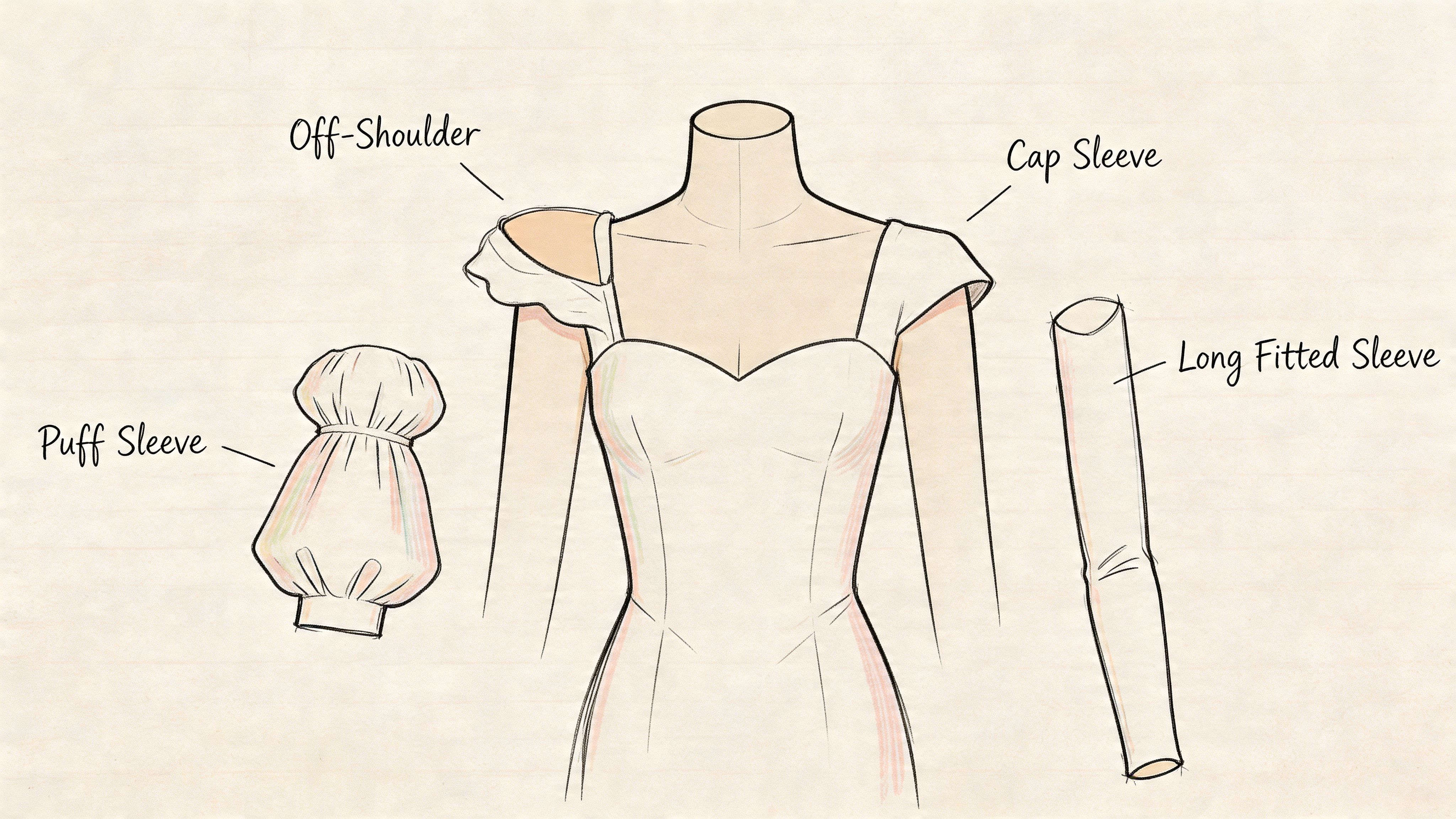
A fitted crepe sleeve can make a simple gown feel architectural and refined in a luxury wedding venue. A soft tulle sleeve can make the same dress feel lighter and more romantic for an outdoor wedding venue. Cap sleeves can give subtle structure without changing the silhouette much at all.
Couples often think of this as a small alteration. It rarely is. It’s a styling decision that affects:
- The ceremony mood. Sleeves can make the gown feel more formal, traditional, or serene.
- The seasonality. They help the dress make sense in autumn, winter, or breezy spring settings.
- The photo balance. Shoulder and arm coverage changes how the dress reads in portraits.
- The venue relationship. A gown should feel at home in the setting, not disconnected from it.
A bride planning a riverfront celebration may want movement in the sleeves so the fabric catches light outdoors. A bride hosting a formal reception in a large wedding venue may want the sleeve to sharpen the look instead of softening it.
The best sleeve additions don’t look added. They look inevitable.
That’s why it helps to think beyond the fitting room. Put the dress in the actual environment of the day. Consider the ceremony backdrop, the hour of portraits, the dinner lighting, and the overall palette. If you’re still shaping that seasonal look, fall wedding dress colors can help clarify whether your sleeve idea should feel airy, fitted, dramatic, or understated.
Deciding Between Detachable and Permanent Sleeves
This is the first decision that affects everything else. Not style. Structure.
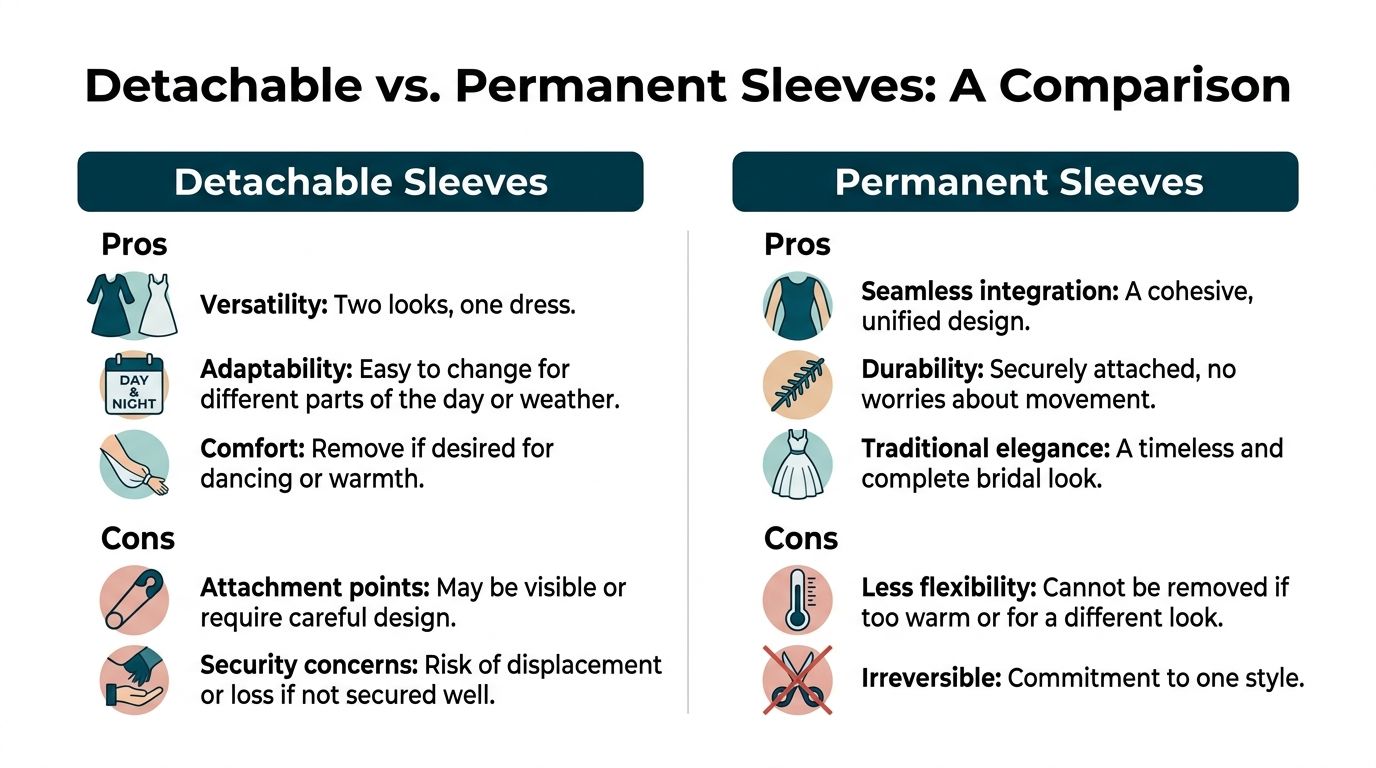
Some brides need one complete look. Others need flexibility because the wedding day includes an outdoor ceremony, cocktail hour, and a full indoor reception in the same wedding venue. That’s where the choice between detachable and permanent sleeves matters.
When detachable sleeves make more sense
Detachable sleeves work best when versatility matters more than a fully integrated appearance.
They’re especially useful for brides who want a more formal ceremony look and a freer reception look without changing dresses. In an all-inclusive wedding venue, where the whole day unfolds in one place, that switch can feel natural and easy.
Detachable sleeves tend to work well for:
- Strapless gowns where a full rebuild of the upper bodice would be risky
- Two-look styling for ceremony and dancing
- Weather shifts at an outdoor wedding venue
- Brides planning on a shorter timeline who need a simpler solution
According to Azazie’s guide on adding sleeves to a wedding dress, simple detachable or cap sleeves typically require 3 to 4 weeks, while complex couture sleeves with illusion lace or structured elements can require 10 to 14+ weeks. The same guide notes that the key planning window is about three months before the wedding, so there’s time for fittings and design adjustments.
That timing matters. Detachable sleeves can be the smarter route when there isn’t enough runway for extensive pattern work.
When permanent sleeves are the better choice
Permanent sleeves usually win when the dress needs a cohesive, designed-from-the-start look.
A sewn-in sleeve can transform the architecture of the gown. It can make the neckline feel intentional, stabilize the visual line of the bodice, and create a more classic finish. In a formal reception venue or cultural wedding venue, that integrated look often reads as more polished.
Permanent sleeves are a stronger choice for:
| Consideration | Detachable sleeves | Permanent sleeves |
|---|---|---|
| Visual integration | Good, if attachment is hidden well | Best overall |
| Day-of flexibility | Excellent | Limited |
| Comfort for dancing | Easy to remove | Must be comfortable all day |
| Best for strapless dresses | Often safer | Possible, but more technical |
| Commitment level | Lower | Higher |
What doesn’t work as well as people hope
The most common mistake is trying to force a complex set-in sleeve onto a dress that doesn’t have enough upper bodice support.
For strapless dress conversions, the same Azazie resource explains that full set-in sleeves are technically difficult unless the neckline structure is built up first. In practice, that’s why many seamstresses recommend slip-on elastic styles or detachable sleeves instead for strapless gowns.
Practical rule: If the gown can’t support the sleeve, the sleeve will start controlling the gown.
That’s when fit problems show up. Pulling at the neckline. Restricted arm movement. A bodice that shifts during hugs, photos, or dancing.
A simple way to decide
Ask these questions:
Do you want one look or two?
If you want a ceremony-to-reception change, detachable is usually the cleaner answer.Is your dress structurally supportive at the top?
If not, a permanent sleeve may require more rebuilding than expected.Do you care more about flexibility or an integrated look?
There isn’t a wrong answer. There is only the answer that fits your day.
For a bride moving from a refined outdoor ceremony to a lively indoor wedding venue reception, detachable sleeves often support the rhythm of the event better. For a bride who wants timeless continuity from first look through final dance, permanent sleeves can be worth the extra work.
Choosing the Perfect Sleeve Style and Fabric
Once the construction decision is made, the creative work gets interesting. At this point, adding sleeves to a wedding dress stops being a technical project and becomes a visual one.
The right sleeve should feel like it belongs to the gown’s language. If the dress is sleek, the sleeve should support that clarity. If the dress is romantic, the sleeve can carry softness and movement.
Start with the dress, not the trend
Sleeves have deep roots in bridal fashion. The tradition of the white wedding dress with sleeves goes back to Queen Victoria’s 1840 wedding, when she chose a white silk satin and lace gown with full sleeves, helping establish white sleeved gowns as a formal bridal standard for more than a century, with high necklines and full sleeves staying prominent well into the 1930s, as noted in this history of wedding dress trends.
That history matters because sleeves still carry meaning. They can read as regal, modest, romantic, editorial, or old-Hollywood depending on shape and fabric.
A few common pairings work especially well:
- Cap sleeves suit simple satin, crepe, or lace gowns that need just a touch more coverage.
- Illusion sleeves work best when the bodice already has lace motifs that can continue onto the arm.
- Bishop sleeves bring softness and movement to A-line and fuller skirts.
- Juliet or puff sleeves create a stronger fashion statement and work best when the gown can support that volume.
- Long fitted sleeves sharpen minimalist dresses and make them feel more formal.
Match the fabric weight and finish
Most sleeve problems aren’t style problems. They’re fabric problems.
If the gown is heavy and structured, a flimsy sleeve can look disconnected. If the dress is airy, a dense sleeve can feel pasted on. Good sleeve design depends on matching weight, sheen, and texture.
Use this quick lens when deciding:
| Dress fabric feel | Sleeve fabrics that usually suit it | Effect |
|---|---|---|
| Smooth and tailored | Crepe, stretch lining, clean lace | Crisp, modern, refined |
| Lustrous and formal | Satin, organza overlays, lace accents | Polished, ceremonial |
| Soft and floaty | Tulle, chiffon, lightweight lace | Romantic, light-catching |
| Detailed lace bodice | Illusion tulle with hand-placed appliqué | Seamless, “grown-on” look |
For a large wedding venue with dramatic architecture, bigger sleeves can hold their own in the space. For a cultural wedding venue hosting multiple events, detachable sleeve options can help one gown shift in tone across different ceremonies.
A veil should be part of this conversation too. Sleeve detail at the shoulder and wrist changes which veil lengths and edge finishes feel balanced. This guide to styles of veils is useful if you’re trying to make the whole silhouette work together.
Think about light and movement
Natural light changes how sleeves read.
Sheer tulle looks soft and dimensional in daylight. Lace appliqué catches highlights beautifully. Matte crepe reads cleaner and more sculptural. This matters in venues with windows, open-air ceremony spaces, or portrait locations where the gown is photographed from the side as often as from the front.
Here’s a helpful visual reference for how different sleeve ideas can alter the dress:
If a sleeve is the loudest element on the dress, it should be loud on purpose.
That’s the test. A dramatic puff sleeve can be stunning in the right setting, especially for a luxury wedding venue or a destination-style weekend celebration. But if the gown already has a strong neckline, textured fabric, heavy embellishment, or a statement veil, restraint usually produces the better result.
Sleeve choices that usually age well
Brides often ask which sleeve style will still feel good in photos years from now.
These tend to hold up beautifully:
- Slim long sleeves in crepe or lace
- Illusion sleeves with restrained appliqué
- Cap sleeves that echo the bodice
- Soft detachable sleeves that don’t overpower the neckline
The goal isn’t to avoid personality. It’s to place it carefully.
Your Guide to the Alteration Process
The alteration path is different for every bride, but the order of decisions matters. If you handle the sleeve choice too late, every later step gets harder. If you choose the wrong method for the dress structure, the final look can feel strained instead of elegant.
What to do before the first appointment
Bring more than the dress.
A good sleeve consultation goes better when the seamstress can see the full picture of how the gown will be worn. That means:
- Your shoes so hem and posture stay consistent
- Your undergarments because support changes bodice fit
- Inspiration photos with sleeve shapes you like
- Your veil or veil plan if shoulder detail needs to coordinate
- An honest description of the venue and season so style choices fit the day
Couples planning from Chicago, Aurora, or Naperville for a wedding venue in Muscatine or the Quad Cities should handle this early. Destination-style planning always works better when alterations start before travel logistics become stressful.
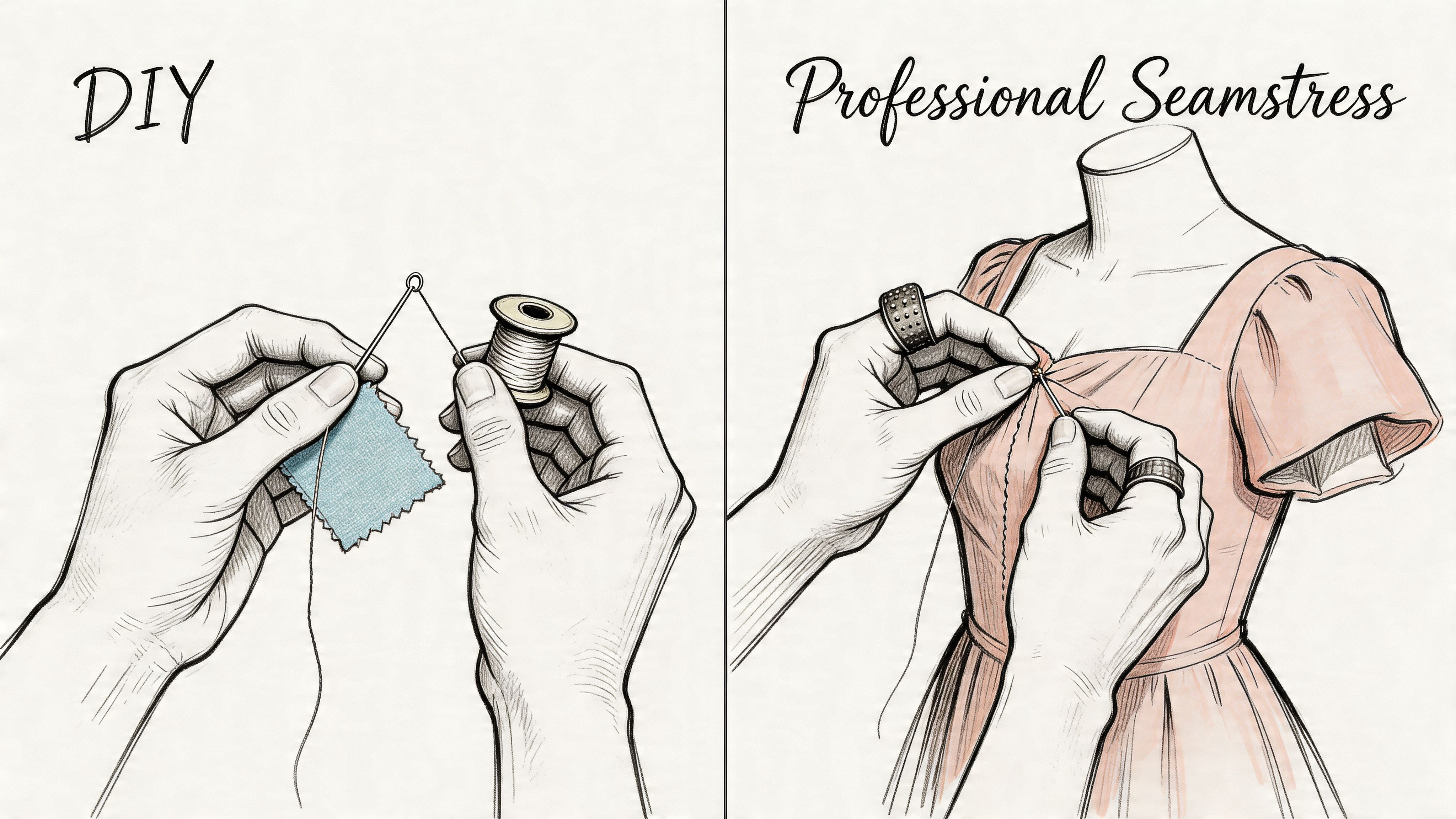
The DIY route and where it makes sense
DIY is only wise for simple sleeve additions.
If you sew well and understand garment construction, you may be able to make basic detachable puff sleeves, soft flutter sleeves, or uncomplicated elastic styles. These are the least risky because they don’t require heavy structural changes to the bodice.
DIY usually works best when:
- the dress fabric is forgiving
- the sleeve is light
- the attachment method is simple
- you’re comfortable testing fit repeatedly
It does not make sense for illusion sleeves, lace motif placement, or bodice rebuilds. Those details need precision. Once bridal fabric is pierced, trimmed, or stretched the wrong way, correcting it can be difficult.
Working with a professional seamstress
A strong bridal seamstress doesn’t just sew. She evaluates whether the idea supports the dress.
That demonstrates the value of professional work. An experienced alterations specialist will assess neckline stability, fabric behavior, and whether the sleeve can be added without distorting the gown’s shape.
Ask direct questions:
- Have you added sleeves to gowns with this neckline before?
- Will this sleeve require reinforcement at the bodice?
- What fabric will you use if the dress has no extra material?
- How will the sleeve affect movement?
- Will the attachment show in photos?
Some sleeve ideas are beautiful in a sketch and frustrating in motion. Test the idea with your arms, not just your eyes.
During fittings, don’t just stand still. Reach forward. Sit down. Lift your arms. Turn and hug someone. A sleeve that looks elegant on the pedestal has to survive an actual wedding day.
Cost realities you should know
This is one of the least clearly explained parts of bridal alterations, so couples are often surprised.
According to The Knot’s guide on adding sleeves to a wedding dress, Midwest seamstresses typically charge $300 to $800 for sleeve additions, depending on complexity. Sourcing matching fabric can add another $100 to $300, and complex work on strapless gowns can exceed $1,000 if structural support is needed.
That range tells you something important. The sleeve itself is only part of the cost. The labor of integrating it well is what changes the budget.
What a good process looks like
A reliable alteration experience usually follows this rhythm:
| Stage | What happens |
|---|---|
| Consultation | Dress is assessed for structure, fabric, and sleeve feasibility |
| Design decision | Sleeve style, attachment method, and fabric are chosen |
| First fitting | Placement and proportion are tested |
| Follow-up fitting | Mobility, comfort, and finish are refined |
| Final fitting | Sleeve length, closure, and overall balance are confirmed |
If you’re planning from another city, ask your venue coordinator for trusted local recommendations. A strong event team often knows which bridal professionals communicate well, work on schedule, and understand the pace of destination wedding planning.
Budgeting and Timelines for Your Sleeve Project
A sleeve project should sit inside the wedding budget, not outside it as a surprise.
That matters for couples comparing a luxury wedding venue in Chicago with a more cost-effective wedding venue in Muscatine, Davenport, or the wider Quad Cities region. When the venue side of the budget is efficient, there’s often more room for the details that make the wedding feel personal, including tailoring.
Where cost usually rises
The price climbs when the work moves from simple addition to structural transformation.
A detachable sleeve is usually more straightforward than rebuilding the upper portion of a strapless bodice. Matching lace or illusion material can also increase labor because alignment matters. If the sleeve must look original to the dress, the seamstress often has to spend extra time testing placement and finish.
Estimated Cost and Timeline for Adding Sleeves
| Sleeve Type | Estimated Cost (USD) | Estimated Timeline |
|---|---|---|
| Simple detachable or cap sleeves | $300 to $800 | 3 to 4 weeks |
| Complex sleeve additions with sourced matching fabric | $400 to $1,100 | 10 to 14+ weeks |
| Complex strapless gown conversion needing structural support | Can exceed $1,000 | Longer, depending on reconstruction needs |
These ranges synthesize the verified benchmarks already discussed. The timing reflects the distinction between simple additions and complex couture-style work, while the cost range reflects Midwest alteration pricing and fabric sourcing realities.
Build your schedule backward
The cleanest planning approach is simple:
- Choose the sleeve concept early so the bodice doesn’t need to be reworked twice.
- Book the consultation well ahead of final fittings because custom work takes revision time.
- Leave room for sourcing if the original gown doesn’t include extra lace, tulle, or matching fabric.
If you’re balancing venue costs, attire, catering, and guest lodging, this broader look at how much a wedding costs can help you decide where customization belongs in your priorities.
Brides rarely regret planning alterations early. They do regret assuming a sleeve addition is quick.
FAQs for a Flawless Wedding Dress Transformation
Can sleeves be added without changing the original silhouette
Yes, if the sleeve respects the dress’s proportion.
The safest additions echo what’s already happening in the gown. A sleek dress usually wants a slim sleeve. A soft, layered gown can handle more volume. Problems start when the sleeve introduces a style language the dress never had.
What’s the hardest kind of dress to alter with sleeves
Strapless gowns are usually the most technically sensitive.
They can absolutely be altered, but they often need more support than brides expect. If the bodice isn’t stable enough, a seamstress may recommend detachable options or a softer sleeve style rather than a fully structured set-in sleeve.
What sleeve style works best for an outdoor wedding venue
That depends on weather, movement, and how formal the ceremony is.
For breezy conditions, lightweight detachable sleeves are often the most forgiving. They offer coverage without locking you into one look all night. For cooler seasons, fitted sleeves can feel elegant, but only if they allow enough movement for the full day.
How do I keep the sleeves from looking obviously added
Fabric matching and restraint do most of that work.
When the sheen, lace scale, and seam placement suit the original gown, the alteration reads as intentional. When the sleeve introduces a different weight or texture without a reason, it starts to look separate from the dress.
Should I choose sleeves based on the ceremony or the reception
Choose them based on the full flow of the day.
If the ceremony is formal but the reception is active and warm, detachable sleeves often solve the problem better than a second dress. If the entire wedding has one consistent tone, permanent sleeves can create a stronger unified look.
Can adding sleeves help a gown feel more appropriate for a cultural wedding venue
Yes. For many brides, sleeves are part of making the gown align with family expectations, religious customs, or the tone of a traditional ceremony.
That doesn’t have to make the dress feel less modern. The right sleeve can preserve modesty and still feel fashion-forward, especially when the line is clean and the fabric is thoughtfully chosen.
If you’re planning a wedding weekend and want a setting that feels polished, flexible, and easy for guests, The Merrill Hotel offers a riverfront experience with indoor and outdoor event spaces, on-site lodging, thoughtful coordination, and the kind of warm, destination-style atmosphere that gives personal details, including your dress, room to shine.