
Most couples book a block of standard rooms and feel settled. But then, a quiet thought arrives. It’s the realization that some of your most important people might need a little more room. Finding 2 bedroom suite hotels is not about extravagance; it’s an act of care.
A suite is a space where the weekend can breathe. It’s for the small, in-between moments that make up the whole experience—the quiet coffee before the rush, a place for a child to nap, or just a private corner for a family to gather themselves. It’s a very practical way to offer comfort.
When do you realize you might need more space?
There’s a moment in planning when you start to see the weekend not as one big event, but as a series of smaller, private ones.
You picture your parents trying to help with their young grandchildren. You see your wedding party gathering with dresses and steaming equipment. You imagine an older relative needing a quiet place to sit down, away from the joyful noise.
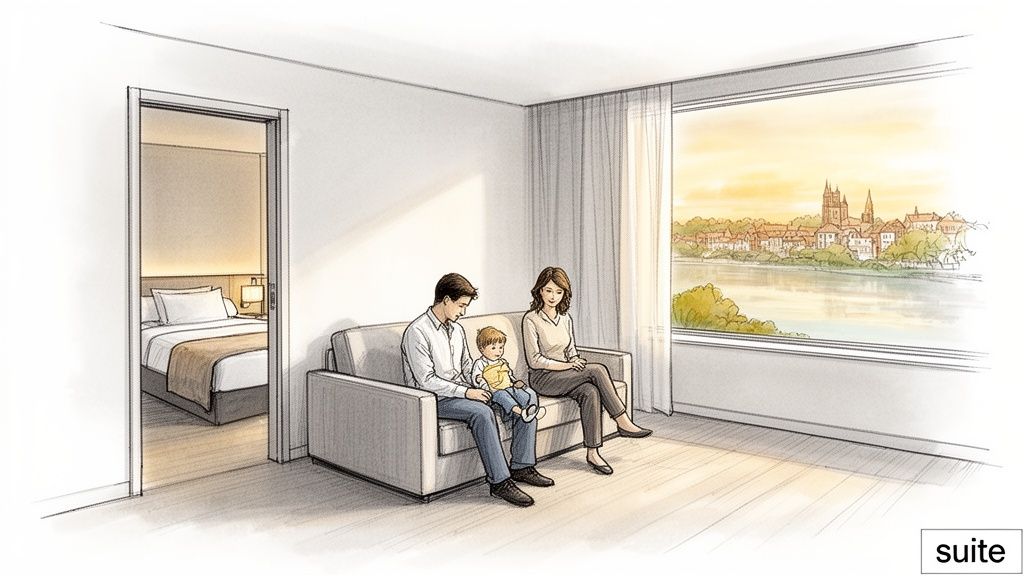
It's in those moments that a suite feels less like an upgrade and more like a necessity. A standard hotel room is designed for sleeping. A suite, on the other hand, is designed for living.
What I’ve seen is that having a central ‘home base’ changes the feeling of the entire weekend. It gives people a private space to gather that isn’t a crowded lobby or someone else's room.
This extra space allows for calm connection. It gives families a place to manage the beautiful chaos of a wedding weekend, from naps for the little ones to a quiet cup of coffee for the grandparents.
It becomes a haven. For families with young children, a separate bedroom means parents can relax in the living area after the kids are asleep. For the wedding party, a common space is where deeper conversations happen, where hair and makeup artists can set up without taking over a bedroom, and where you can share a relaxed meal before the ceremony begins.
This feeling of having a private anchor becomes even more important in a place like Muscatine. When people travel to a river town, they’re already slowing down. Having a comfortable space of their own helps them do just that.
Thinking about suites is not about adding another complicated decision to your list. It’s about being a thoughtful host. You are simply creating pockets of calm for the people you care about most.
If you're considering the benefits of having everyone under one roof, you might find our thoughts on wedding venues with on-site lodging helpful. It is another way to make the entire experience feel more connected and less hurried for everyone involved.
What makes a hotel suite actually comfortable?
The listed square footage of a suite does not tell the whole story. What truly matters is not the size, but the layout—how people will actually move through the space. When you’re looking at 2‑bedroom suite hotels, it helps to think less like you’re booking a room and more like you’re setting up a temporary home.
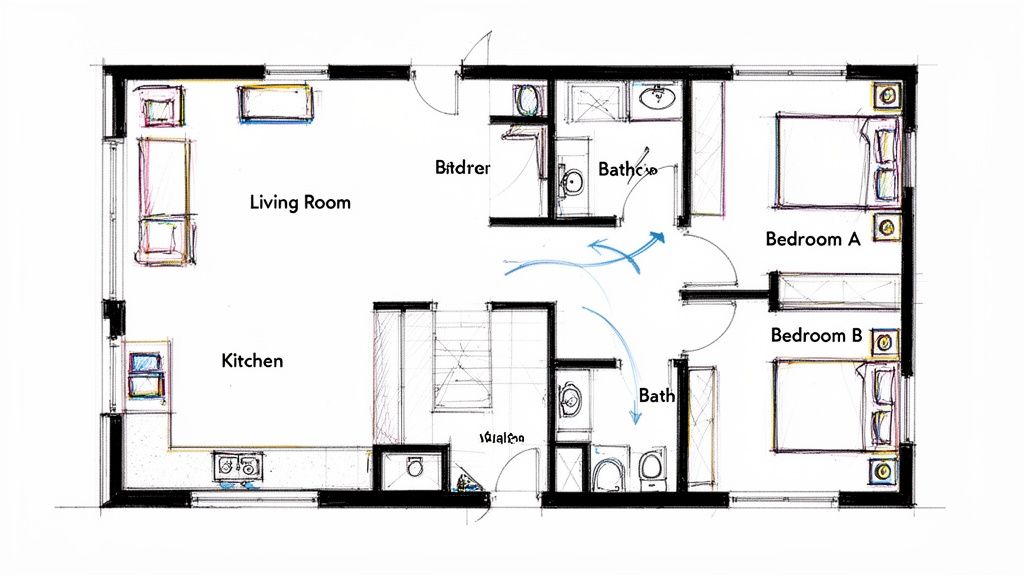
The first thing to look for is real separation. A true two-bedroom suite needs a common living area that is fully distinct from both bedrooms, with doors that close. That simple detail is what allows a grandparent to read quietly while a grandchild naps, or lets early risers make coffee without waking the whole family. It gives everyone breathing room.
This is not a niche preference anymore. Guest expectations are changing, and many now prefer superior rooms or suites over standard options for group events. It points to a growing need for accommodations that offer more than just a place to sleep, a trend you can see reflected in recent research on extended stay hotels.
A small detail with a huge impact is the bathroom location. When a suite’s only bathroom is tucked inside one of the bedrooms, it can create awkward moments. The best layouts feature at least one bathroom that opens directly into the common area, letting guests from either bedroom—or even daytime visitors—use it without disturbing anyone.
I’ve watched so many wedding mornings unfold in our suites. The ones with good natural light always feel calmer. It’s a simple thing, but it completely changes the mood for everyone getting ready, especially for the photographers trying to capture those quiet, candid moments.
Beyond the floor plan, the small, practical comforts are what make a suite feel genuinely thoughtful. A kitchenette is a good feature, but its usefulness comes down to the details. A proper coffeemaker, a mini-fridge big enough for milk and snacks, perhaps even a microwave—these are the things families and wedding parties actually use.
They are often the difference between a good stay and a great one. Thinking through these practical needs helps you move past just booking a room. You’re creating a comfortable, restorative home base for the people you care about most.
Who really benefits from having a suite?
There is no rulebook that says who should get a suite. It’s a thoughtful gesture, not a requirement. But after years of watching families and wedding parties move through a hotel, I’ve seen certain guests find a real sense of calm and comfort in having that extra space. It almost always becomes an unofficial home base for the weekend.
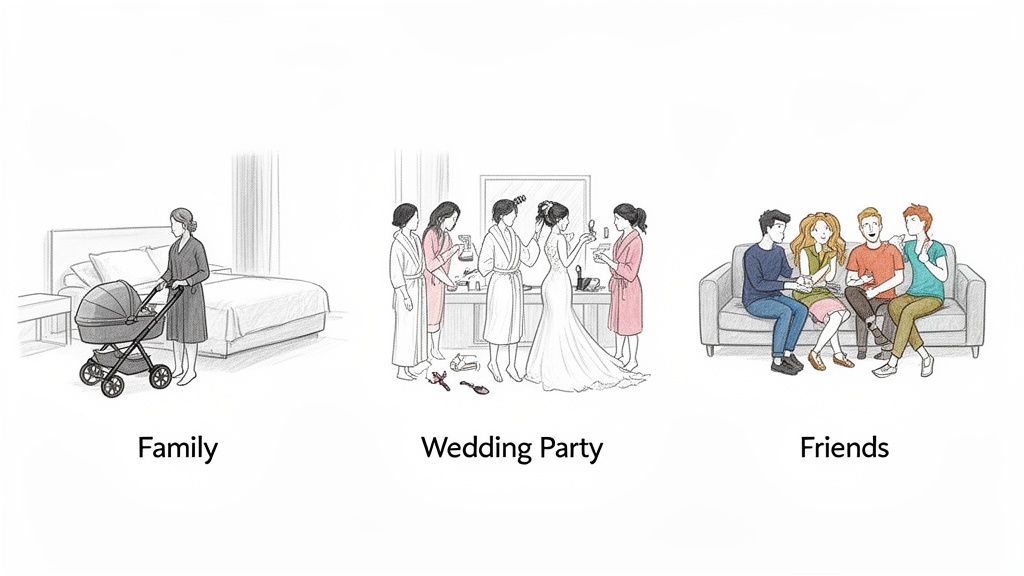
This is more about observing needs than creating obligations. Just thinking through who might appreciate the space can make you a more thoughtful host without adding pressure to your own plans.
Parents and Grandparents
The group I see benefit most from 2 bedroom suite hotels are the immediate families of the couple. For parents or grandparents who are also helping with young children, a suite is not just nice—it’s practical. It offers a quiet bedroom for naps while life keeps moving in the living room.
I’ve often watched a set of grandparents take one bedroom while the parents and a young child take the other. Their shared living space becomes the spot for morning cartoons, quiet coffee before the day’s events, and a central place for everyone to connect without feeling on top of one another.
It gives them a private space to just be a family. They can order room service for the kids or have a place to land between the ceremony and reception. That bit of calm can make all the difference.
The Wedding Party
Sometimes, a few close friends in the wedding party will decide to share a two-bedroom suite. It starts as a practical choice but often brings an unexpected sense of camaraderie. When split between four or five people, the cost can be comparable to booking separate rooms.
What they really gain is a built-in place to gather. The living room turns into the spot for last-minute dress steaming, practicing a speech, or just sharing a quiet moment. It keeps the energy contained and relaxed, away from the main hotel bustle.
Families with Young Children
Beyond your own immediate family, any guests traveling with babies or toddlers will see a suite as a true gift. That separate sleeping area means parents do not have to sit in the dark and whisper after putting their child to bed at seven o’clock.
They can close the bedroom door and actually enjoy their evening—watching a movie or talking at a normal volume. It helps them feel less like they are just visiting and more like they can settle in and rest, which is one of the kindest things you can offer a guest.
How does suite pricing work in a room block?
At some point, the question of cost comes up. It’s a practical and completely normal concern, especially when you think about adding larger rooms, like suites, to your hotel block.
It helps to remember that you are not booking an entirely different product. The suites are just part of the same group of rooms you’re reserving for your guests. The process is usually simple: you decide how many standard rooms and how many suites you would like to hold, and the hotel sets them aside for everyone to book directly.
Are suites part of the group rate?
This is a question I hear all the time. Typically, 2 bedroom suite hotels will offer a discount on every room type within a block, but that discount is applied to the room's starting rate. A suite will have a higher nightly rate than a standard room, but it will almost always be lower than if your guests tried booking it on their own.
It’s also helpful to look at the cost from a different angle. While the total price for a two-bedroom suite is higher, it’s a space often shared by four to six people. When the cost is divided among them, it is frequently comparable to—or even less than—what they might pay for two or three separate rooms. What they gain is the immense comfort of a shared living space, which is a value you cannot really measure in dollars.
The most important thing is to have a clear, calm conversation with the hotel coordinator. Ask them to walk you through the rates for each room type in your block. There should never be any surprises.
What is usually included in the price?
When you see the rate for a suite, it helps to know everything it covers. Most of the time, the price is for more than just the space itself.
Things like Wi-Fi, access to hotel amenities, and daily housekeeping are almost always part of the rate. If the suite has a kitchenette, that is also included, which can save your guests money on breakfasts and snacks. These are the kinds of built-in conveniences that add real-world value.
This trend of investing in better accommodations is growing. The market for premium suites is projected to reach over $160 billion by 2034, driven by travelers who want more from their stay. You can see more insights on this shift from the IMARC Group.
Thinking about suites is part of a larger idea—making the entire wedding feel like a cohesive, relaxed event. You might find our perspective on when the weekend becomes the wedding offers some helpful context. Ultimately, a suite is just another tool to help you care for your people, and understanding the cost is the first step toward using it thoughtfully.
What should we ask before reserving a suite?
Once you are ready to book a suite, the conversation should not feel like a negotiation. It is about uncovering the small details that make a stay feel thoughtful and genuinely caring.
After watching hundreds of families and wedding parties settle into our suites, I’ve noticed the most important questions are often the ones people do not think to ask until they have already arrived.
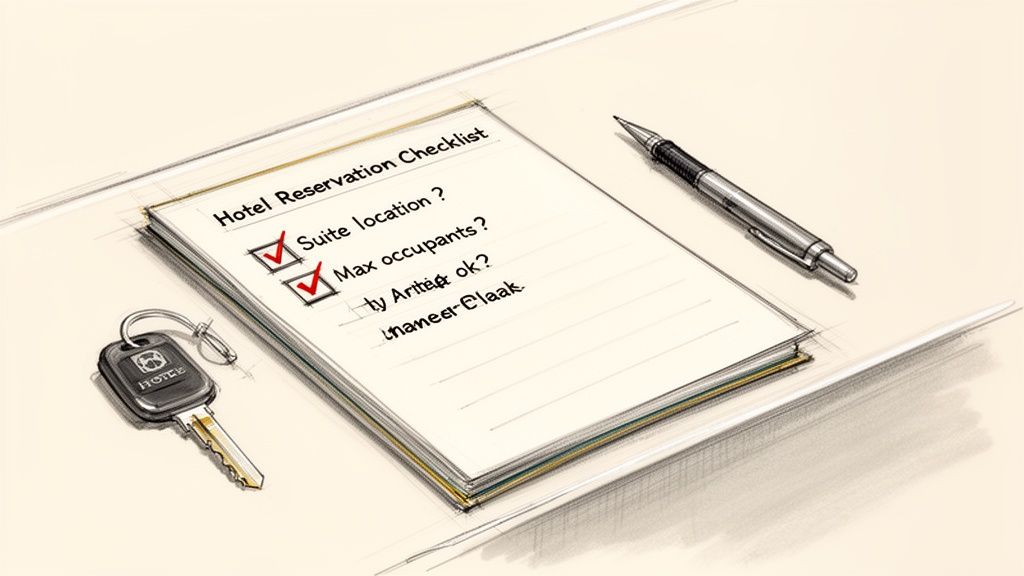
Questions About the Space Itself
The location of a suite inside the hotel changes the entire feel of the stay. A room near the main elevators is convenient but has more foot traffic. One at the end of a quiet hall offers more privacy. Neither is better, but one will be a better fit for your group.
A few questions can help you picture the experience beyond the floor plan:
- Can you describe where the suites are located? Are they in a quieter wing or near busy areas?
- Do the suites have a view? Here at The Merrill, some of our suites overlook the Mississippi River, which brings a welcome sense of calm to a busy morning.
- Are all the two-bedroom layouts identical, or are there variations?
These simple things help paint a much clearer picture of what the stay will actually feel like.
Questions About How the Suite Can Be Used
There are two ways to think about a room’s capacity: how many people can sleep there, and how many can comfortably gather there. These are rarely the same number.
I’ve seen this come up when a family wants to host a small, informal welcome for a few relatives, or when a bride hopes to have her hair and makeup team work in the living area.
A question I’ve heard that is always helpful is, “What is the maximum number of people allowed in the suite for a small daytime gathering versus an overnight stay?” This simple clarification prevents any misunderstanding and helps you be a thoughtful host.
It’s also wise to ask, “Are outside vendors, like a makeup artist, permitted to work in the suite?” Most 2 bedroom suite hotels are very accommodating, but it’s always reassuring to confirm ahead of time.
Clarifying the Finer Details
Finally, a few practical questions can ensure a smooth experience for everyone. This is where you confirm what’s included, what’s not, and what the hotel’s policies are. If you're building a list of questions, you might also appreciate our guide on what to look for during a wedding venue tour.
- Are there any rules about noise that we should be aware of for a group gathering?
- Is it possible to request adjoining rooms if we need even more space?
- Can you confirm the final check-in and check-out times for the suites?
Asking these kinds of questions is not about being difficult. It is about being prepared, which is one of the calmest feelings you can give yourself during a wedding weekend.
All the planning comes down to something simple. You want the people you love to feel cared for. That is the real reason you start looking at 2‑bedroom suite hotels in the first place.
Worrying about layouts, capacity, and who gets which room is just the practical side of that feeling. It is not about extravagance. It is about thoughtfulness. It is about giving your family a quiet place to land when the happy energy of the weekend becomes a little much.
What people remember is not the size of the room. It is the feeling of having somewhere comfortable to connect with their favorite people between all the scheduled moments.
A suite becomes a private living room. A calm spot where a story is shared over a quiet breakfast. It is a space for the small, unscripted moments that make a wedding weekend feel whole. It is a place to breathe.
If you have thought about these details, you have already done the most important part. You have considered their comfort. That alone is a kindness people feel, even if they cannot put it into words.
The hope is that you now feel a little calmer and clearer. It is not about finding a perfect room. It is about creating pockets of peace for the people you love. The rest will fall into place.
At The Merrill Hotel, we have seen how the right space can bring a sense of calm to a wedding weekend. To learn more about our suites and how we help families and wedding parties feel at home, you can see more at momentsatthemerrill.com.